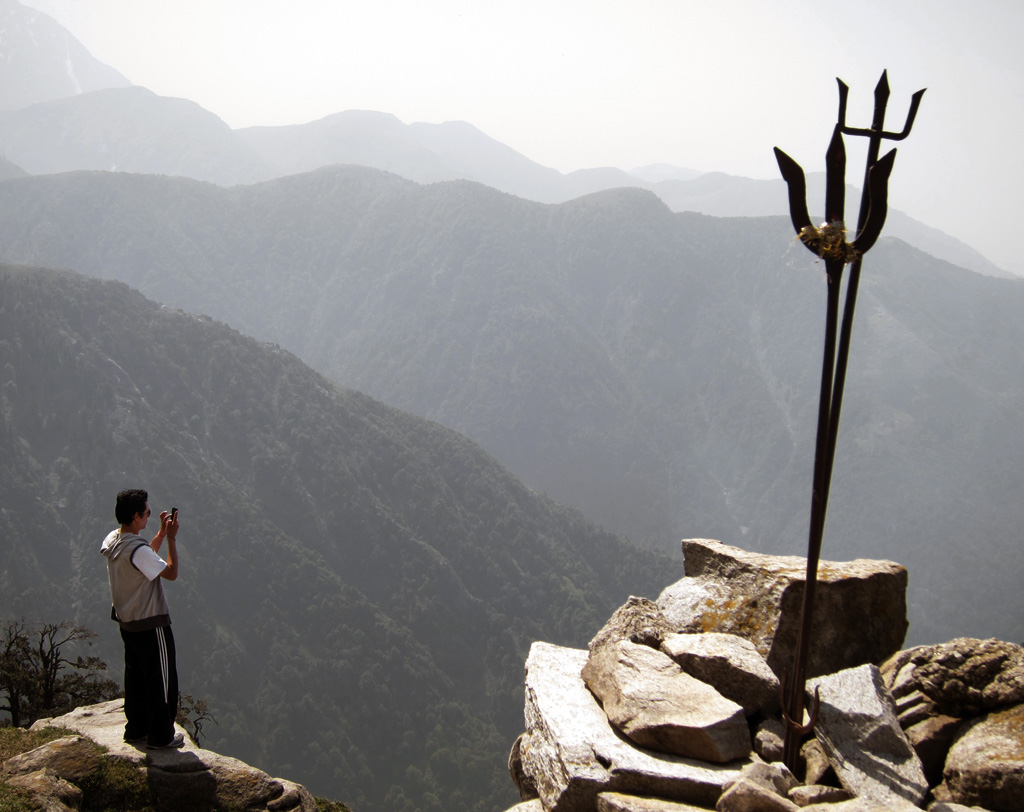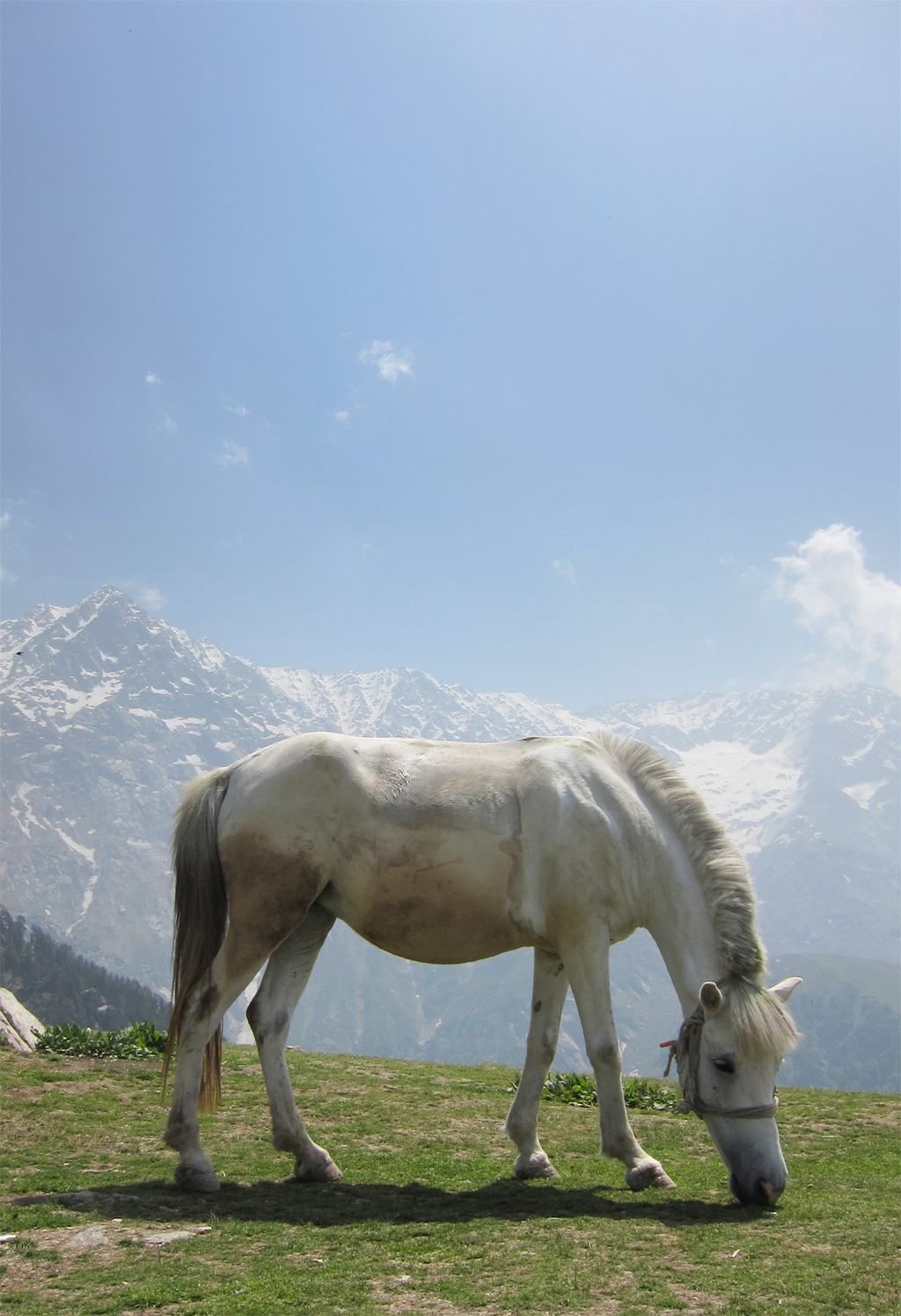
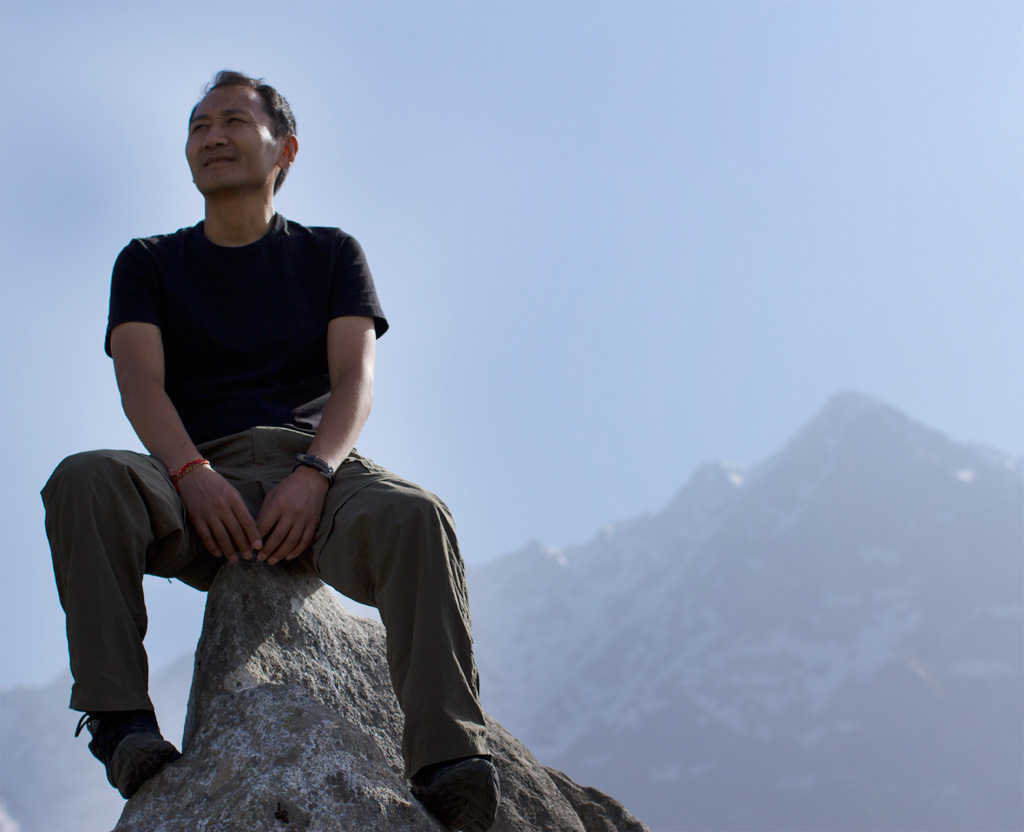
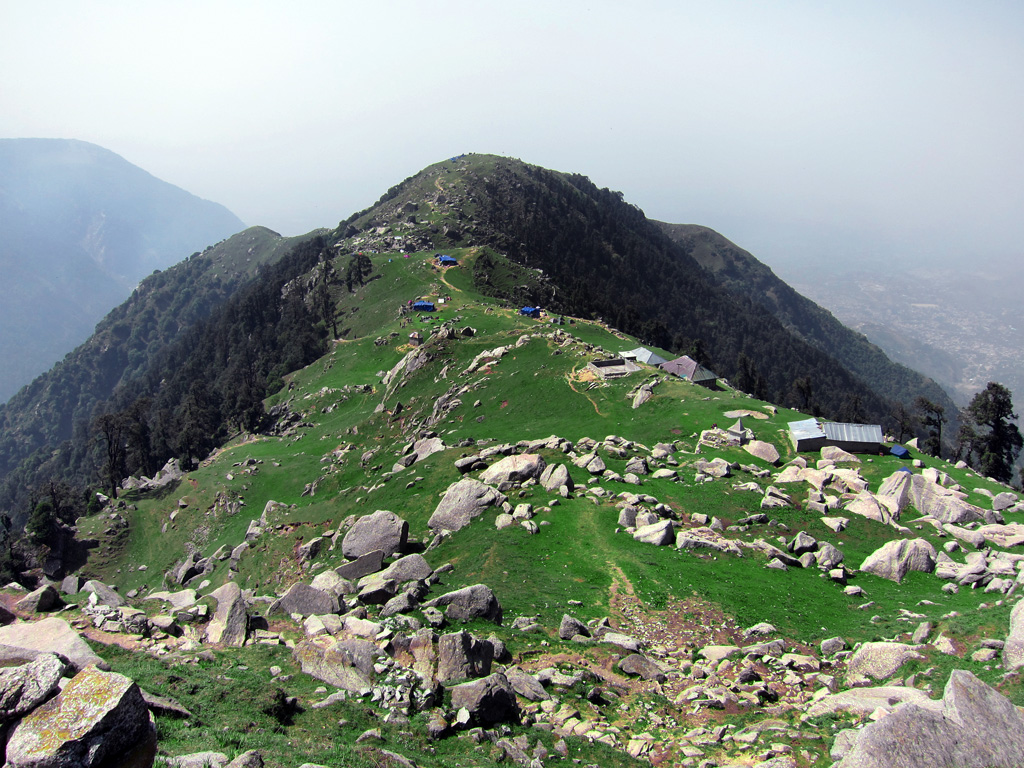
We arrived at the top of Triund before nine in the morning. The air was still cool but the sun was already blazing. Crows and birds of prey circled the valleys below.
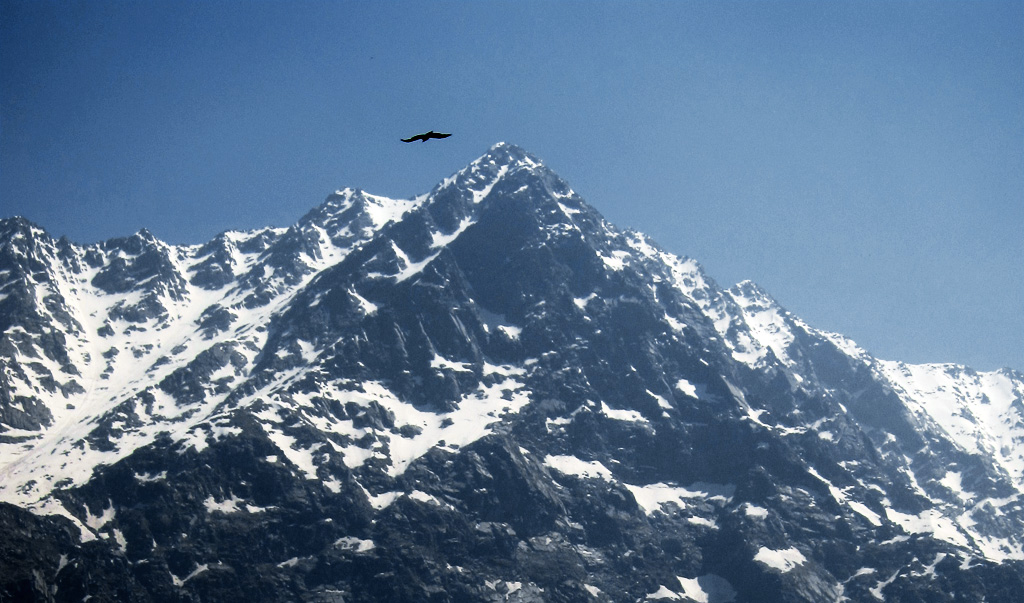
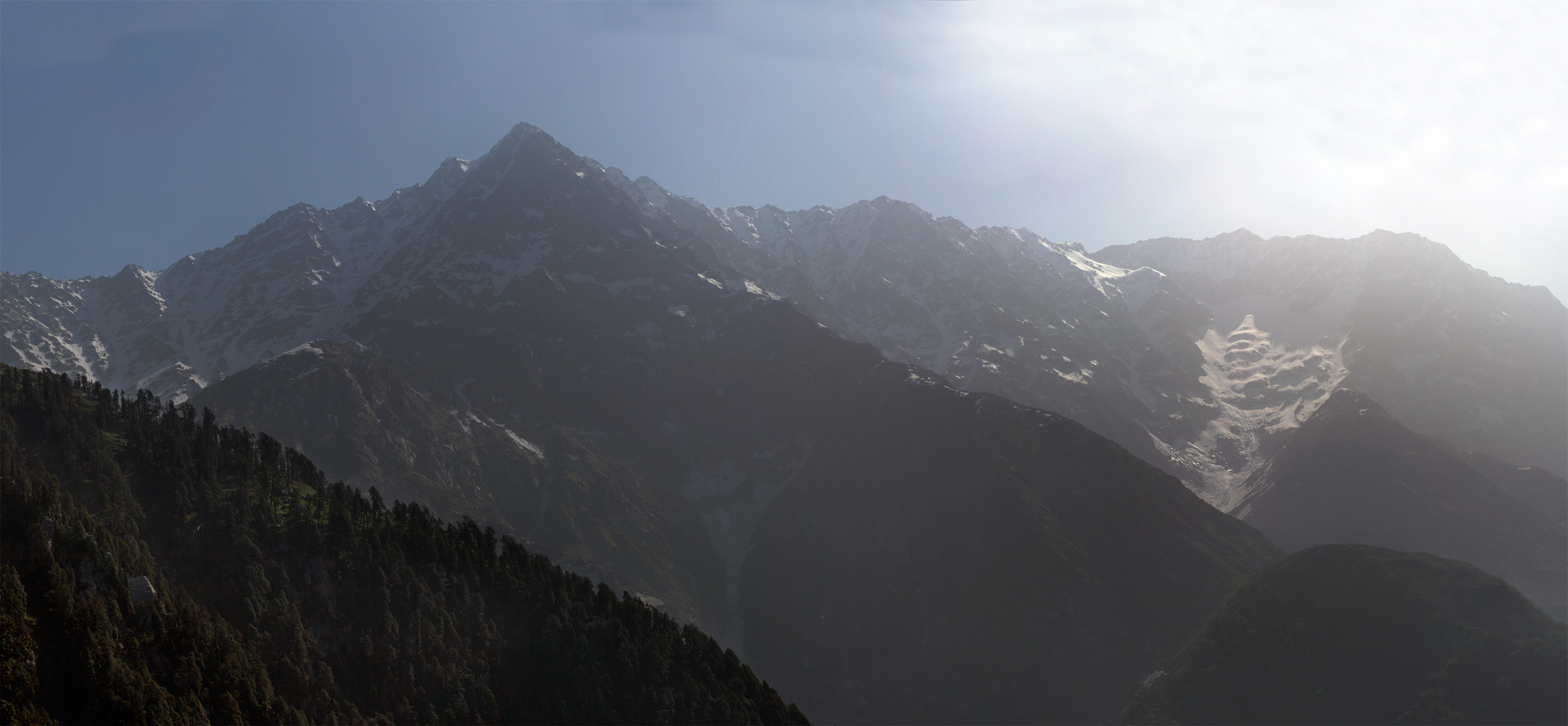
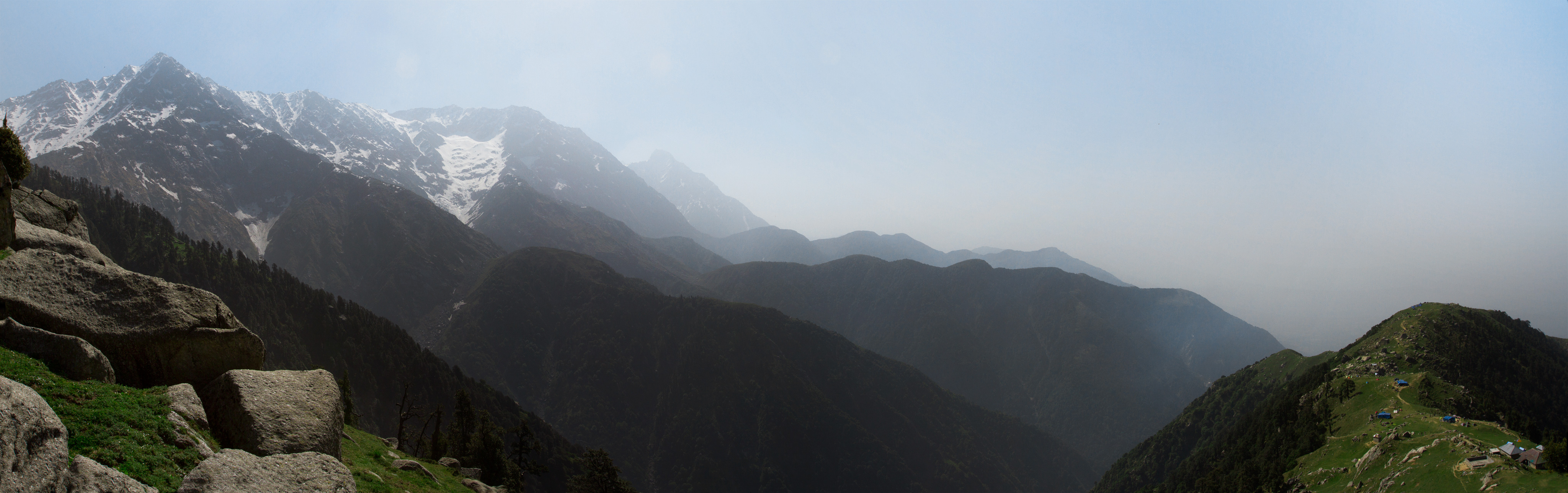
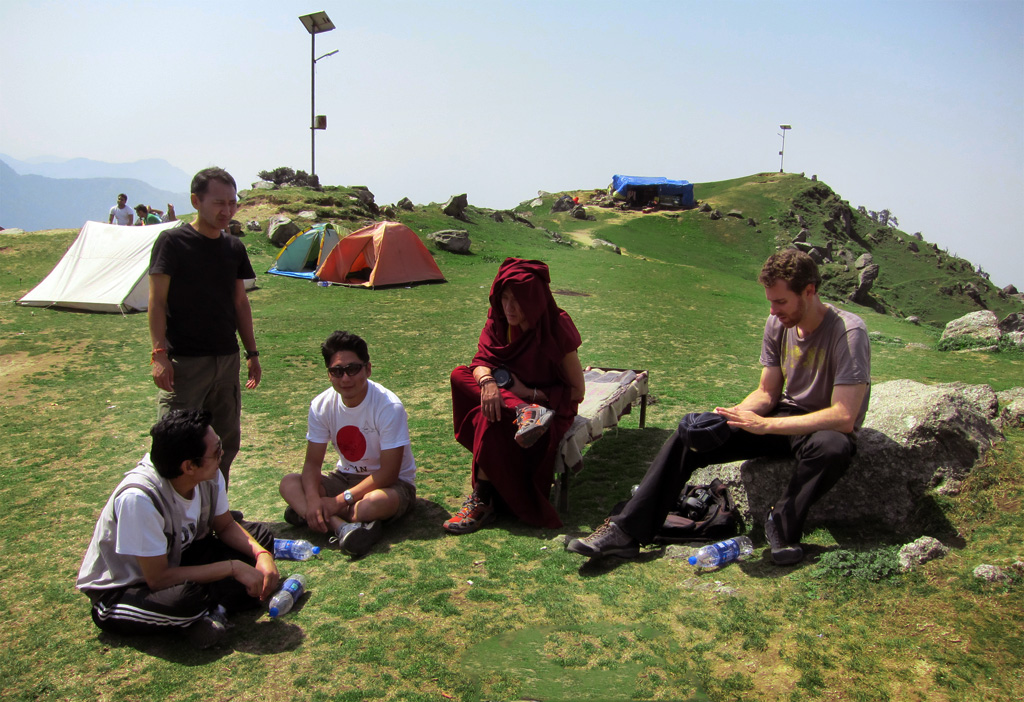
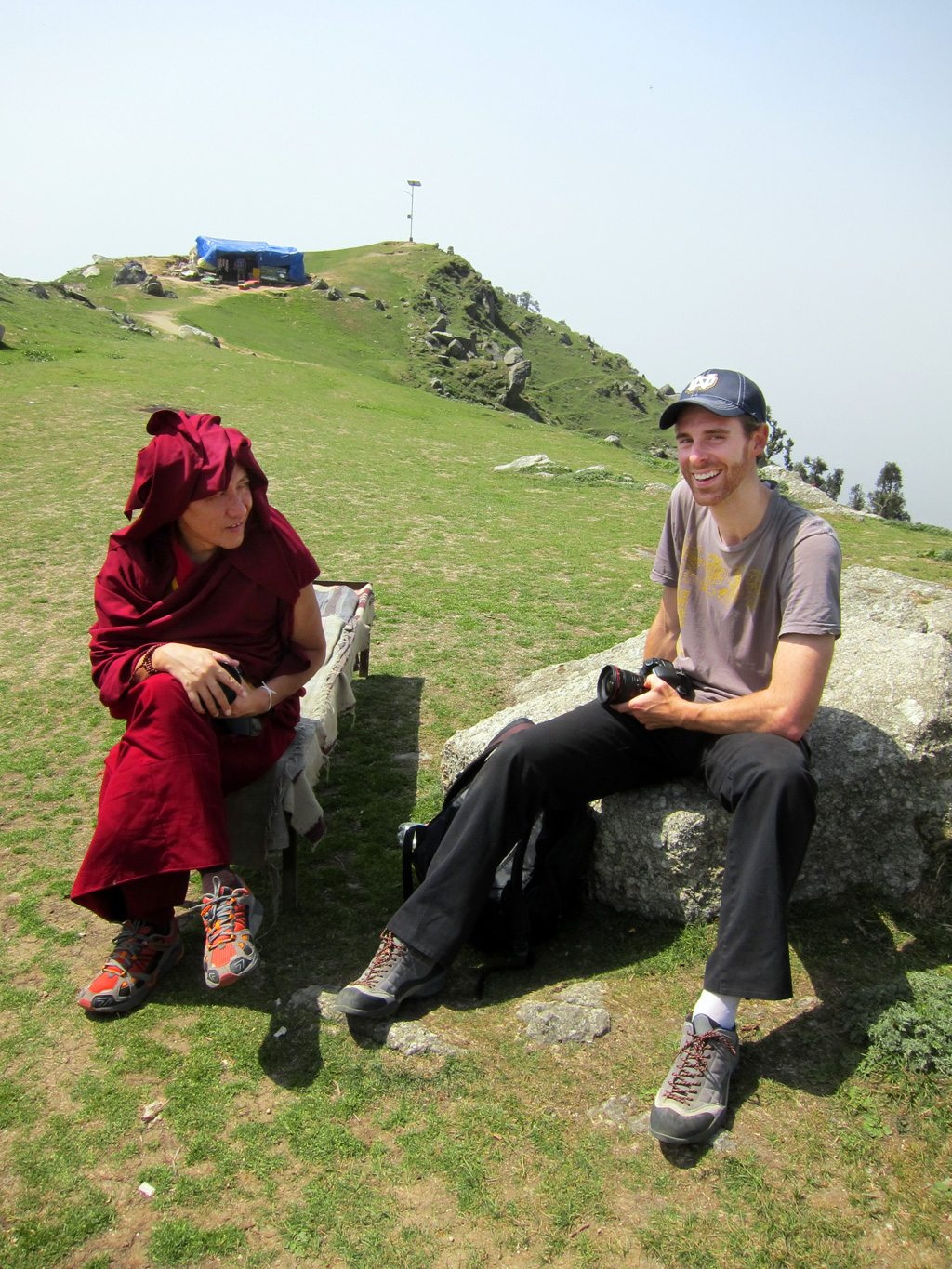
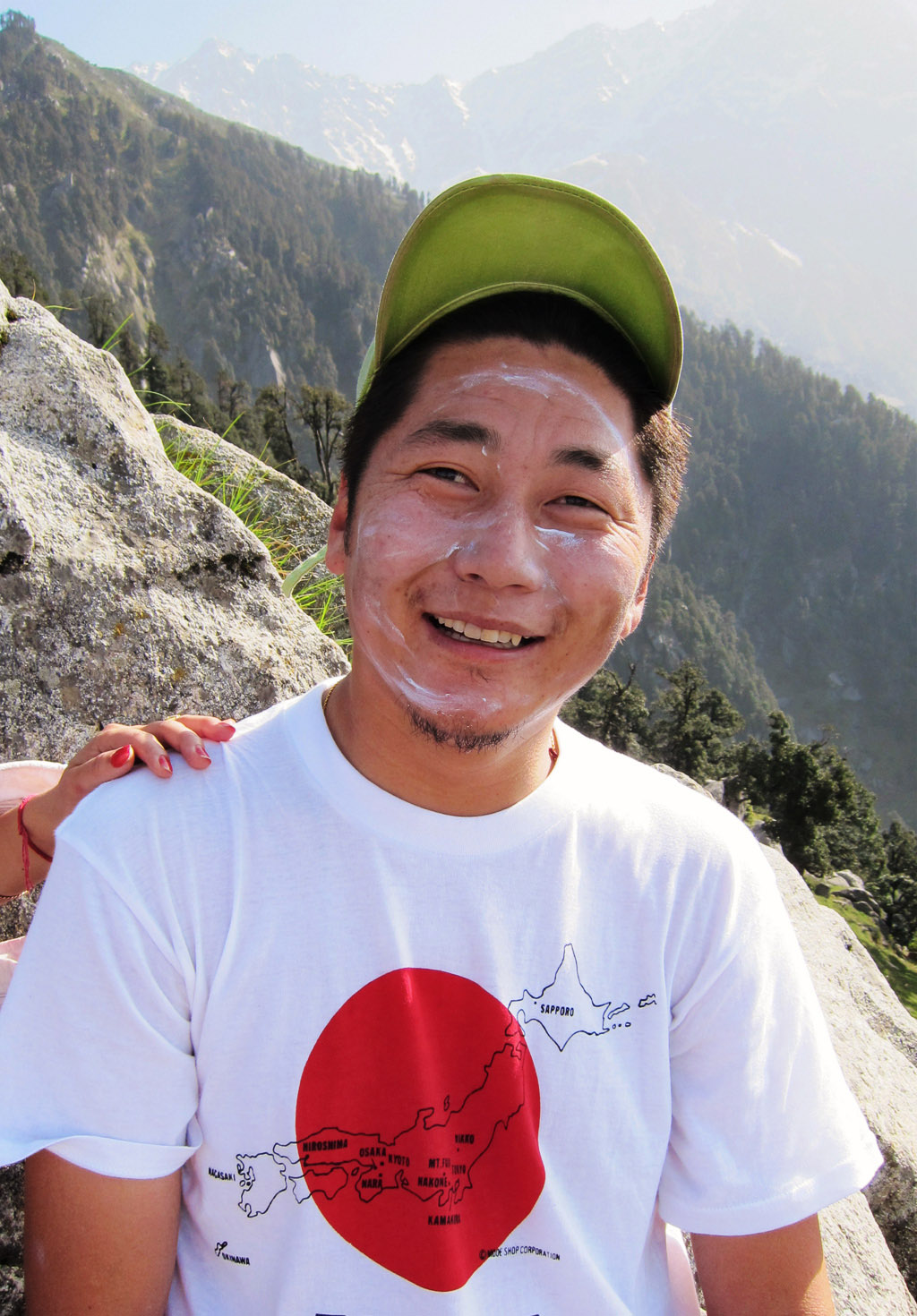
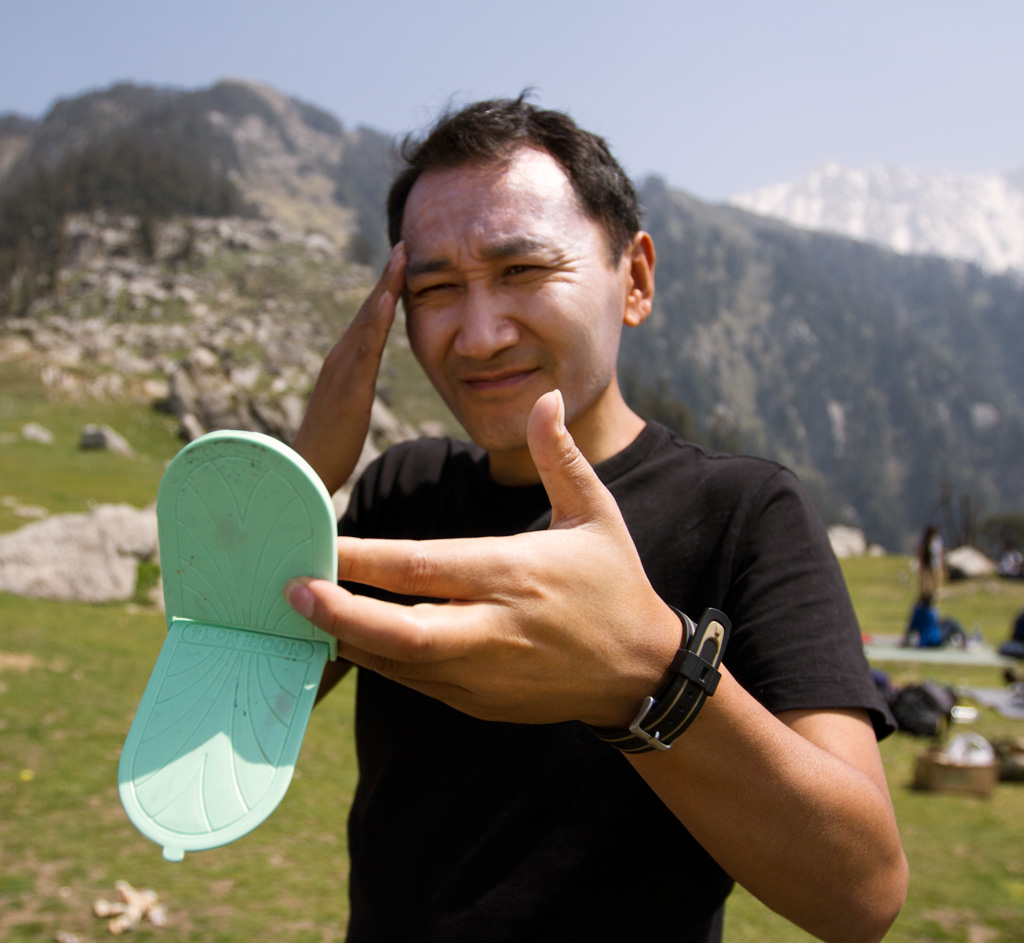
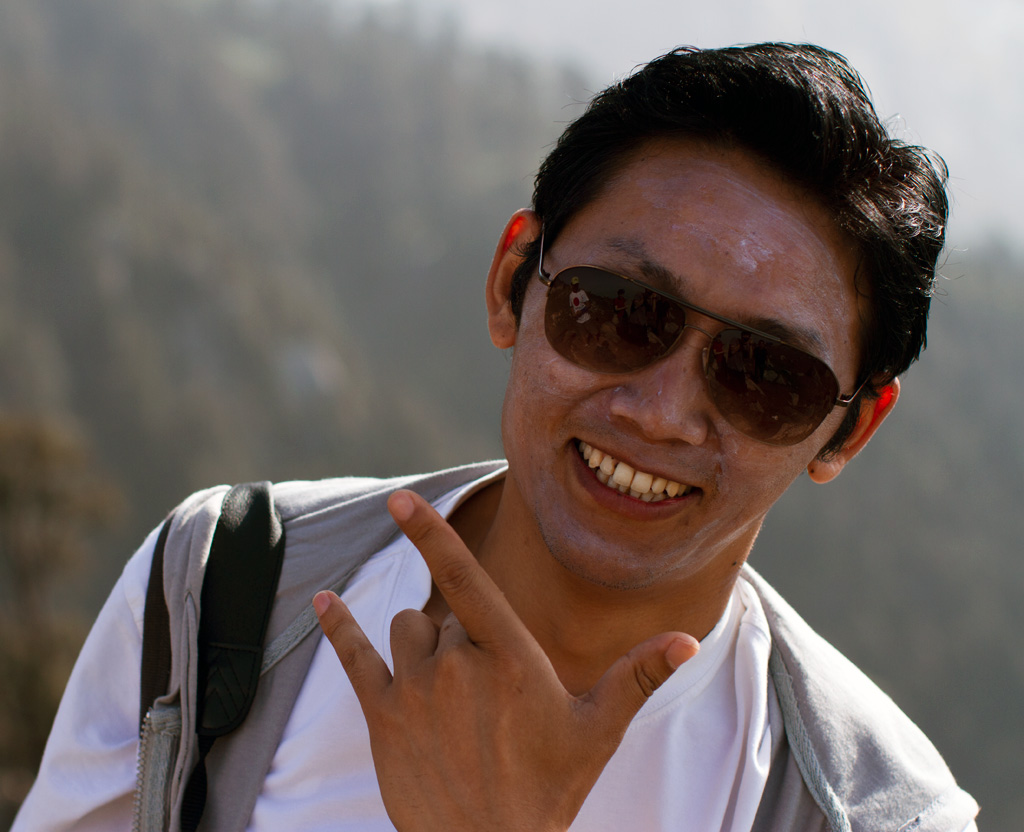
Bennett pulled out some sunscreen, warning us to use only a little bit. I thought, “whatever—it’s really sunny out here,” but there was indeed something special about this sunscreen: as much as you’d rub it into your skin, it would never fully absorb. I can vouch for its effectiveness, since my face was the only part of me that didn’t get burned on the trip, but it made us look like a bunch of unemployed mimes (except Lhakpa and Lobsang, who didn’t partake).
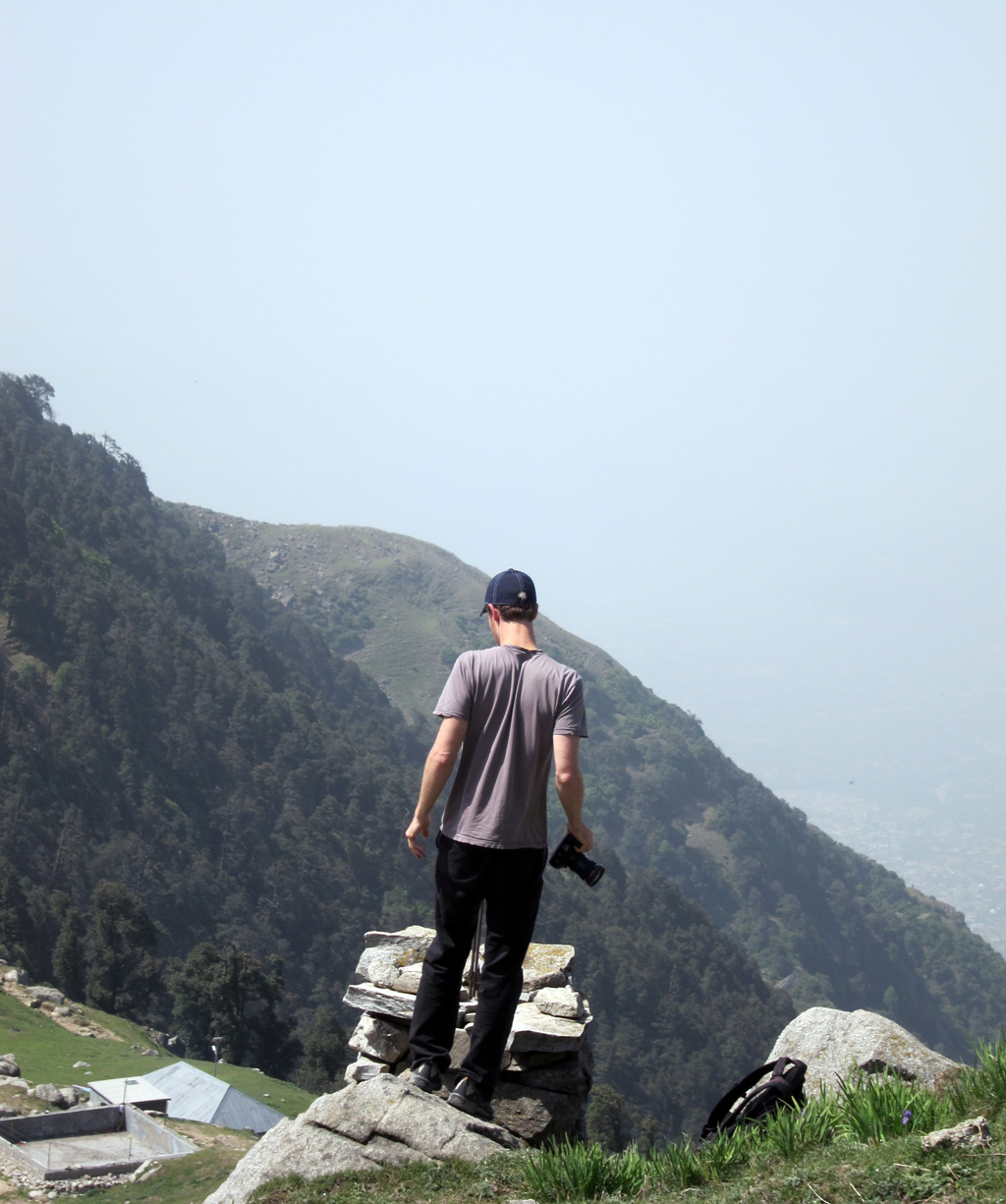
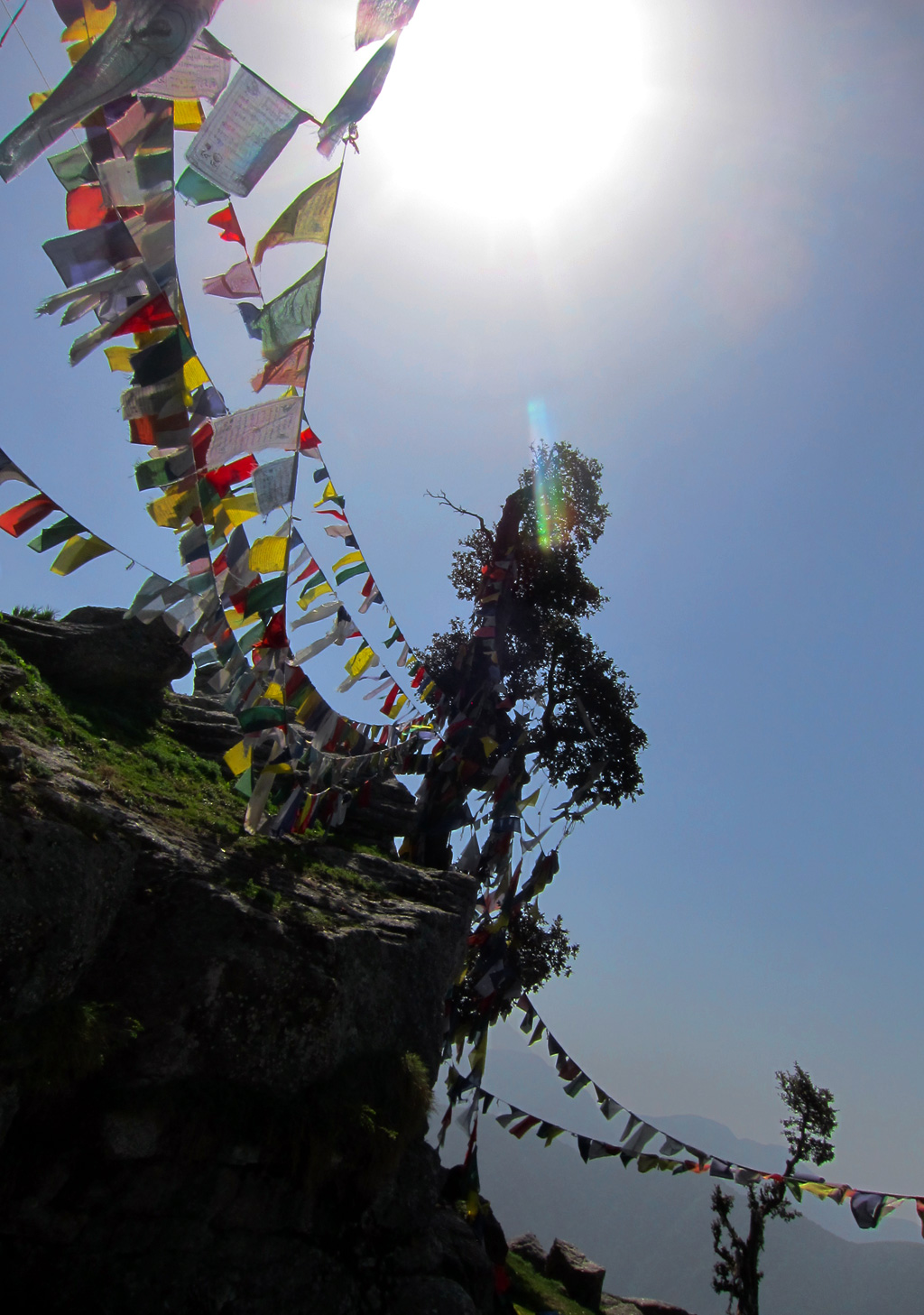
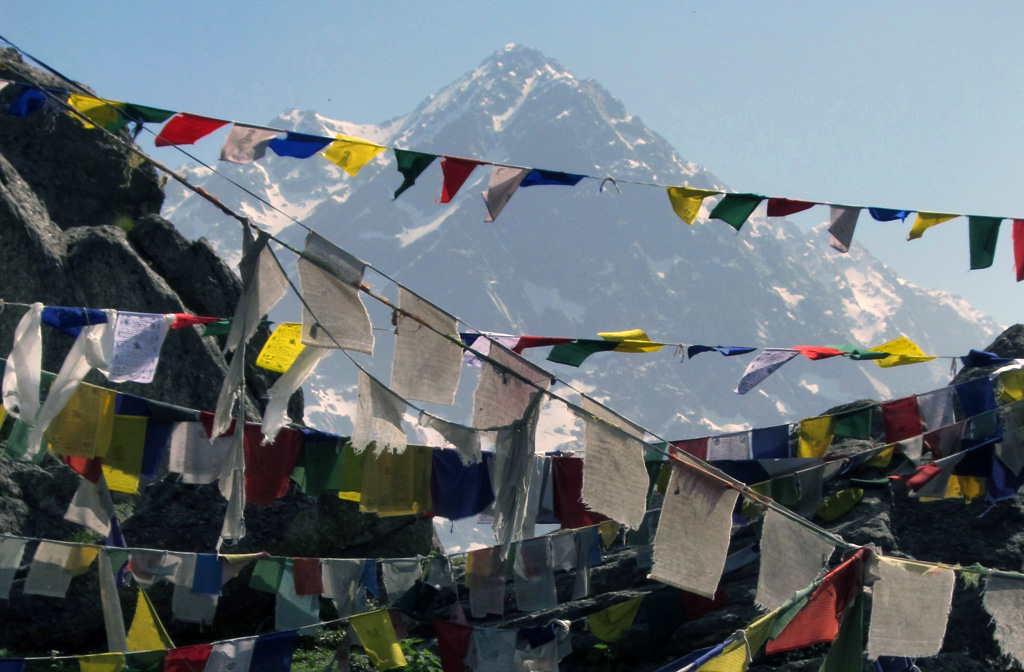
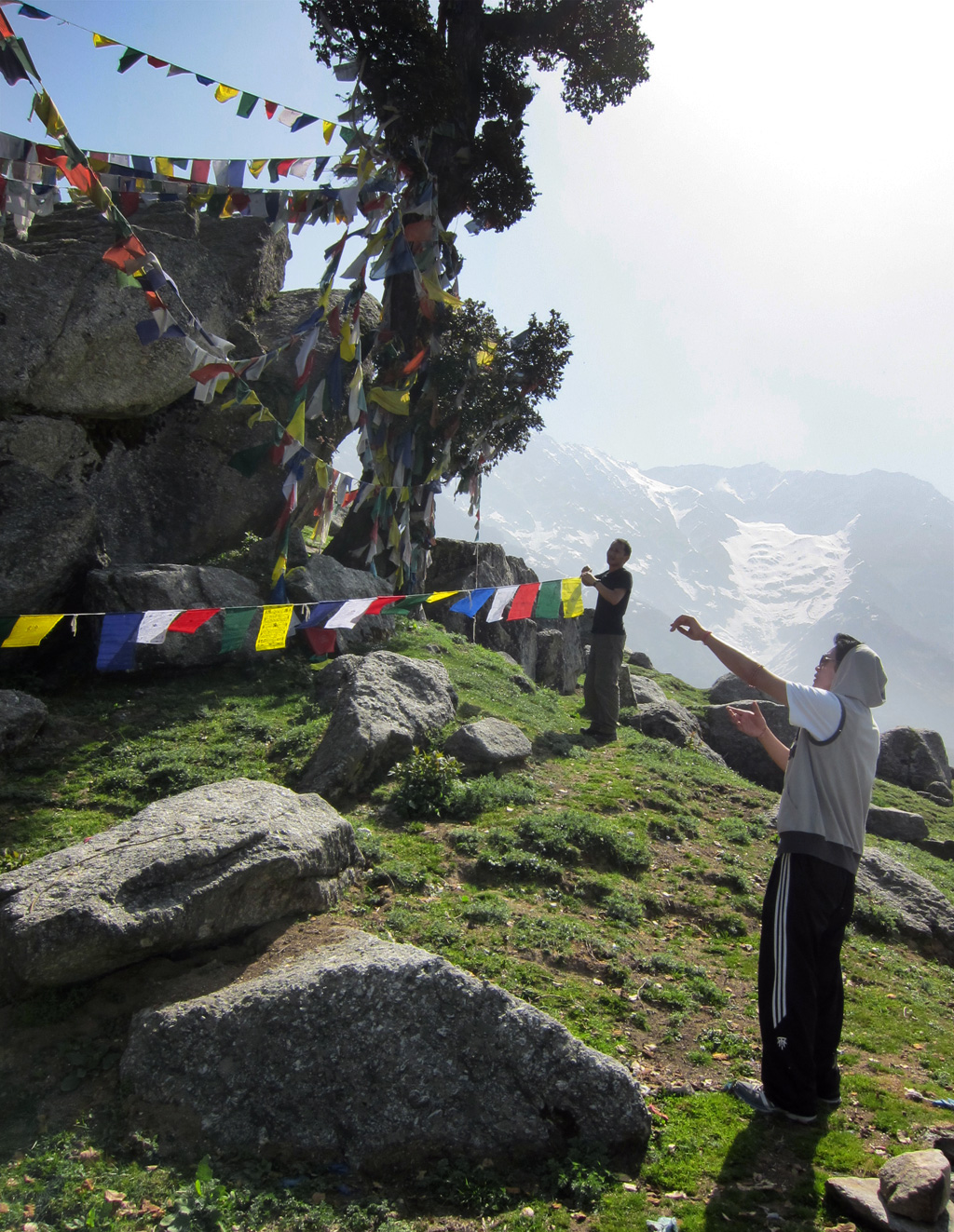
Passang and Lhakpa brought prayer flags to hang on the highest point of the mountain.
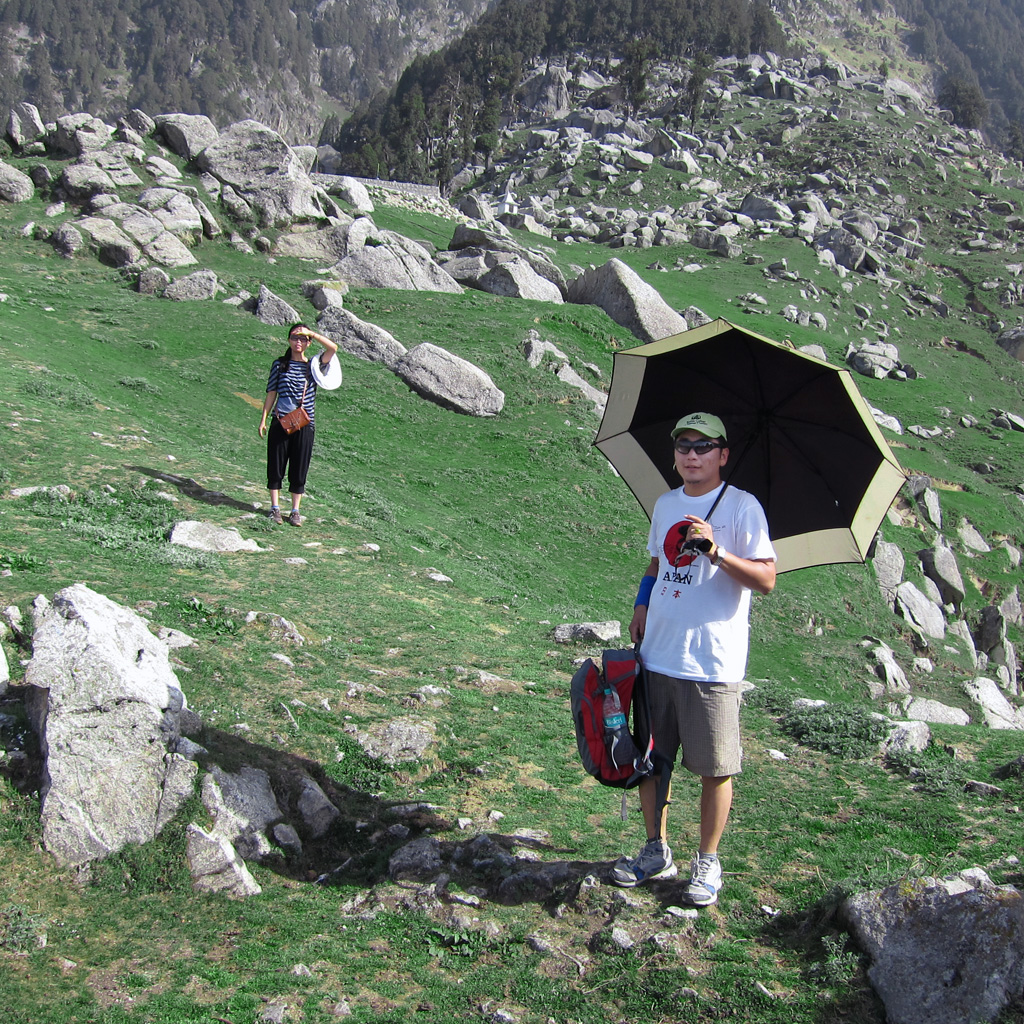
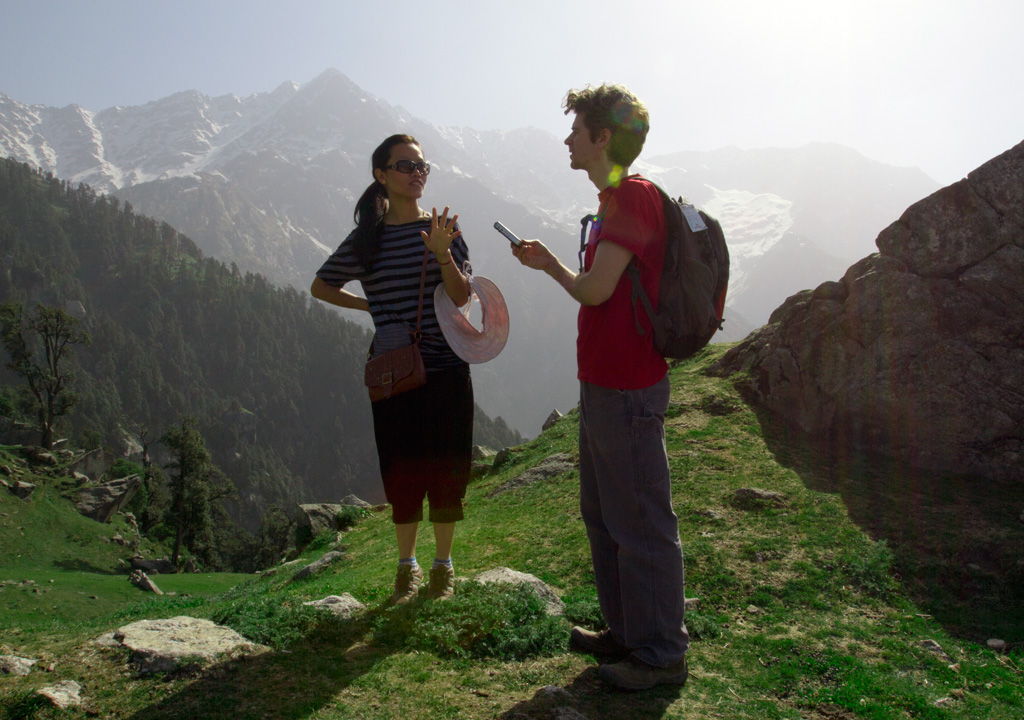
Yesterday we buy these prayer flags for offering for our luck. It’s very high mountains so it’s very advanced, you know? The higher when we offering the flags is very good, [the Tibetans feel].
They’re just writing their name on [a] scarf…
On the flag!
On the scarf!
Yeah, on the scarf!
On the scarf… after when we [fly the] flag there’s the scarf will be[come] nothing and [at] that time [the] wind [is] blowing and their lucky is also [traveling].
[Phuntsok] I put your name on [one].
Thank you!
Red, blue, yellow, something like that… and there’s different [kinds]: some is for luck, some is for reduce obstacle, and [the] words are different—meanings, you know? Offering for luck, only, we have a different words. If you are reduce our obstacle, then other, different words are [on the flags].
And the [symbol] is also [on the flag]. For luck, there’s one horse, you know, riding like this—lung-ta. This is—I call luck. The sign is like a horse, but lung means wind. And lung [plus] ta: “wind” and “horse” [respectively], and that’s why… just like a “wind horse” but there’s no meaning [in “wind horse”]. It just like luck.
Yeah, my name is also like Lhakpa. Lhakpa means “wind.” Lhakpa [has] two meanings: [it also means] Wednesday. L… H… A… lha [by itself] means “god.” And Lhakpa means Wednesday. And also “wind.” [laughs]
Dolma is, you know, Tara, the goddess [laughs]. Mostly our Tibetan parents put our name, like when I born on that day was a Wednesday so they call me Lhakpa Dolma. Some parents are [in a] village area [and] there’s no Rinpoche so they put [a weekday name]. If I born in Monday then they will [call] me Dawa Dolma. Dawa is Monday. Our parents—mostly [the name of our cousins and relatives are all named] same: like Dawa Dolma, Lhakpa Dolma, Pemba Dolma—it’s just like, mostly [days of the week].
If you are in the Dharamsala area, then Dalai Lama is easy to ask [for] our name. They give us mostly the name [begins with] Tenzin. Tenzin Gyatso is the Dalai Lama, so he gave name mostly starting from Tenzin. Some other Rinpoche, they [give a different first name]. There’s lots of Rinpoches. Some [Tibetans] like to get name from Dalai Lama, some like to get [a name from] other Rinpoche.
Mostly, [Americans] put their name, you know, for parents, they like [whatever name], but in our Tibetan [culture], they not put, they just get a name from Rinpoche. It’s very good [for the children’s future and luck], and also: sometimes, [when a mother is pregnant], they also get a name. After child born, just like if the child is female or male, they don’t know [in advance]. If [a boy is born and gets a female name], then they again change the name.
But [the Rinpoches have lots of names] and it’s easy to get—two or three days, they get. Because they have, already, you know, booklet, like, name—lots of names are there. And you know, when we are pregnant, then on that time if you get the name, our child will be, you know, long life. Otherwise, we think that it’s good to take a name [before a child is born]. Not like an Indian. [When an Indian has the name Sharma, all with that name are related.] No, no in our Tibetan [culture], it’s very difficult to find out which family you belong to.
They have a family name also, in Tibetan. Family name, you know? Our parents, our grandfathers, mothers… they have a family name. It means a total one name in a group, we have. In my family, my family name is Yonge. In Tibetan they have a family name. If you have a house, they put a family name.
Before I was voting in [?], you know? It’s a [name from the Kamba area in Tibet]. Now when I’m married, now I have to vote [based on her husband, Passang’s lineage]. There’s three [regions in Tibet]: Kamba, U-Tsang [and Amdo]… different castes. In Tibetan [culture] we have lots of castes, you know? I don’t want to change my name, but it’s just only for [voting]. Because [for] prime minister we have to put voting. On that time I have to go [where my husband is going] to vote.
Passang! [Which region do you vote within?]
U-Tsang…
[The] central province…
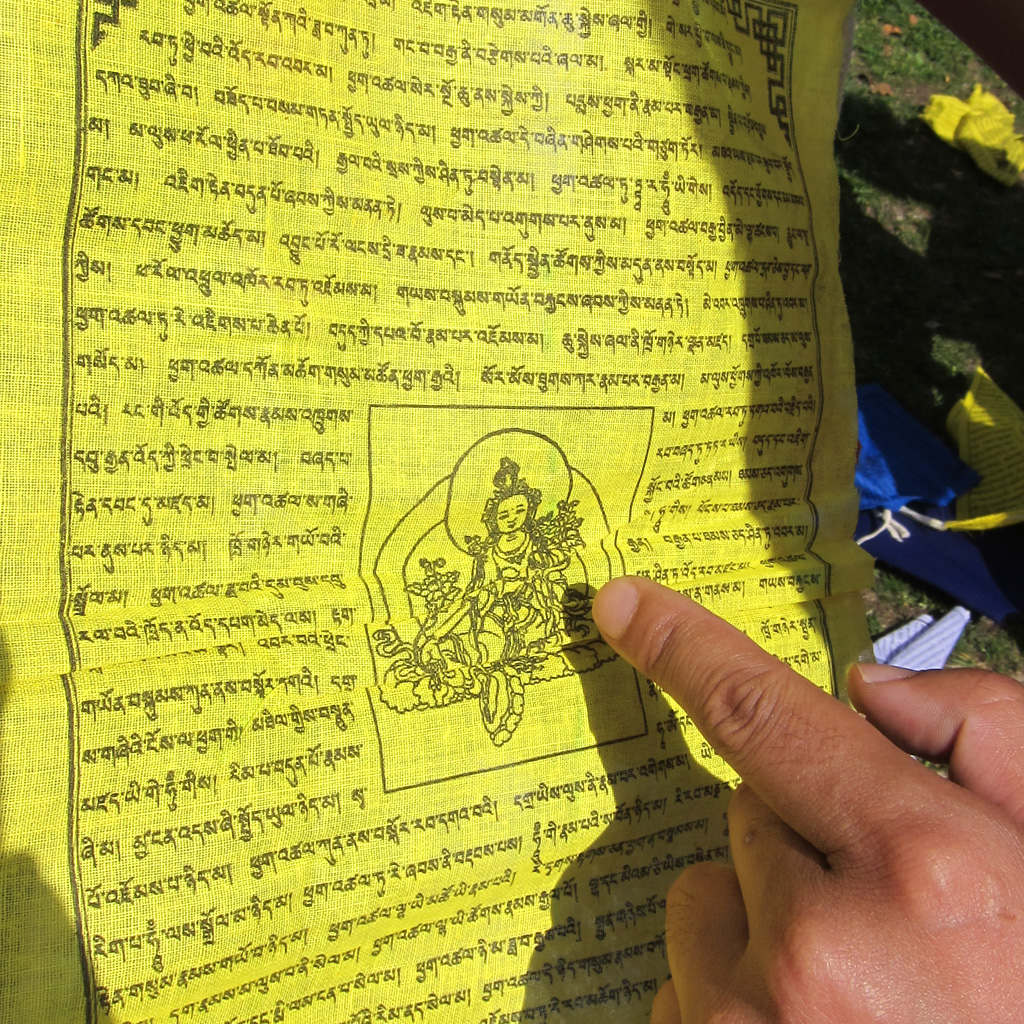
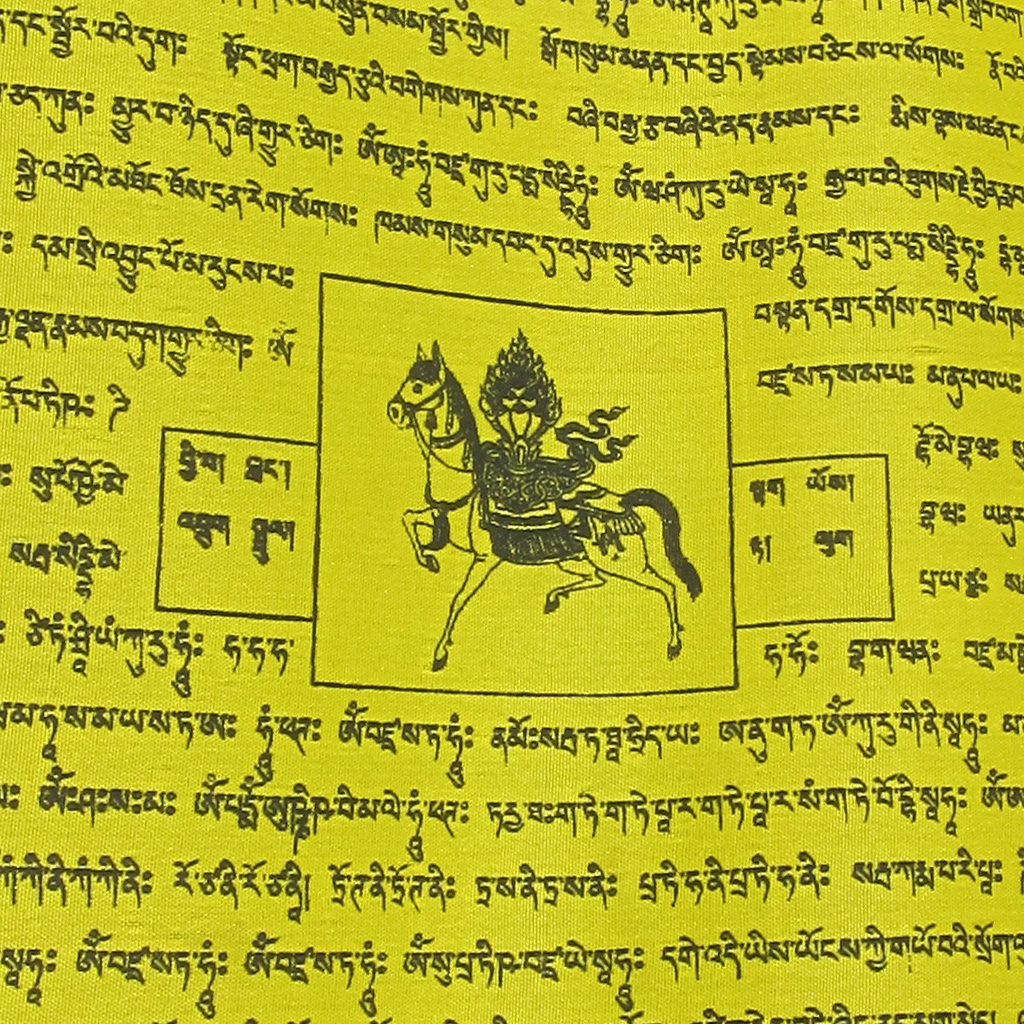
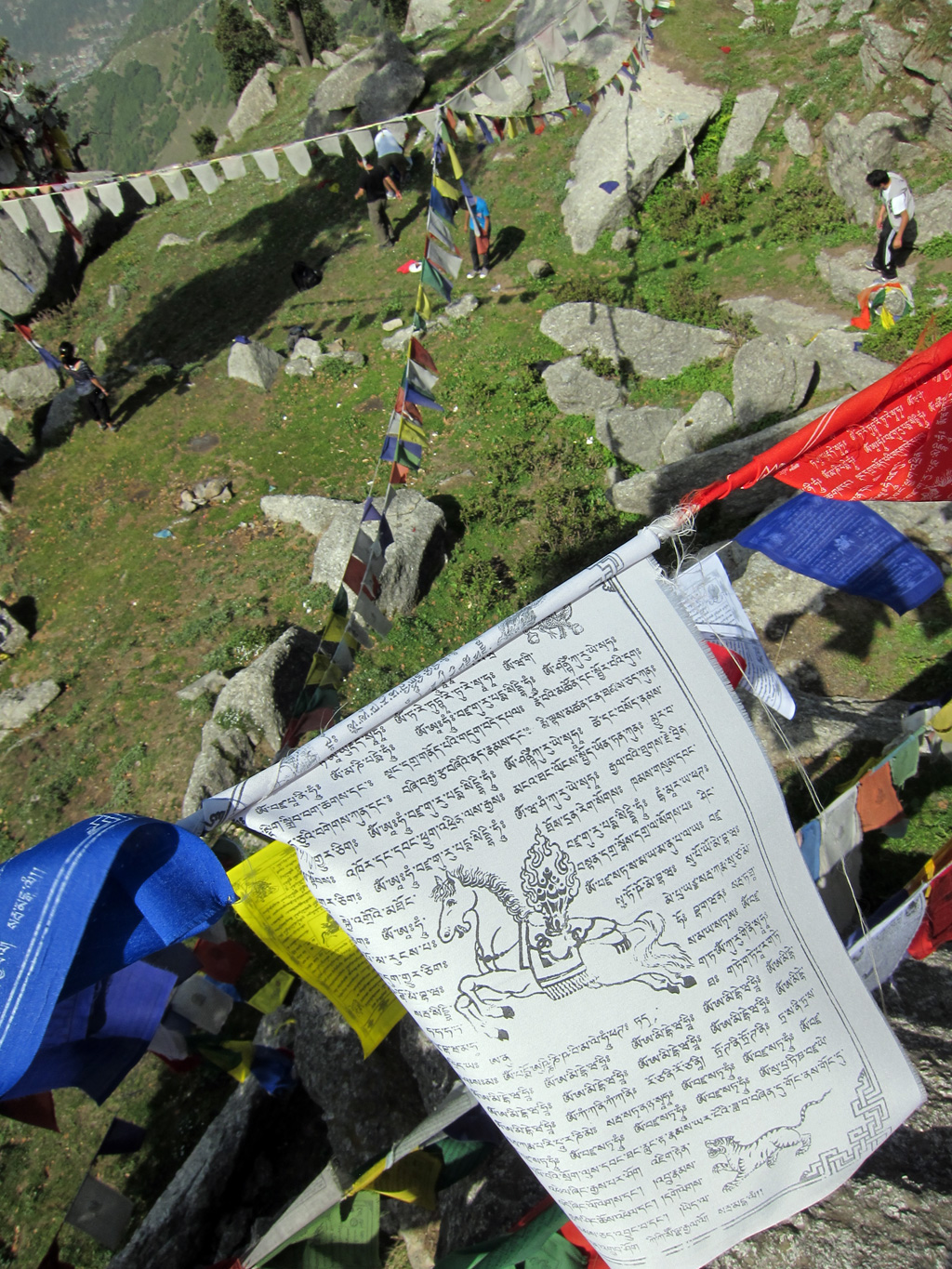
This is Green Tara. Green Tara is the most, [out of the twenty-one Taras, the most important one]. And this one is for lung-ta… you know that.
Okay, there’s five different color, right? Five different color. Yellow one is earth; then green one is… water; red one is… fire; white one is air; and this one is… sky—blue one is sky.
[These flags are] lung-ta [flags]. Lung-ta means it’s good for your luck.
You can’t do this every time—I mean, you have to look through your [astrological] calendar, you know?—in Tibetan, calendar. Sometimes it’s bad day to having flags on a tree. [If you hang the flags] on a bad day, then all year you’ll [have] bad luck. People used to say like that.
Okay then! Now we are putting the flag on tree, so hope our obstacle of this year will be gone.
…
[laughing] I think we need the help of Bennett!
Is it tight?
You did it!
Yeah, I did it! Woo!
[Passang] Wow, we did it!
[Chemey] So we finished with hoisting prayer flags… for Passang’s [good fortune/wedding].
[Passang] Not Passang… to all sentient beings.