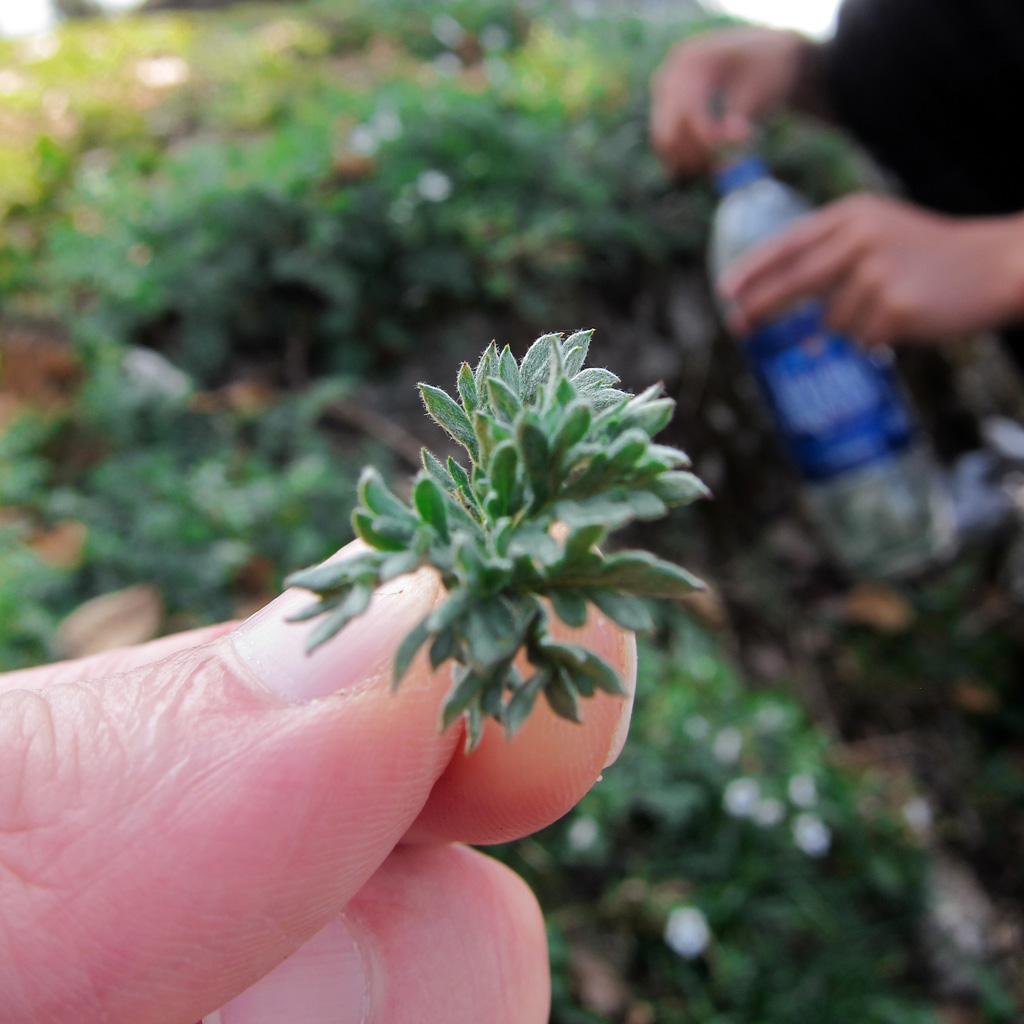
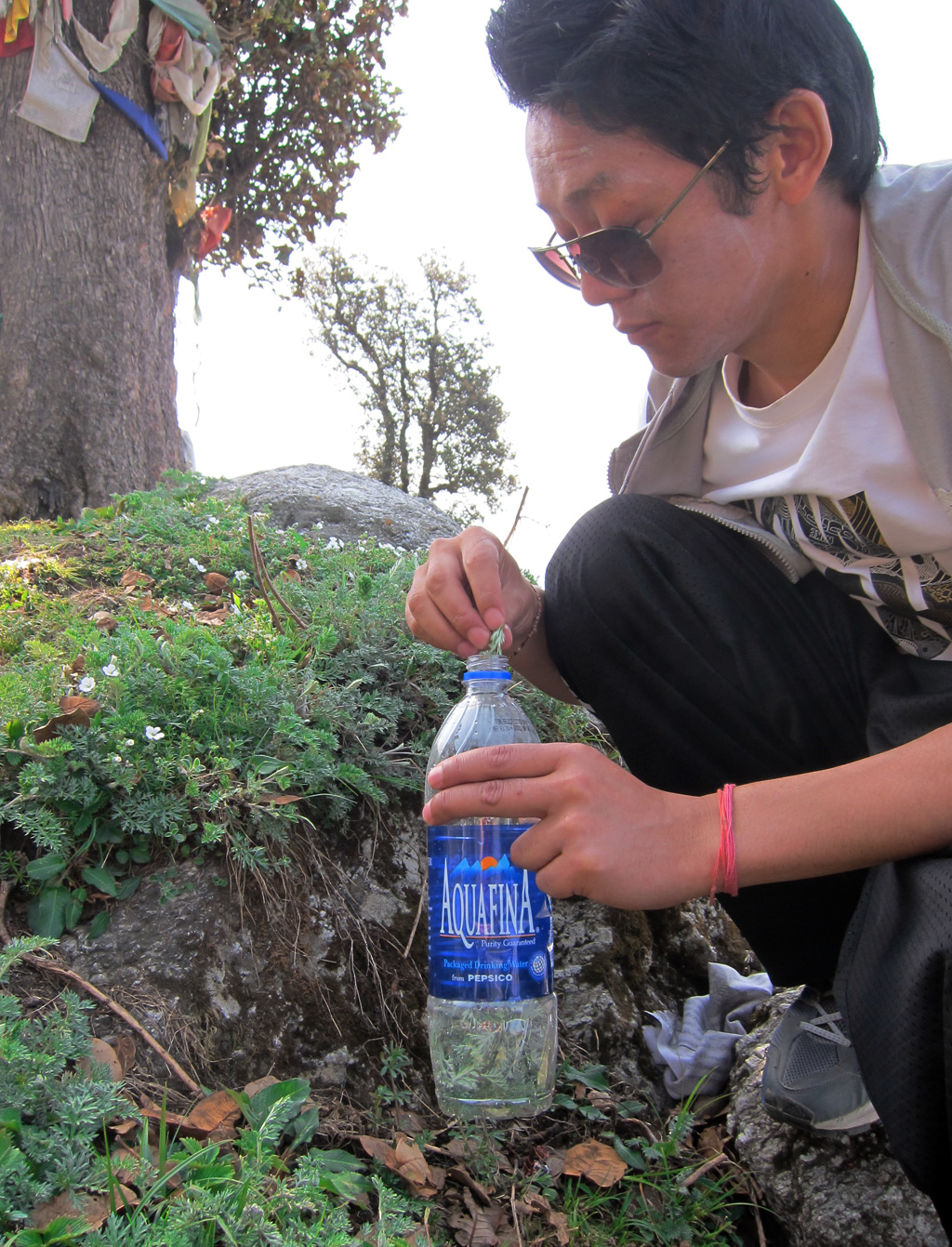
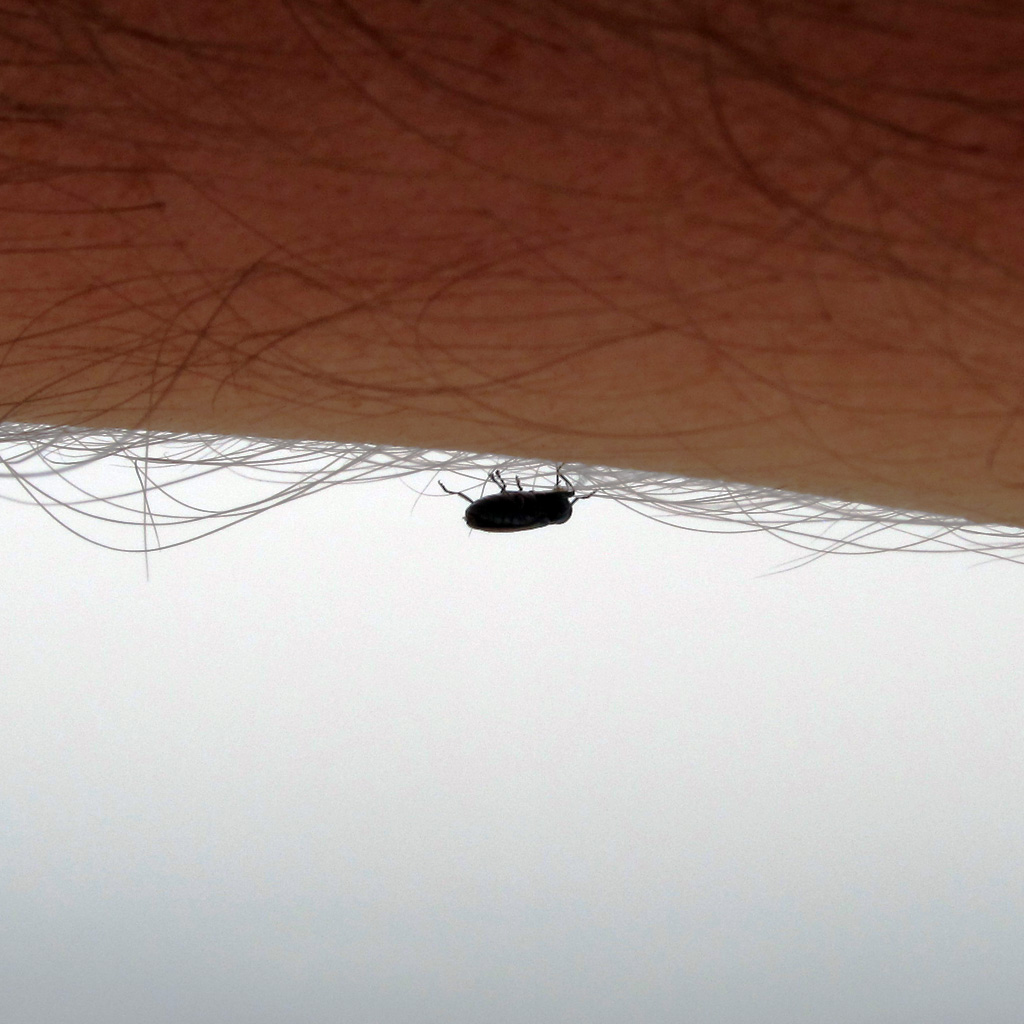
After hanging the flags skyward, we looked down and followed our own separate details. Phuntsok started gathering a plant he uses for cooking while I explored the ladybug situation on Triund.
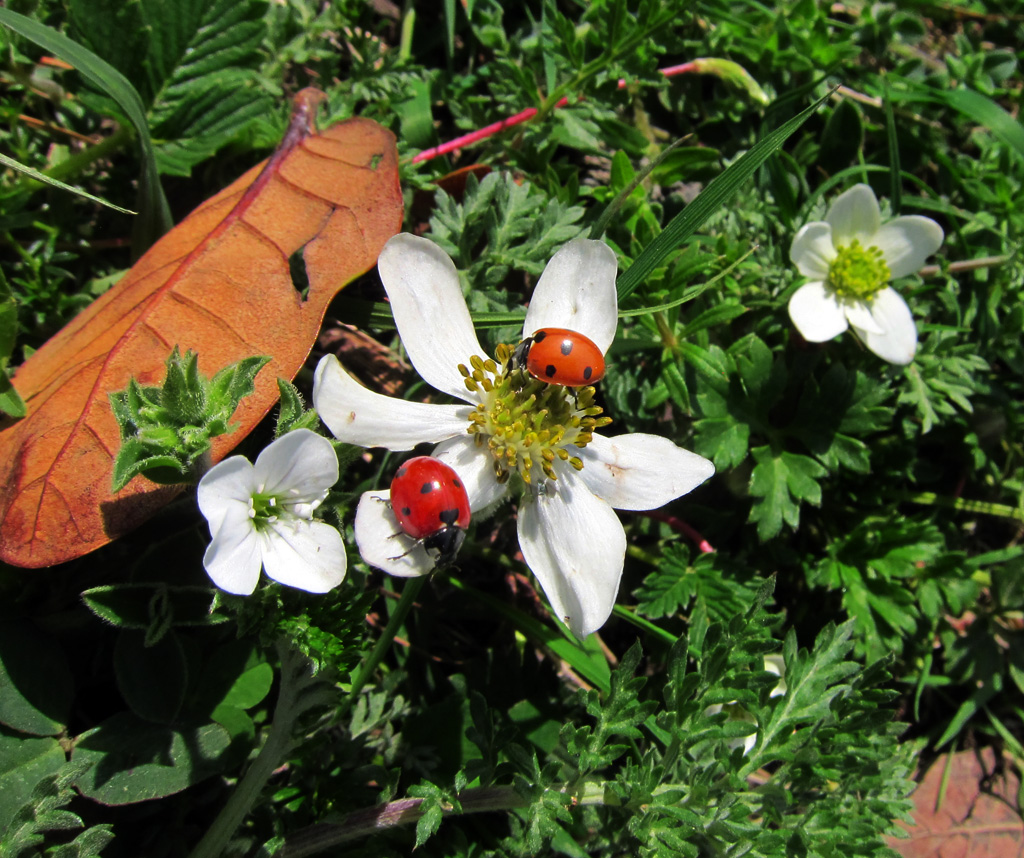
Amla, pala: “father, mother.”
We have a song for this insect. Just we put on our hand and just sing a song like this: “Parents, parents, please give us oil, and then you fly!”
And he fly. These ladybirds have oil, yeah? You try on your hand and then you see, when he fly… sign of little bit oil.

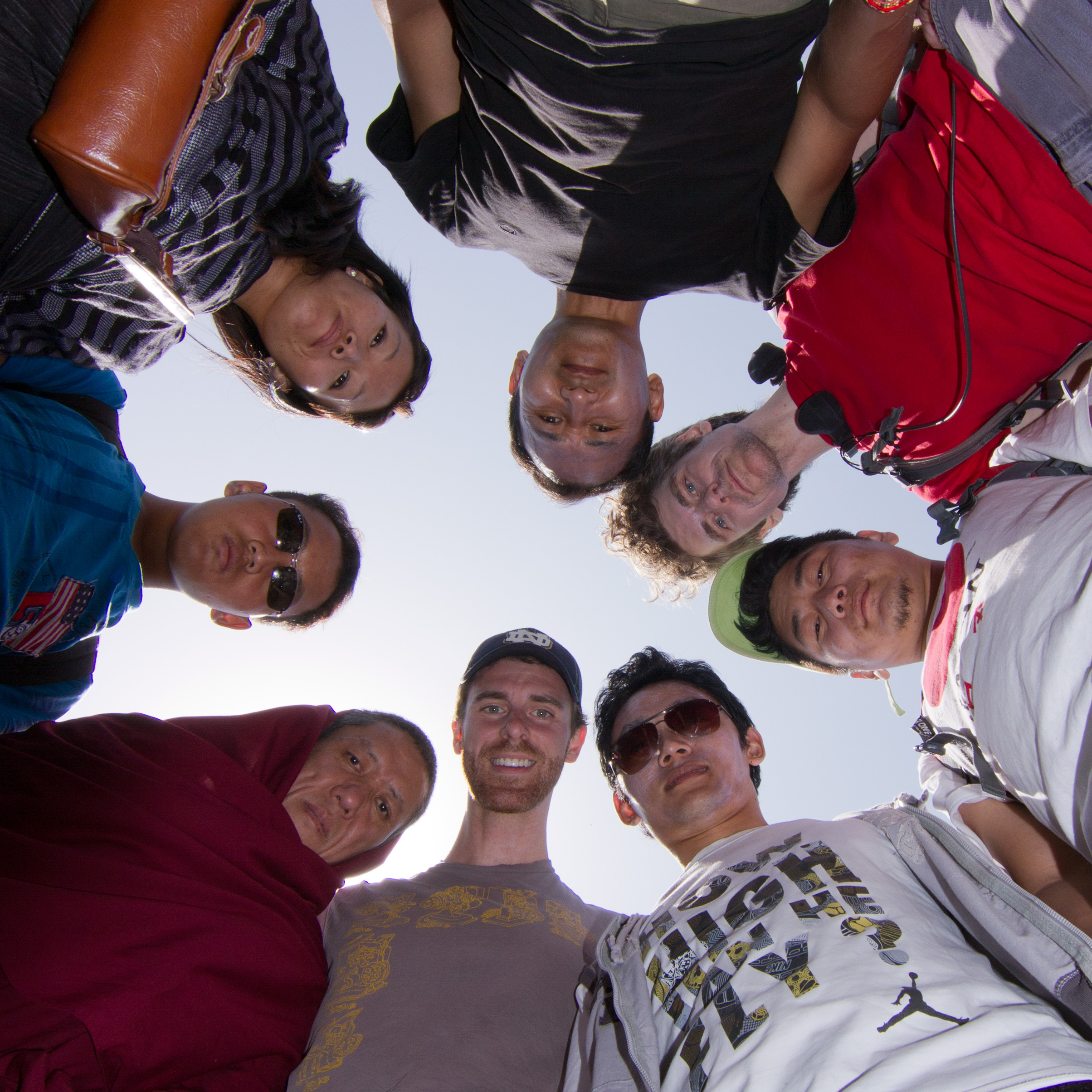
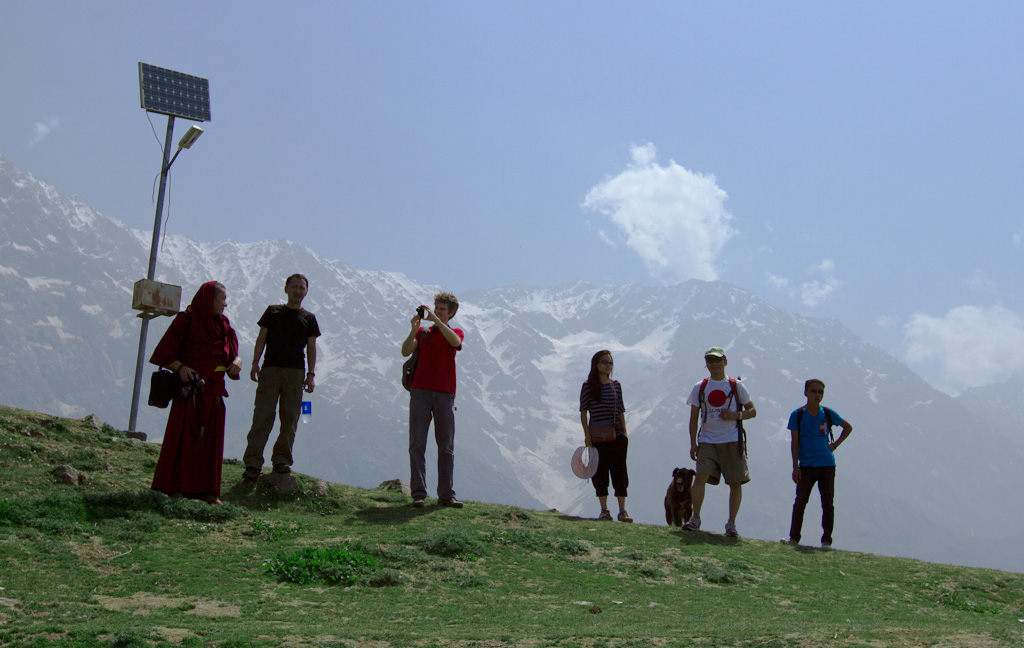
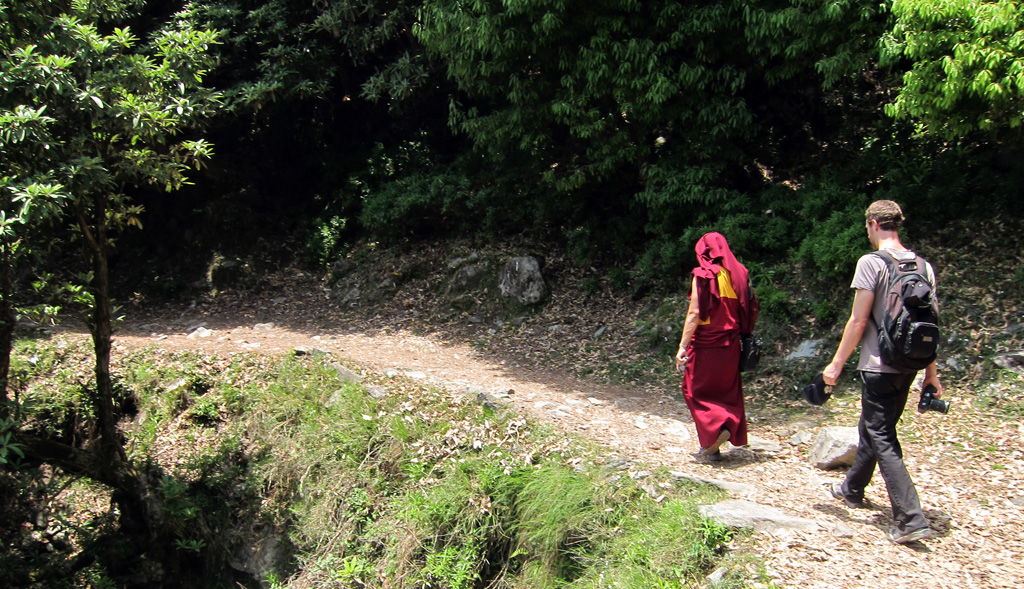
Knees and potential twisted ankles aside, going down was much easier than up. Watching hikers who had started at noon, we were grateful for our early start.
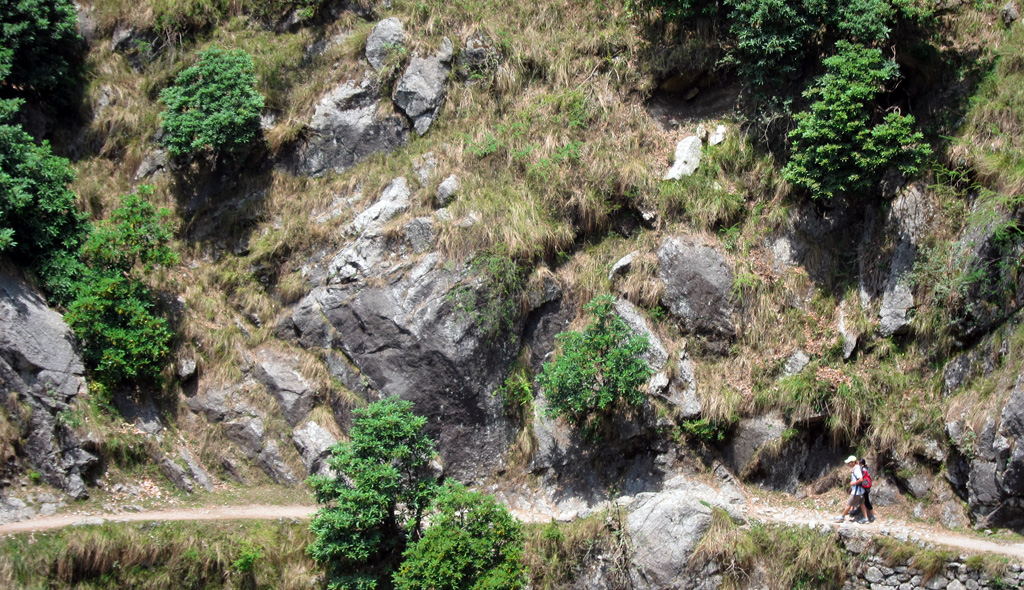
We stopped again at “Magic View” to take a break. Business had picked up significantly since breakfast.
When His Holiness [was in the United States], you know, last visit… and they have one television guy [who] interviewed to him about America, about Tibet—I saw in His Holiness’s YouTube [channel]. One question he asked: [is monk’s life hard or not? His Holiness said “no.” [laughs] I listened carefully what he’s saying. Only you think physical, you know? [But] if you see all old picture, then [you see that] monk’s life easier than the lay [person’s] because lay people—[their] mental state, you know, go up and down very often. According to this, monk’s [mental state is stable], you know? So, for the long term, there’s more benefit [to being a monk].
He’s thinking and our thinking—the mental state, you know?—completely different. He has already achieved [the highest levels of Buddhist practice]. What I thinking is: wherever he go, what he see, he never think this reality [exists as it appears], you know? Hard to say in English. For example, like this [holds up phone], we call “mobile?” Mobile, this? If someone asks you “Where’s mobile?” [then] this battery is not [the] mobile. And inside they have [computer] chips and many parts, you know? This—if you make partition—[there] is no mobile. We can’t find any mobile. But all these [parts] altogether we call “mobile,” yeah? But when you’re going to find [the] mobile you couldn’t find mobile. It does not mean it does not exist, otherwise it couldn’t work. So, it means… emptiness.
One thing [our Tibetan culture does best] is when we have something bad happen to you, you know, we think this is karma. This really reduce your pain. When we lost our country, everybody say this las [pronounced lay]. Las means: before many years, they made already this cause; now this result comes on our time. So [this] we call las [karma].
When Lobsang, Bennett, and I made it to the bottom, everyone else was sitting under a shop awning with drinks in hand, dozing off.
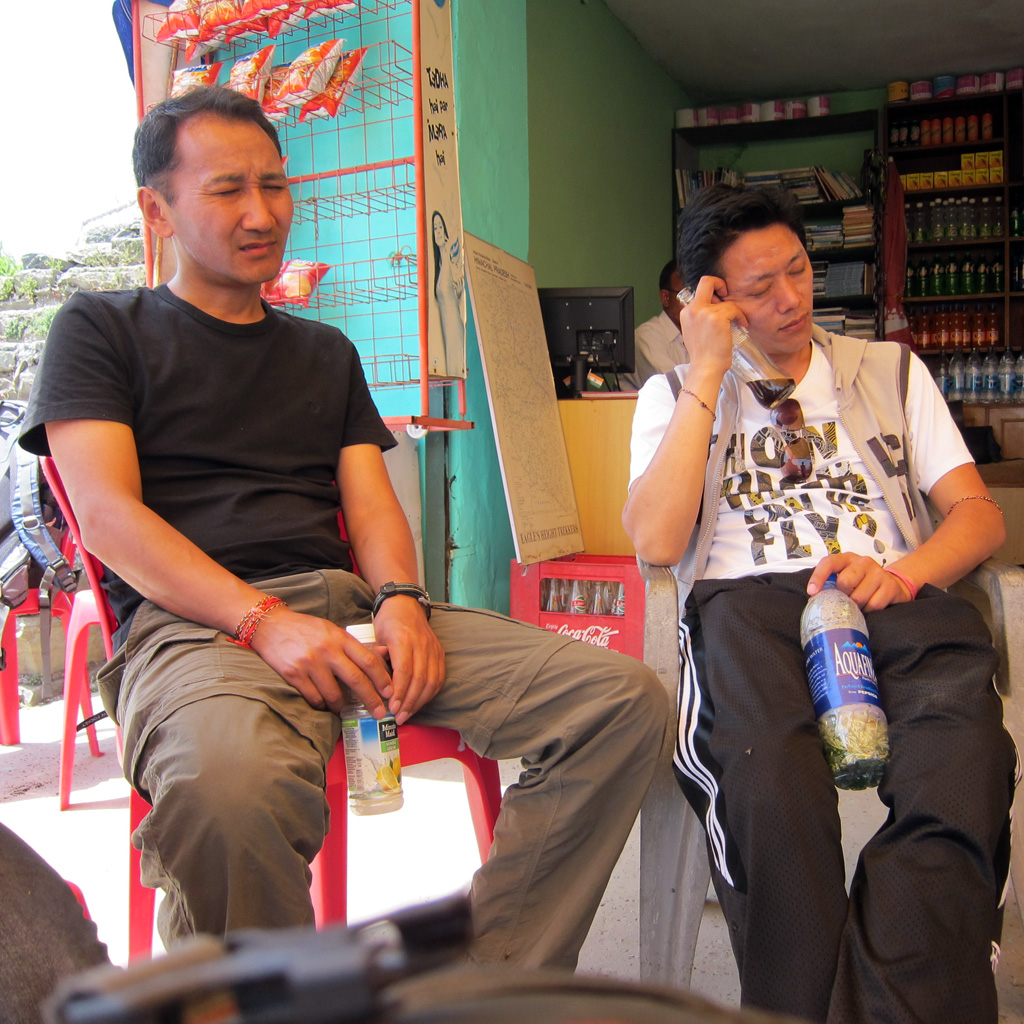
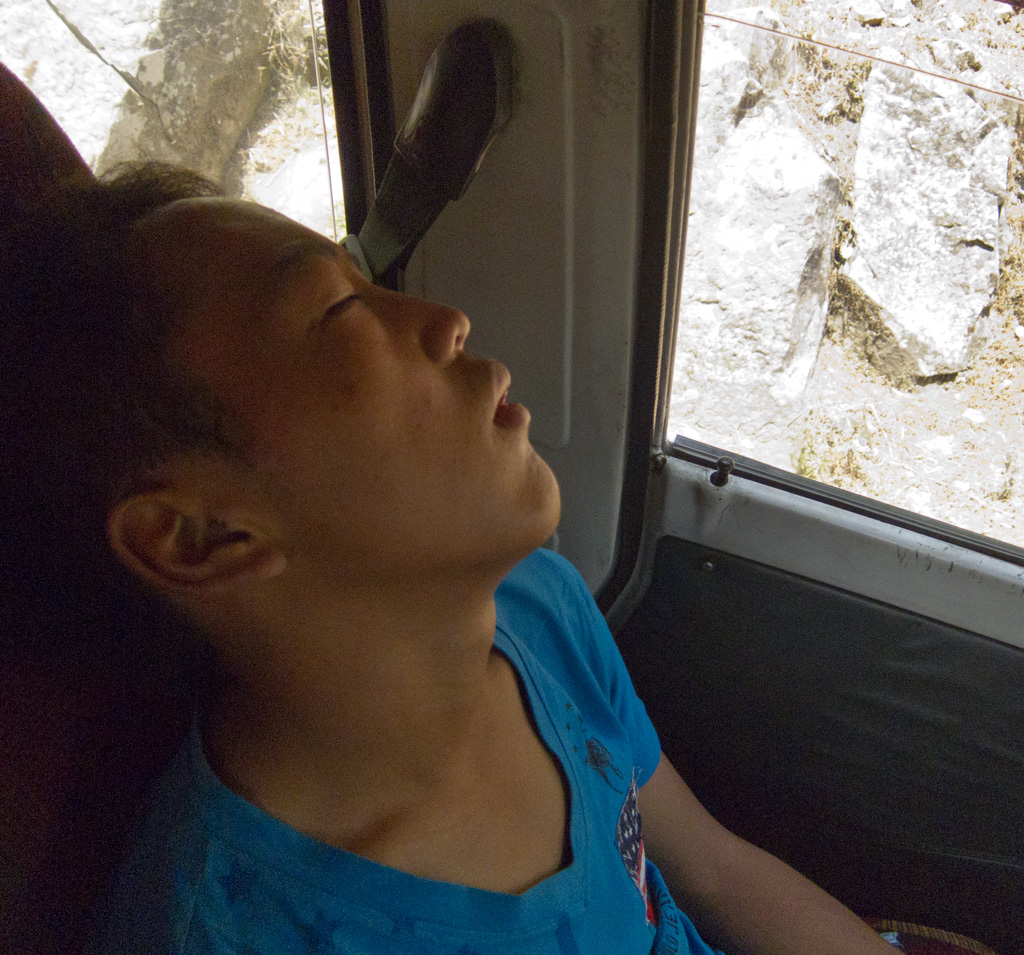
To describe the cab ride as shaky is a severe understatement, yet somehow Passang’s friend slept through the entire trip to McLeod.