A cross rhythm consists of a main beat scheme (a purpose in life) and a secondary beat scheme (a perceived obstacle). Each beat scheme has a significance and function in making up the distinct cross rhythmic texture.
In the following rhythm, you will hear two bars of three (red), followed by two bars of four (blue), and then both played simultaneously (red and blue).
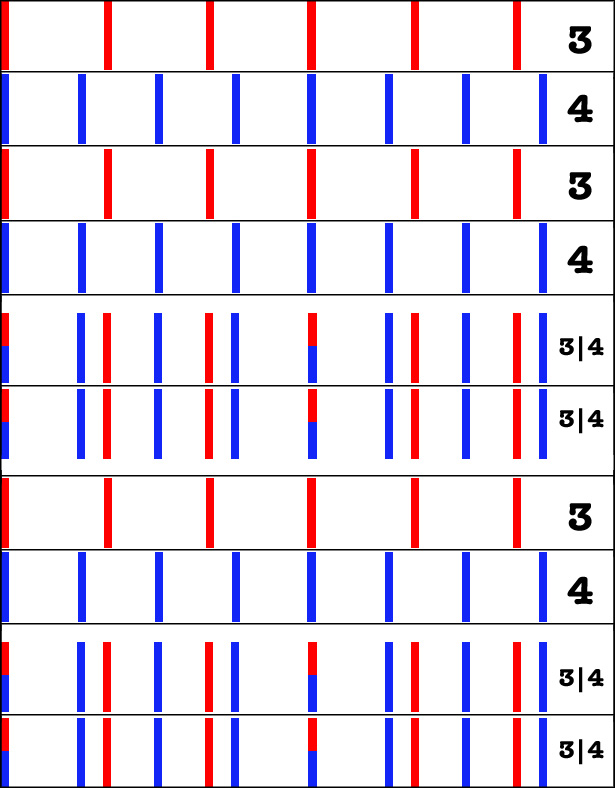
Try tapping the bars of three with one hand and the bars of four with the other, so each hand plays a different rhythm at the same tempo. This is a polyrhythm: four against three. If your brain is overwhelmed trying to coordinate the separate rhythms, try listening to the rhythm as a single melody—hear beats relative to one another instead of in isolation. Similarly, when we learn to speak, we talk in phonetic groupings as opposed to sounding out each individual phoneme, but it happens so organically we aren’t aware of it (until we try learning another language, at which point we start over and mechanically sound out each fragment).
In the cultural understanding, the technique of polyrhythm simply asserts the highly unpredictable occurrences of obstacles in human life. They occur without a warning. It reinforces the need for the development of a strong and productive purpose built on a foundation of adequate preparation for life.
Rhythmic Principles by C. K. Ladzekpo: Cultural Understanding of Polyrhythm
On the way home from Phuntsok and Rabzay’s house, passing Kirti Monastery, I heard young monks chanting, memorizing texts. I always imagined monks reciting the lines alone in their rooms, behind closed doors, but in fact, memorization happens in groups, even though each person is practicing a different text.