
Teachings in Dharamsala, HP, India from June 7 to 9:
His Holiness will give three days of teachings on Introductory Buddhist Teachings which will include Kamalashila’s The Middling Stages of Meditation (gomrim barpa) at the request of Indian Buddhists at the Main Tibetan Temple. Contact: nalandashiksha@gmail.com
Buddhism may have originated in India, but when the pot finally stopped boiling over into neighboring Asian countries during the Middle Ages, there was virtually nothing left inside. Despite the large Tibetan community living in India since 1959, there have been few teachings for Indians. That’s why this teaching—conveniently scheduled during our last three days in town—is a notable cultural milestone: an Indian-organized Buddhist teaching. It’s a technical milestone too: the first full HD shoot at the main temple.
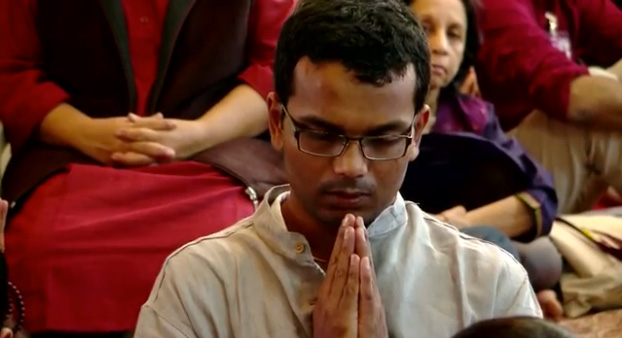
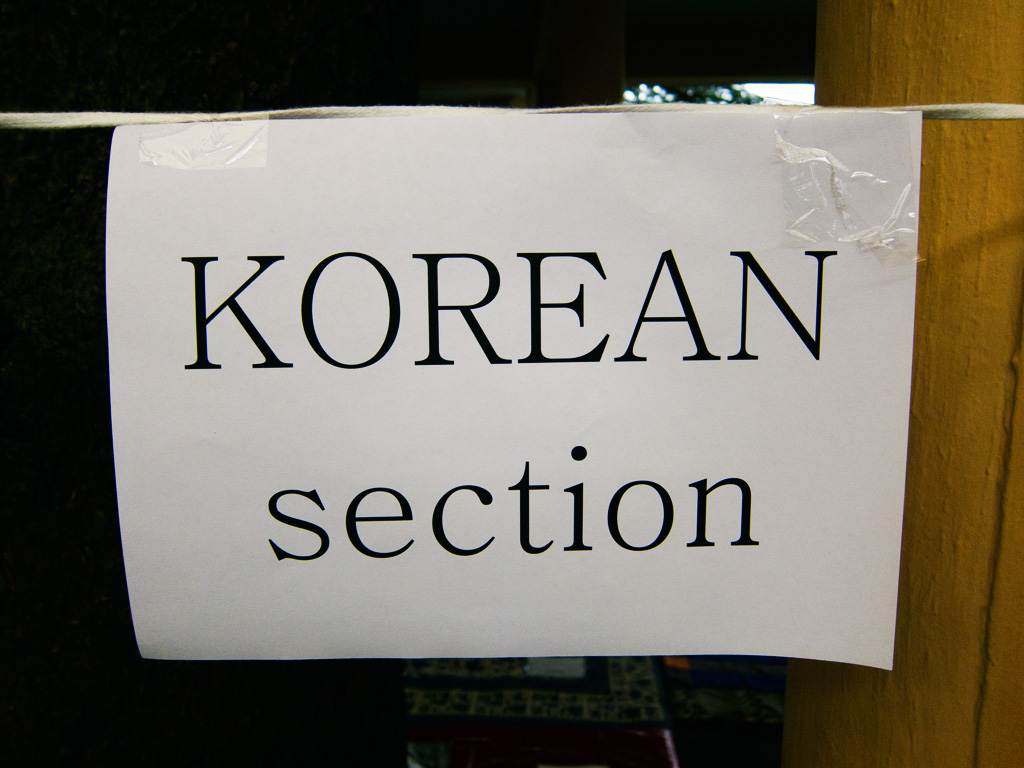
As with most teachings at the temple, there are simultaneous translations in multiple languages. This can get pretty complicated, with the mixing board routing up to seven different translators to an array of recording and streaming equipment (yay, Mackie!), not to mention FM transmitters and their corresponding antenna on the roof.
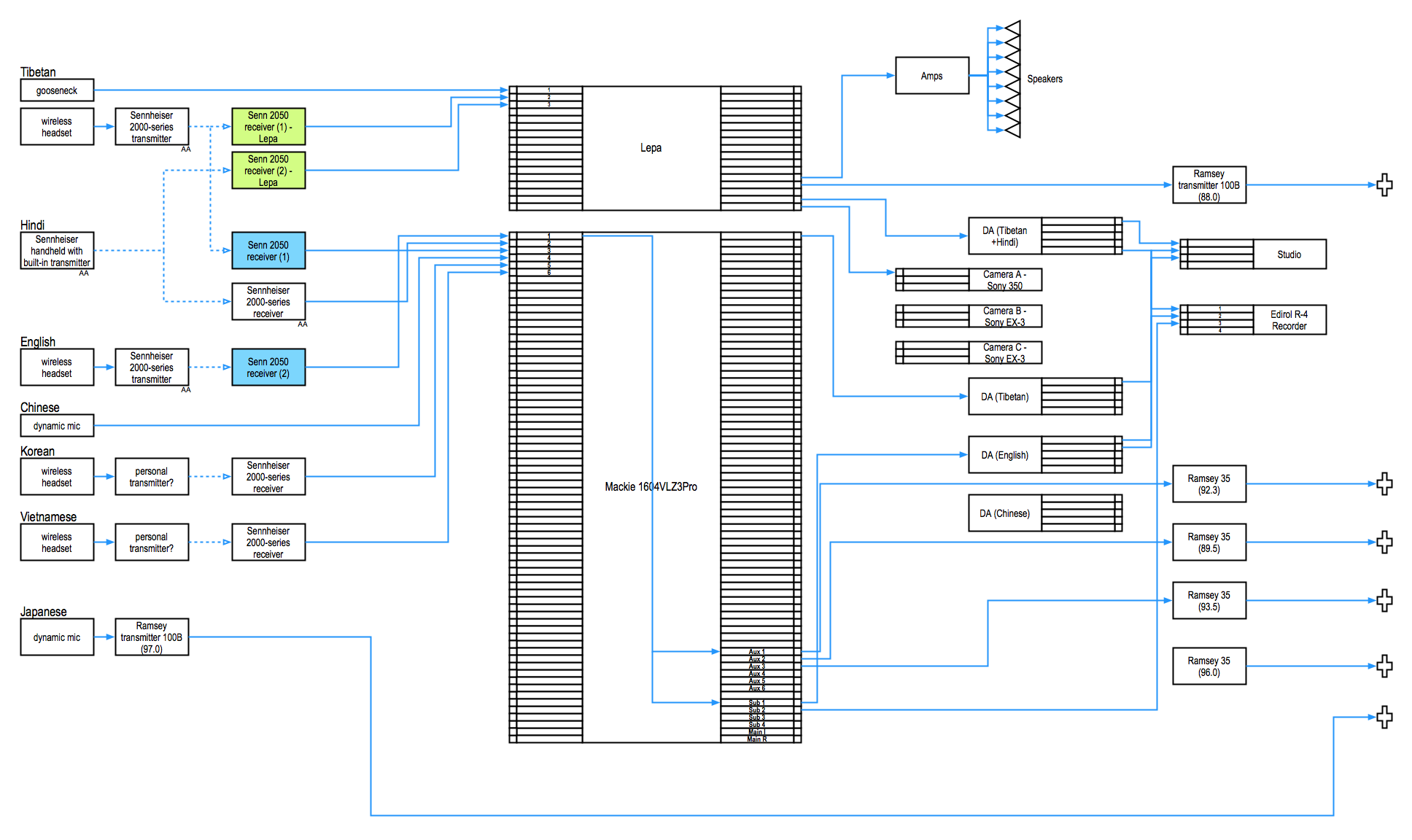
Some languages, like Hindi and English, are translated directly from Tibetan. Others are secondary translations from the English. This teaching will be in the following languages:
- Tibetan
- Hindi
- English
- Chinese
- Korean
- Vietnamese
- Japanese
I helped set up the day before, but hadn’t planned to go in for the teaching. I was looking forward to watching the streamed video knowing that Bennett (who left the house at six that morning) was, literally, the one calling the shots. The phone rang at 7:30. “The person who was supposed to run the audio mixer can’t make it—can you come down?”
There’s an electricity in the air before a teaching—a bouquet of Buddhist robes from saffron yellow to neon orange, a melting pot of travelers and spiritual seekers from around the world, and vendors poised to sell some serious Buddhist wares to all of the above. There are also long lines, a tedious security routine, and use-it-or-lose-it cushion seating inside.
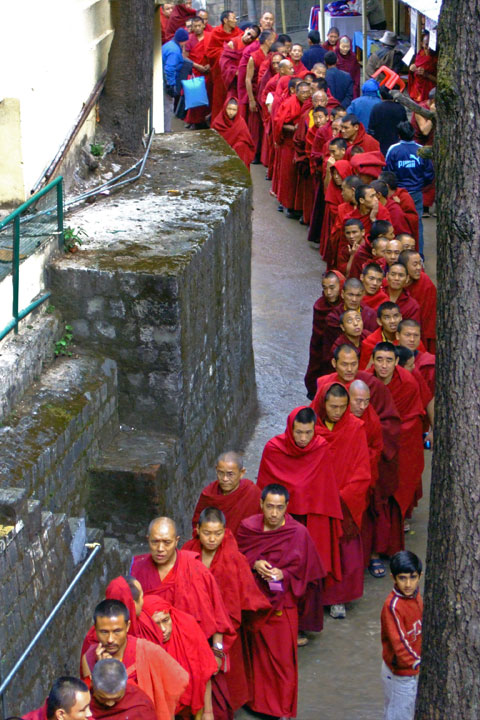
I whisked along an alley crowded with monks and ran into Geshe Kunkhen. He encouraged me, just like lunch at the monastery, to cut directly to the front of the line where people were passing through the metal detector. The security guard refused until I handed him the phone with Lobsang on the other end, explaining the situation in Tibetan.
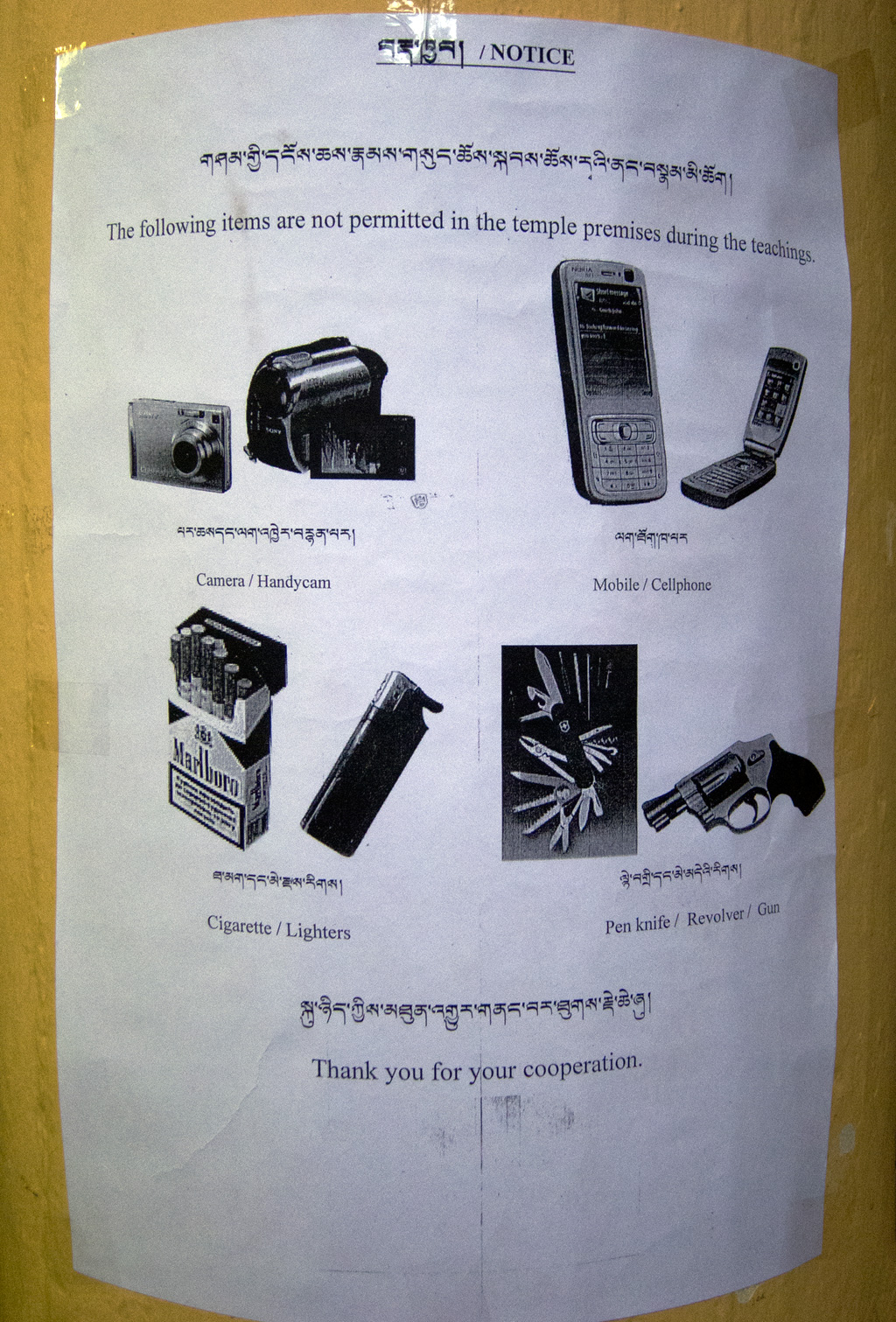

At the Archive, Lobsang suggested I leave most of my things behind to make it easier to get into the Private Office, where security is much more involved than at the temple. It makes sense—it’s basically the Tibetan equivalent of the White House or the Vatican.
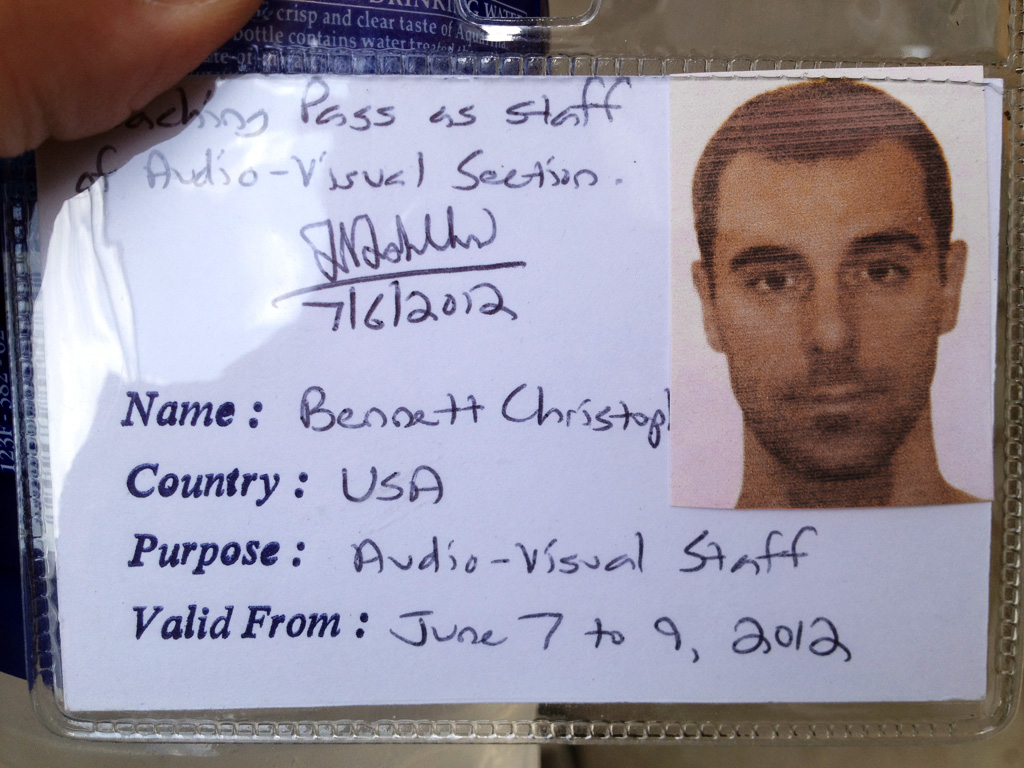
When I finally arrived at the video control room in the Private Office, Choejor offered me tea and a handwritten pass which would help me get in and out for the remaining two days.
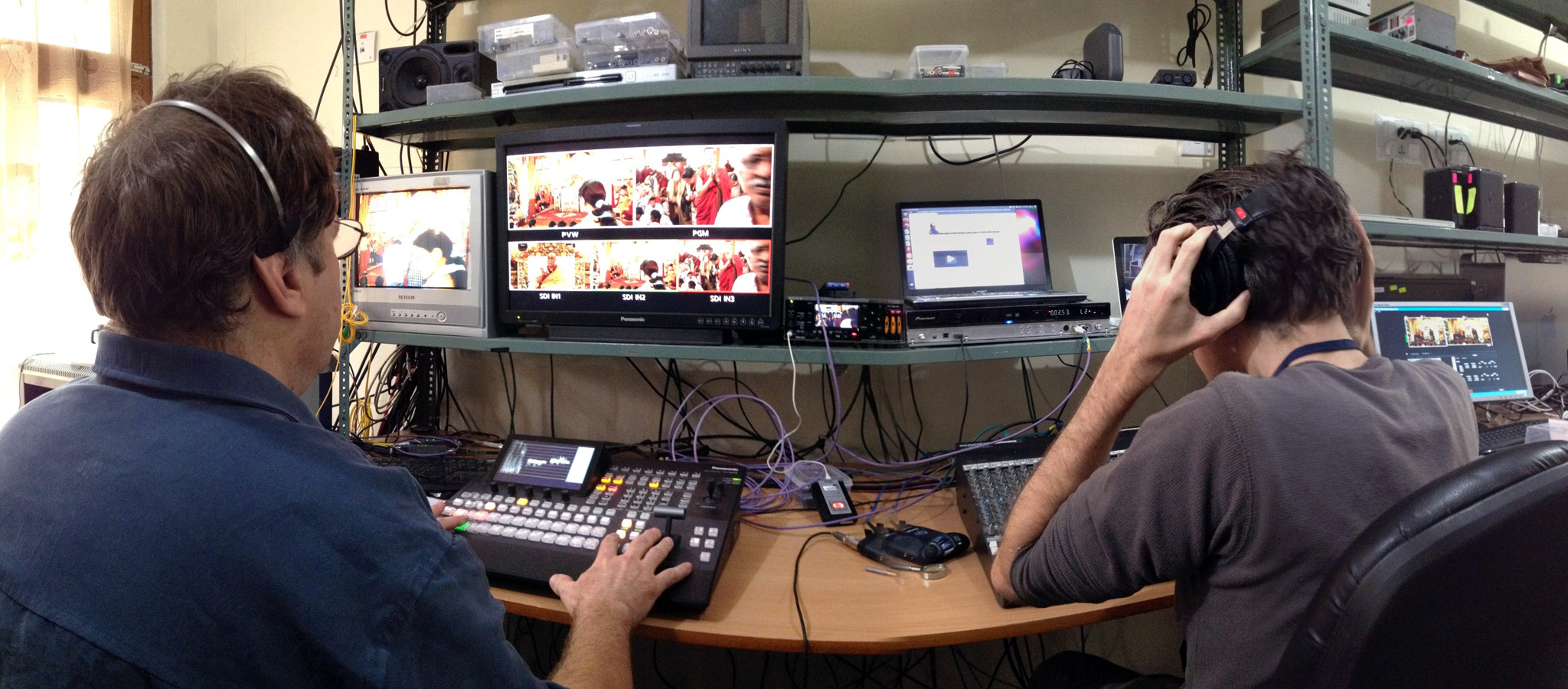
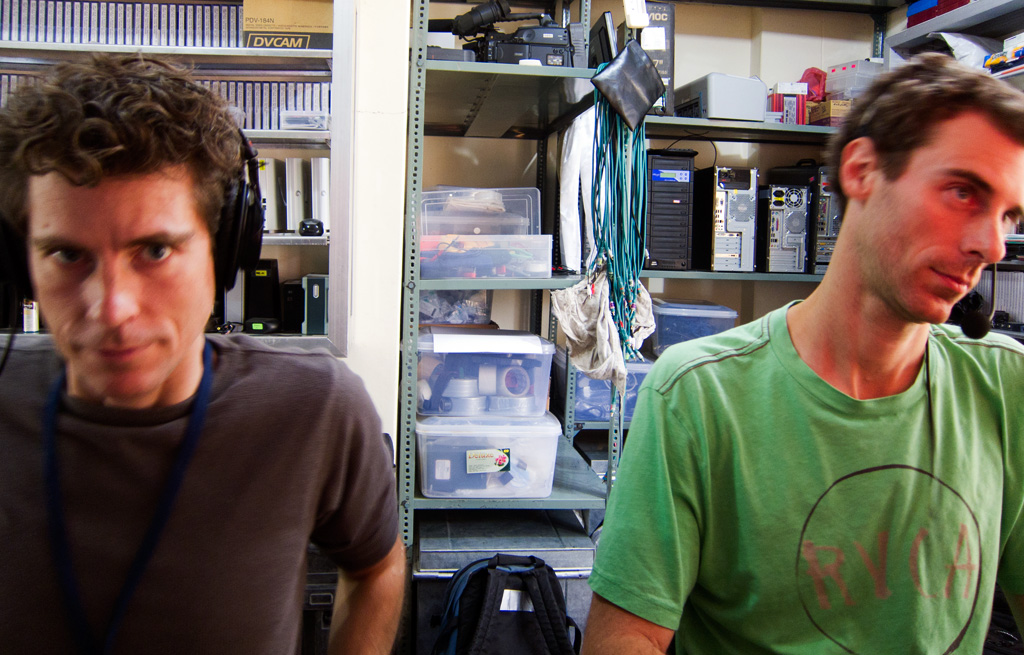
Sitting in the director’s chair turned out to be a great way for Bennett to continue teaching the staff, as well as Choeyang from DIIR.
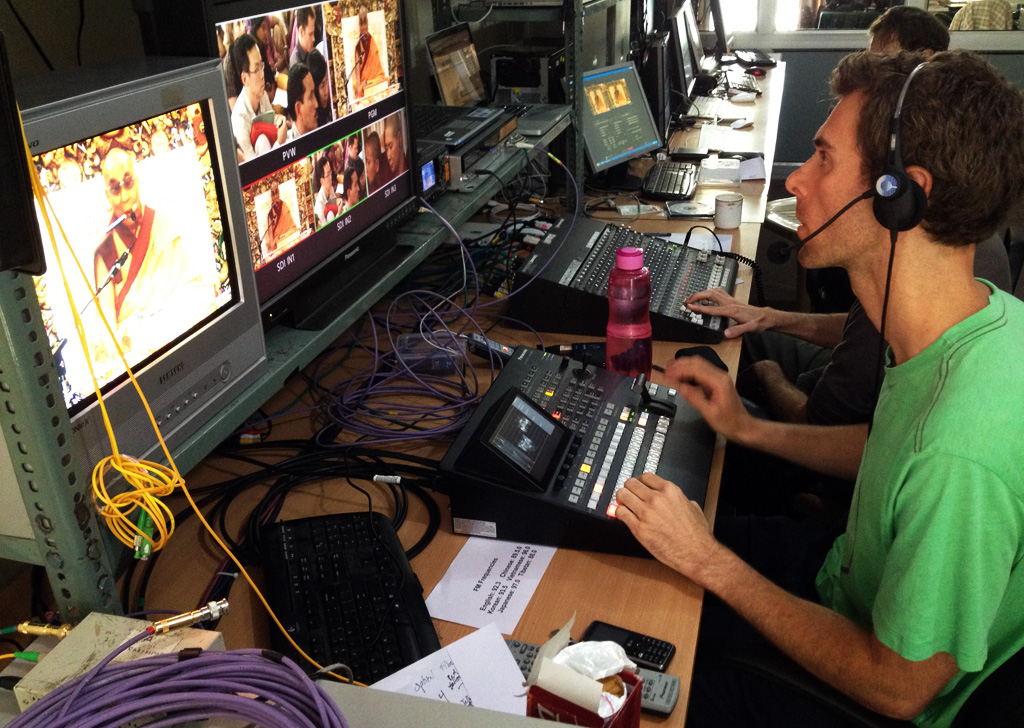
We weren’t allowed much control over the lighting and mic positions around the throne, so after the first day, Bennett adjusted what he could—the angle of Camera B—to move the position of the black gooseneck mic on the left of the frame away from His Holiness. The adjustment is subtle, but it does make a difference. It’s one less thing obscuring his face and disrupting the composition.
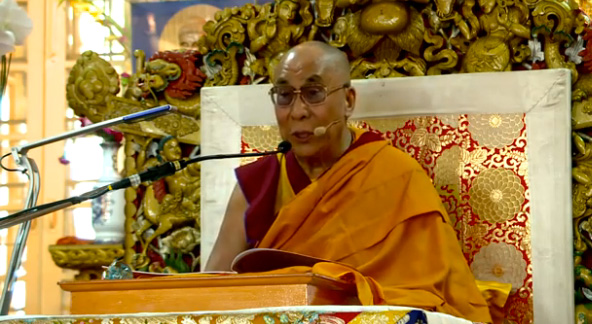
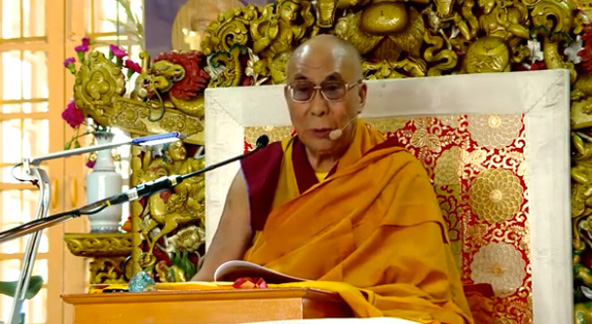
The teaching was streamed separately in Tibetan+Hindi and Tibetan+English, with the primary translation being Hindi (i.e. Hindi was heard publicly over the loudspeakers; English was not). Additional languages were recorded but not streamed.
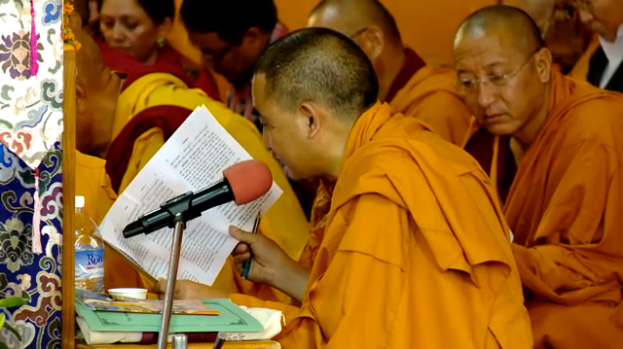
This teaching was translated sequentially (as opposed to simultaneously), so His Holiness spoke in Tibetan for 5–10 minutes, followed by the Hindi and English translators, and then back to Tibetan. Because the translators are speaking different languages, they don’t necessarily finish at the same time. Sometimes, the Tibetan resumes while the English is still going, in which case we emphasize the English audio until finished, then switch back to Tibetan.
All of this requires some minor audio mixer gymnastics, and it doesn’t always go perfectly. Here is a small excerpt where you can hear the English (Tenzin Tsepag) and Hindi translators (only the person at the audio mixer hears this cacophony—the rest of the audience hears only the language of their choice), followed by His Holiness speaking in Tibetan.
…so the nature of mind is empty and therefore there is a possibility overcoming these delusions from within our mind. And so once you are overcome these delusions and defilements from within the mind, then that is the state where you reach enlightenment, or omniscient state. So the omniscient state is where you are totally free from all these defilements and this comes through the realization of the true nature of the mind itself. And then we have the—
[Tibetan begins here]
—two vehicles Mahayana and Hinayana, and the final destination of all followers is Buddhahood where—
[Hindi again, briefly]
—there are the full Buddha bodies…
[Hindi plus Tibetan, then only Tibetan]
…so that has to be our aim. And then we have to tread along the path and realize fully the Buddhahood.
[English ends here, full Tibetan]
Here is the complete archive of the teaching.