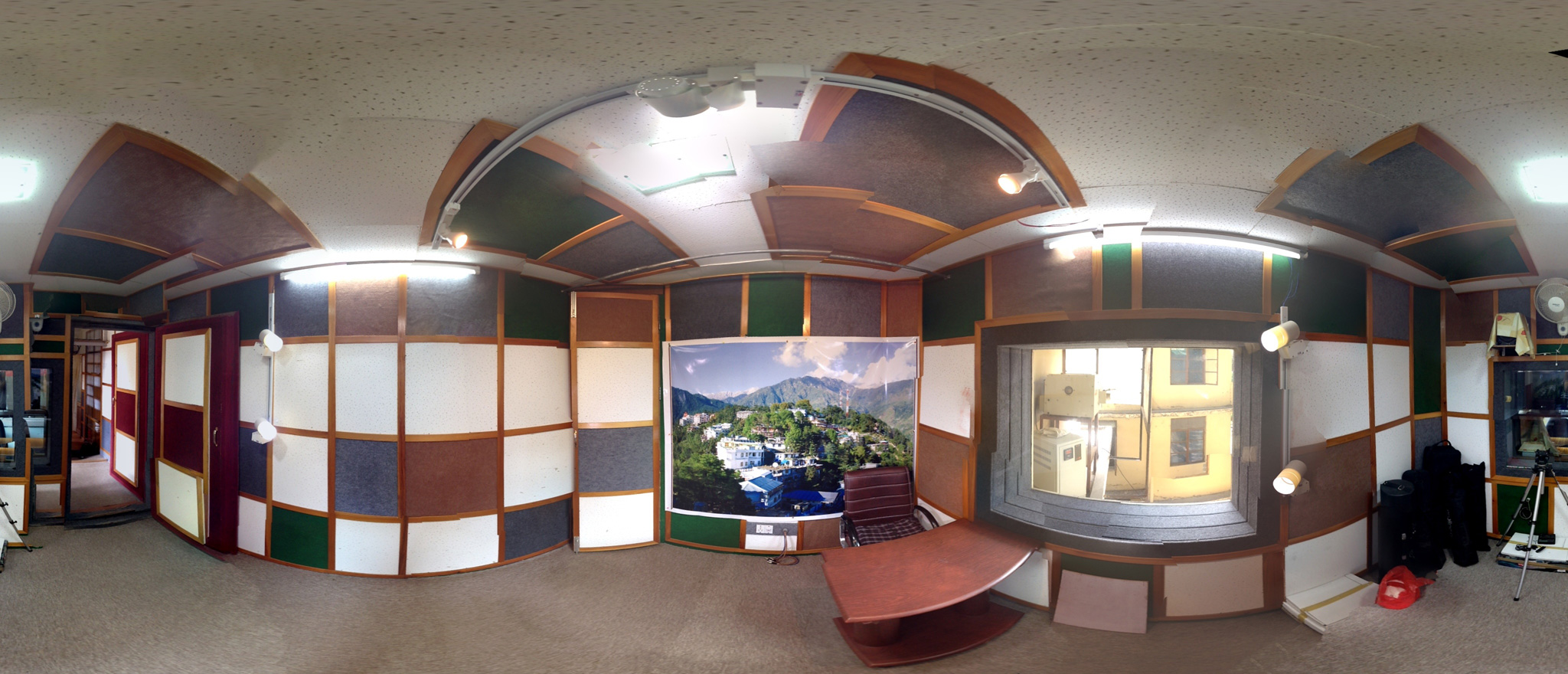
Six years. Back at the Archive. Use of the limited space here is always astounding. There’s now an entire soundproofed studio, complete with double doors and triple-paned glass. You can see monkeys attacking each other outside, but when the doors are closed, you can’t hear a thing.
The big question for my brother and me: how much can we do in five weeks? Some possibilities:
- Teach basic motion graphics and After Effects
- Contemplate a future without Final Cut Pro 7
- Build a proper database to keep track of the contents of the archive
- Cameras, framing, lighting
- Editing
- Scripting and other digital efficiencies
The highest priorities are the cameras and the database, and Bennett still needs a couple of days to prepare his lessons. The database is a deep dive, but a necessary one. A few questions made the necessity apparent: “How much media is in here these days?” Answer: “Not sure.”
“How many events has the archive documented?”
“Not exactly sure.”
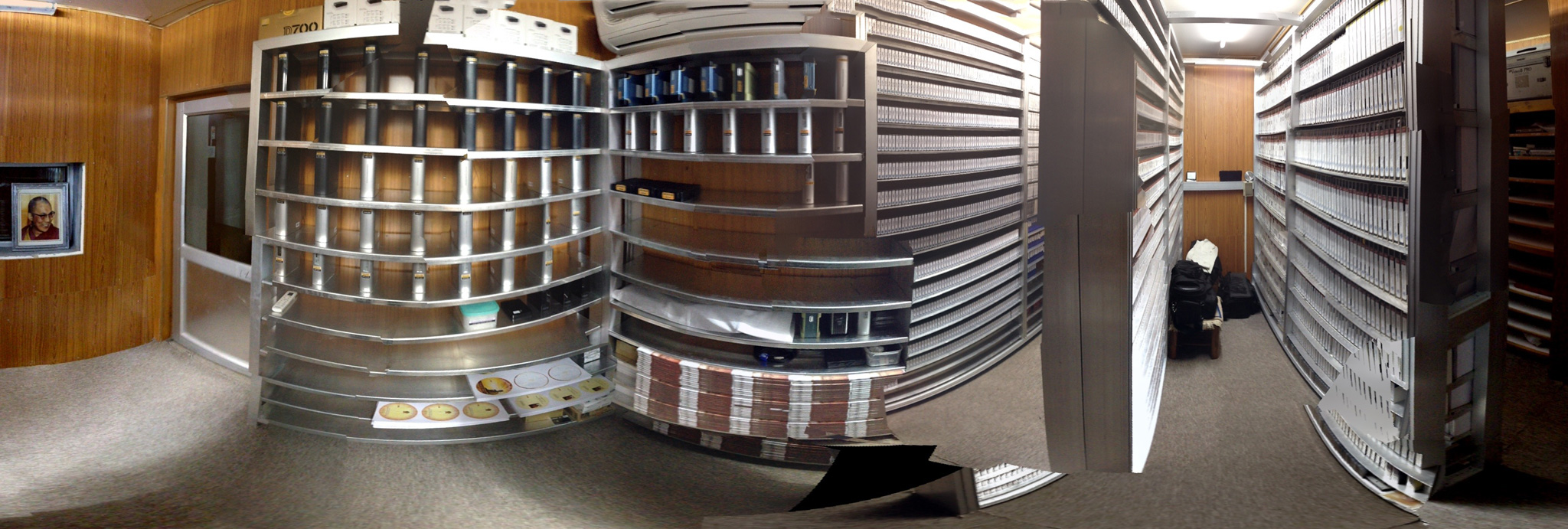
The archive has been growing for several decades now, and the only tracking mechanisms are some Excel spreadsheets. These spreadsheets can form the foundation of a proper database, but it’s going to take a lot of work to normalize their content. I had started a database shortly before leaving in 2006, but there wasn’t enough time to train the staff. We unearthed the old database (FileMaker Pro 8 was the version back then—version 12 was just released) and you could practically see the digital data crumbling off the edges as if in some excavated ruin. We’re going to have to start over from scratch.
Step 1: let’s look at one of the spreadsheets, just to get a taste of what’s to come.
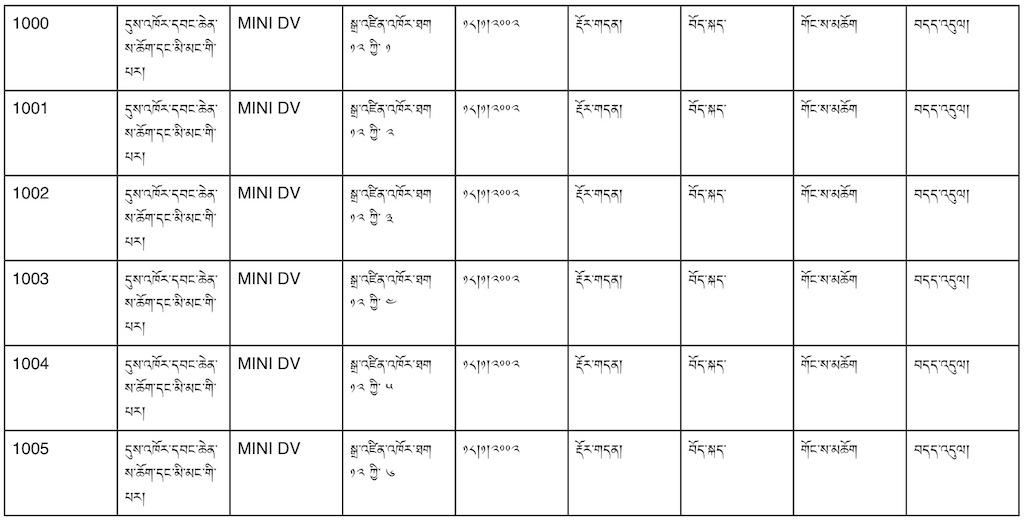
Granted, I can’t read the Tibetan, but it seems straightforward enough. Obviously, this is a log of MiniDV tapes, and all the dates and numbers are written in Tibetan. I scrolled down a bit further, and things got more complicated…
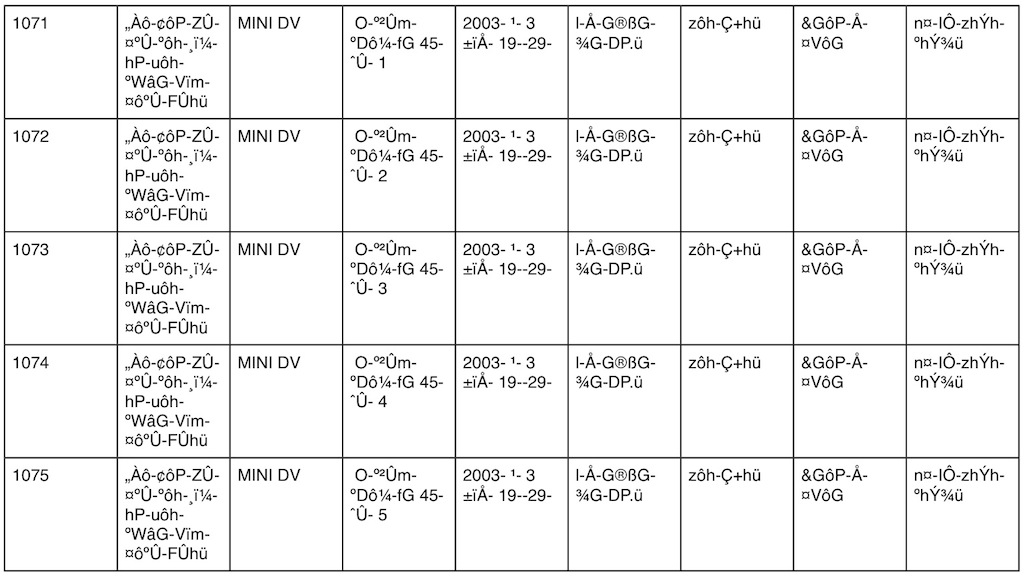
If you have the right font (the Tibetan Computer Resource Centre font TCRC), the jumble of characters will appear as Tibetan, but installing a font only cures the symptom, not the underlying problem. Appearing to be Tibetan isn’t sufficient. The data has to be entered as real Tibetan, otherwise you get precisely the problem from above: without the right font, you see meaningless text. There’s an official system for doing this called Unicode.
But the problems with these files don’t end here. Check out how some of the dates are formatted: “2003- ¹- 3 ±ïÅ- 19–29-.” On close inspection, I think that says March 19–29, 2003. Did I mention that there are over 3000 rows in this single spreadsheet, and there are at least a dozen spreadsheets?
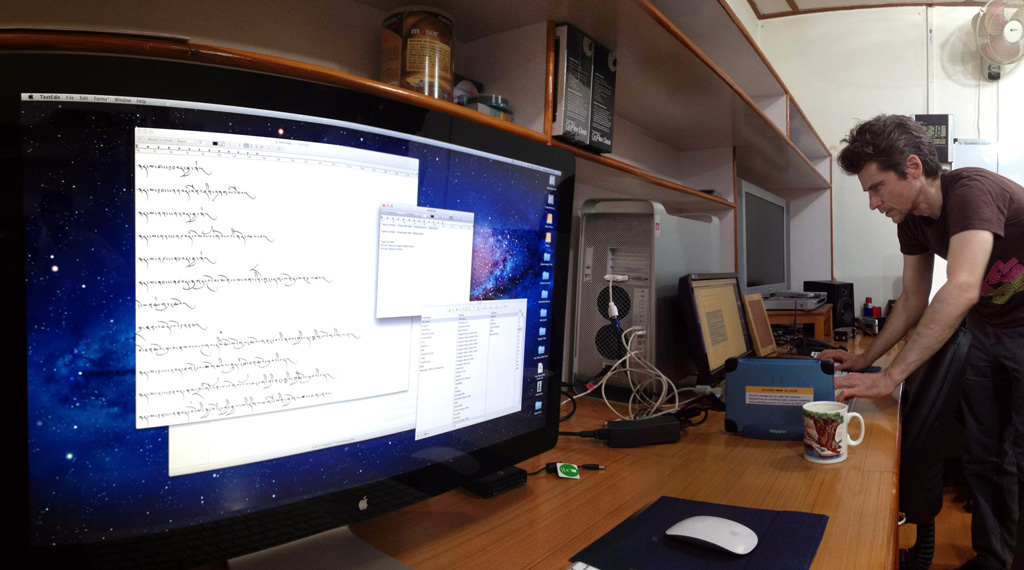
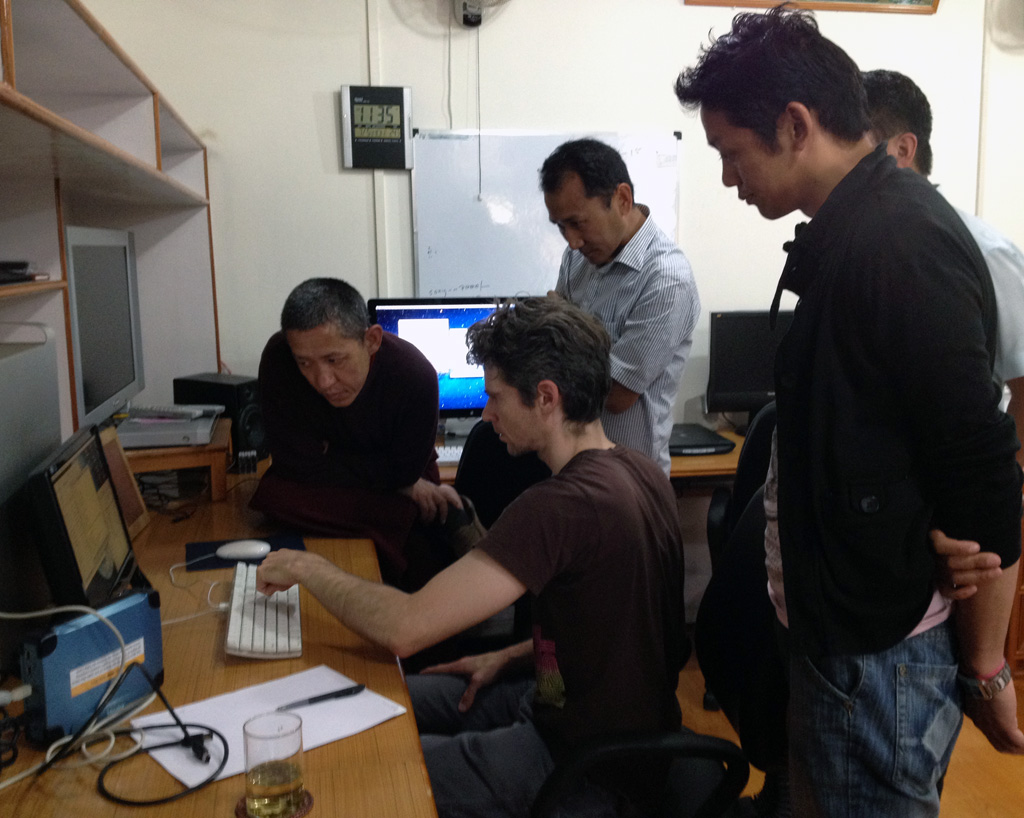
I started lecturing about Unicode, explaining how it uniquely encodes every character of every known writing system. Silence fell when I asked if anyone knew what hexadecimal is, at which point I let the database rest for the day.
A familiar sound: the lunch bell. Lunch is serious business here. In the past, it went something like this: “Dave-La, it’s lunch time.” “Great, I’ll be there in a couple of minutes.” The power goes off in the Archive. “Dave-La, lunch time.” So, we go to lunch.
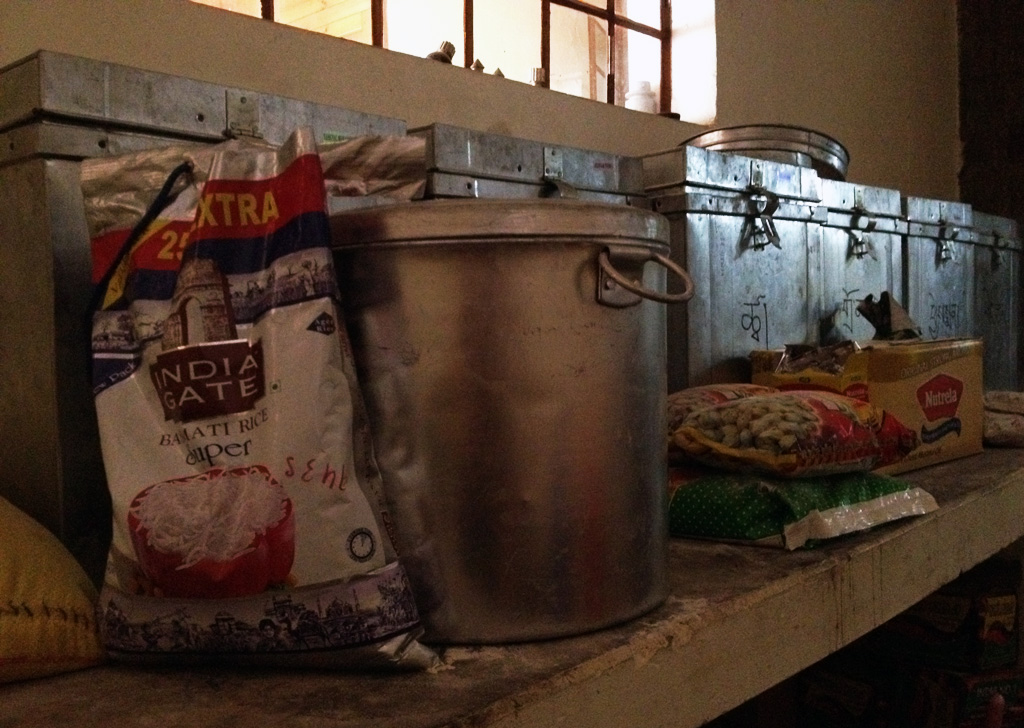
The monastery provides lunch every day—one of the perks of working (and volunteering) at the Archive. Someone is sponsoring meals in exchange for the monks performing pujas, so this week we’ll be having “special lunches.”
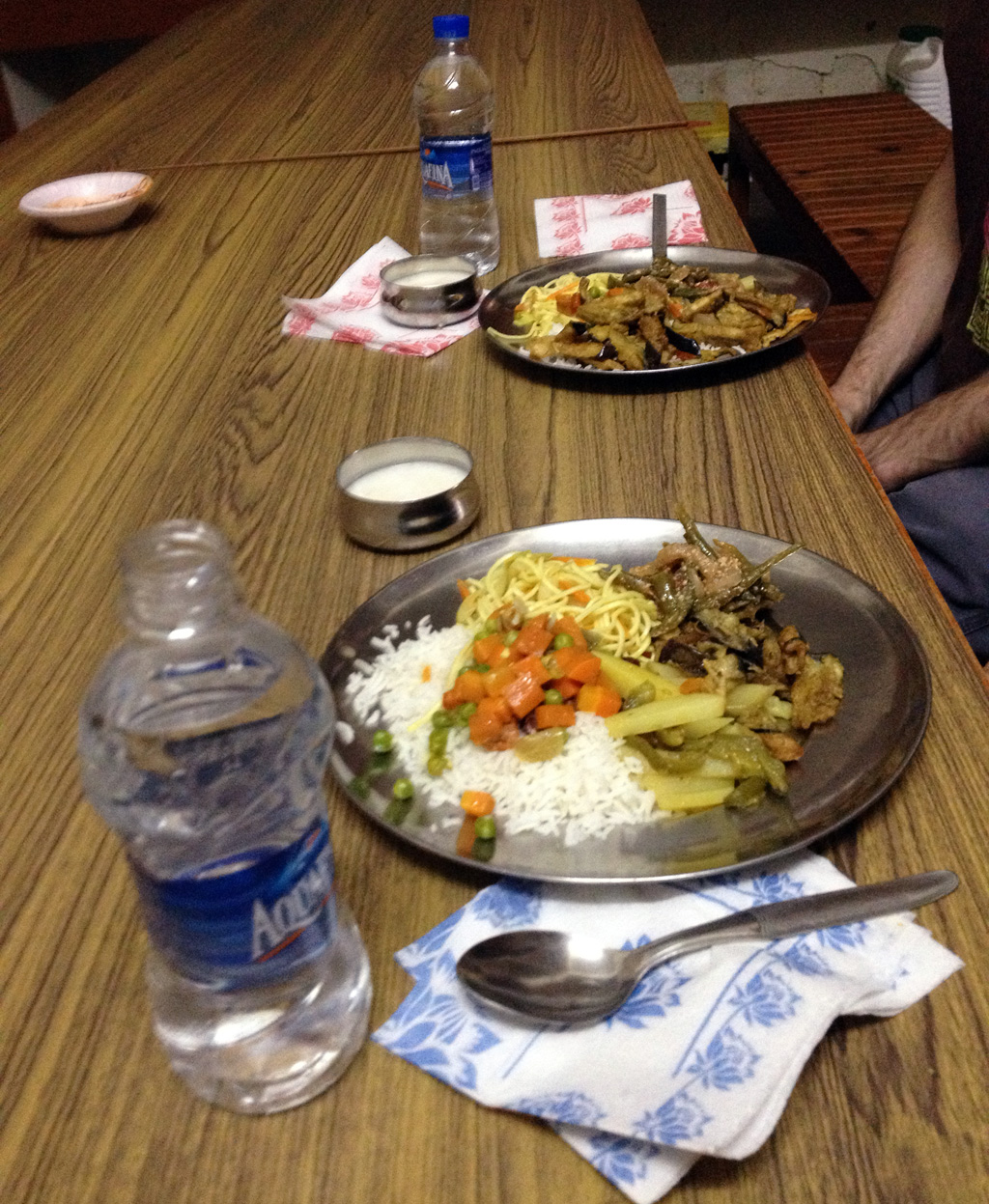
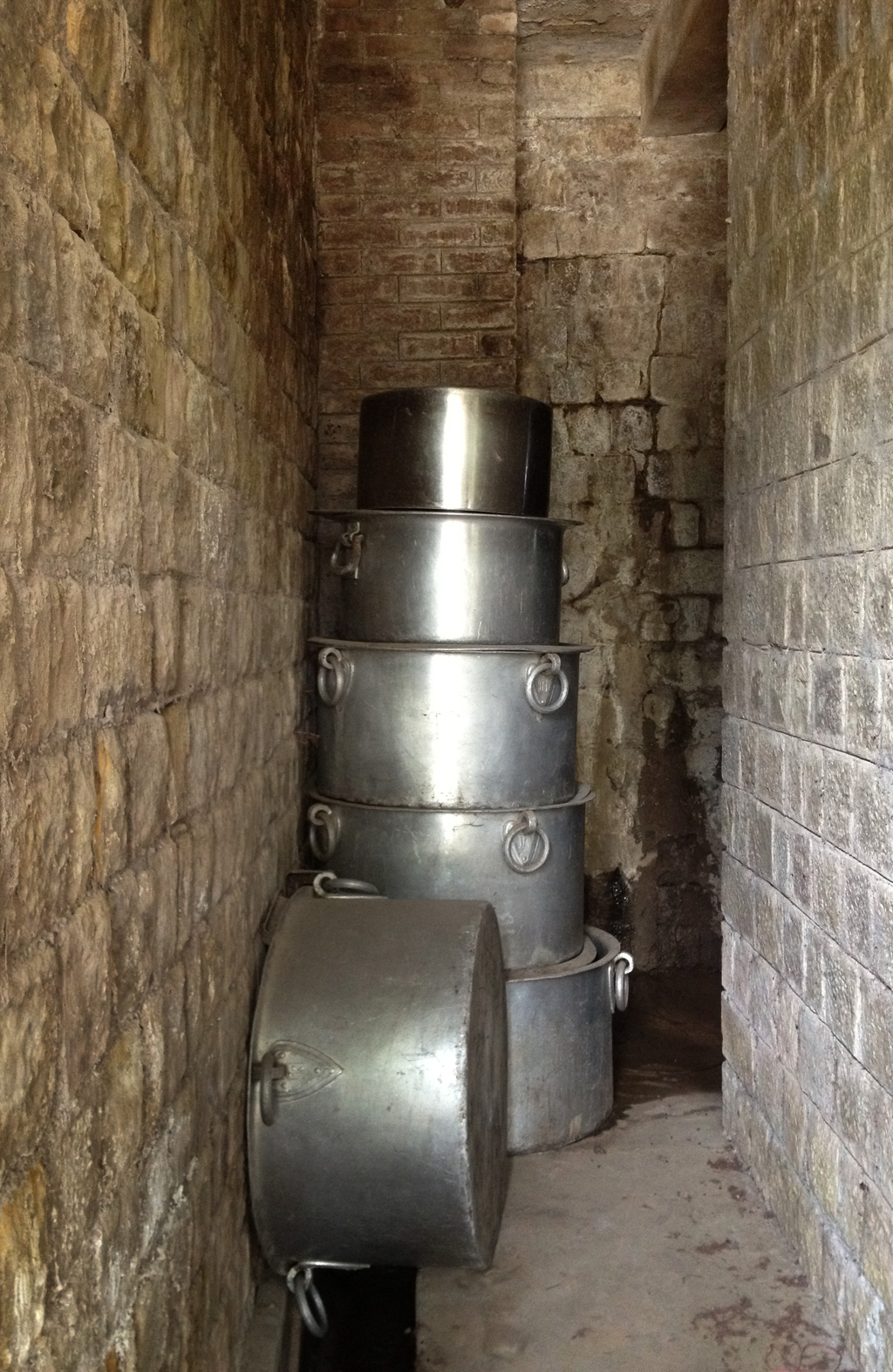
The staff has a small table adjacent to the kitchen—a dim, fluorescent-bathed room with tables and benches that seat twenty or so.
After lunch, it’s time for tea at Tibet Cafe, which is just above the tourist spot where we had breakfast. Lobsang tells us the tea is stronger, the flavor is better, and the prices are lower. Tea time is when I wish I understood Tibetan the most. There are a lot of good jokes going around the table, and even though everyone generously translates, it would be great to participate more directly. I try to remember the Tibetan alphabet in vain, as though fluency is only a few steps beyond… ka, kha, ga, nga…
We clock back in at one o’clock and start up After Effects. It was a welcome change for everyone. The mechanics of After Effects are pretty easy to pick up in about an hour, so that left everyone in good spirits. We analyzed the animated logo I put together back in 2007, and discussed the possibility of making a new one.
Meanwhile, Bennett started cataloging the camera equipment to prepare for next week’s classes. Before we knew it, the first day was over and it was time for dinner at Snow Lion.