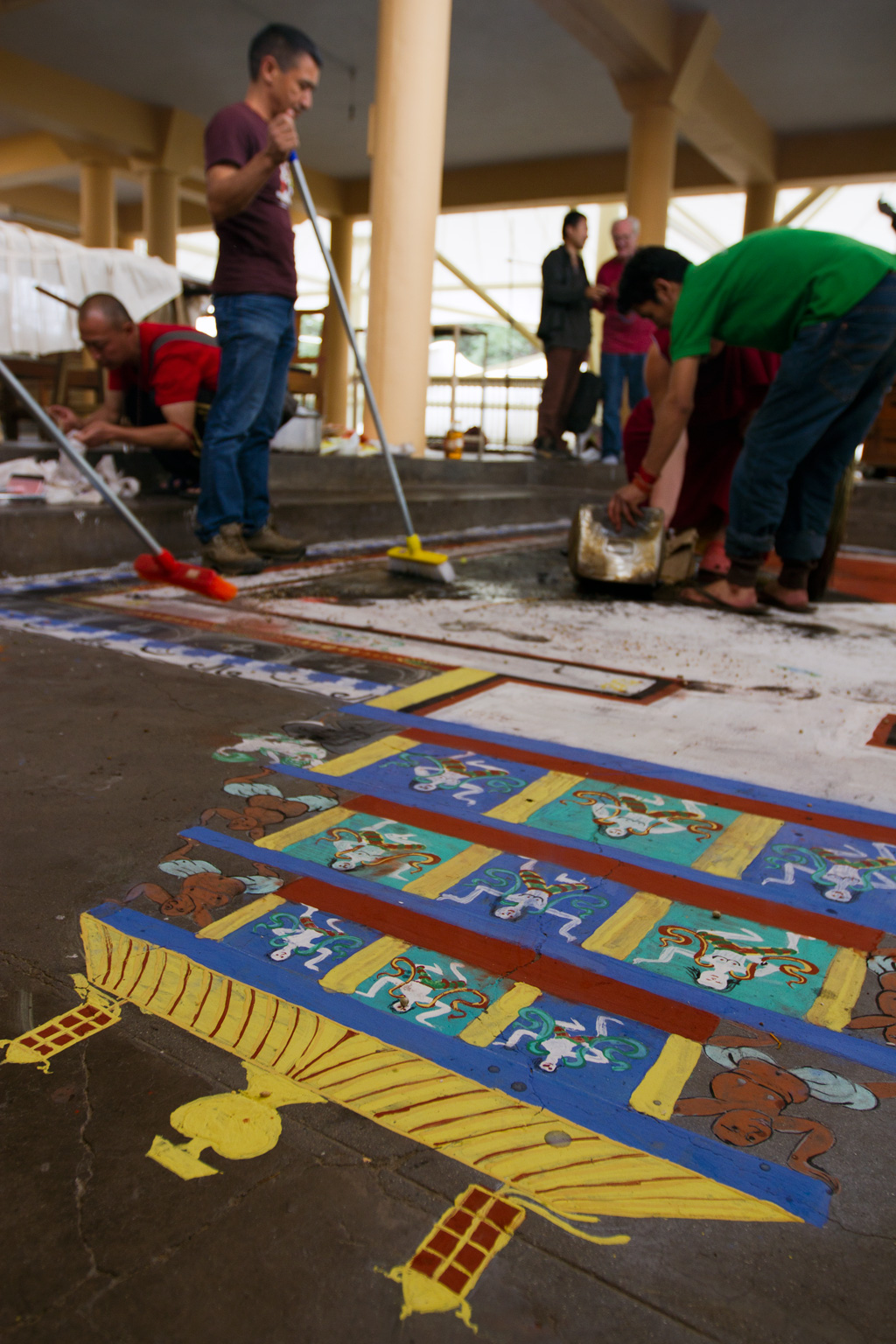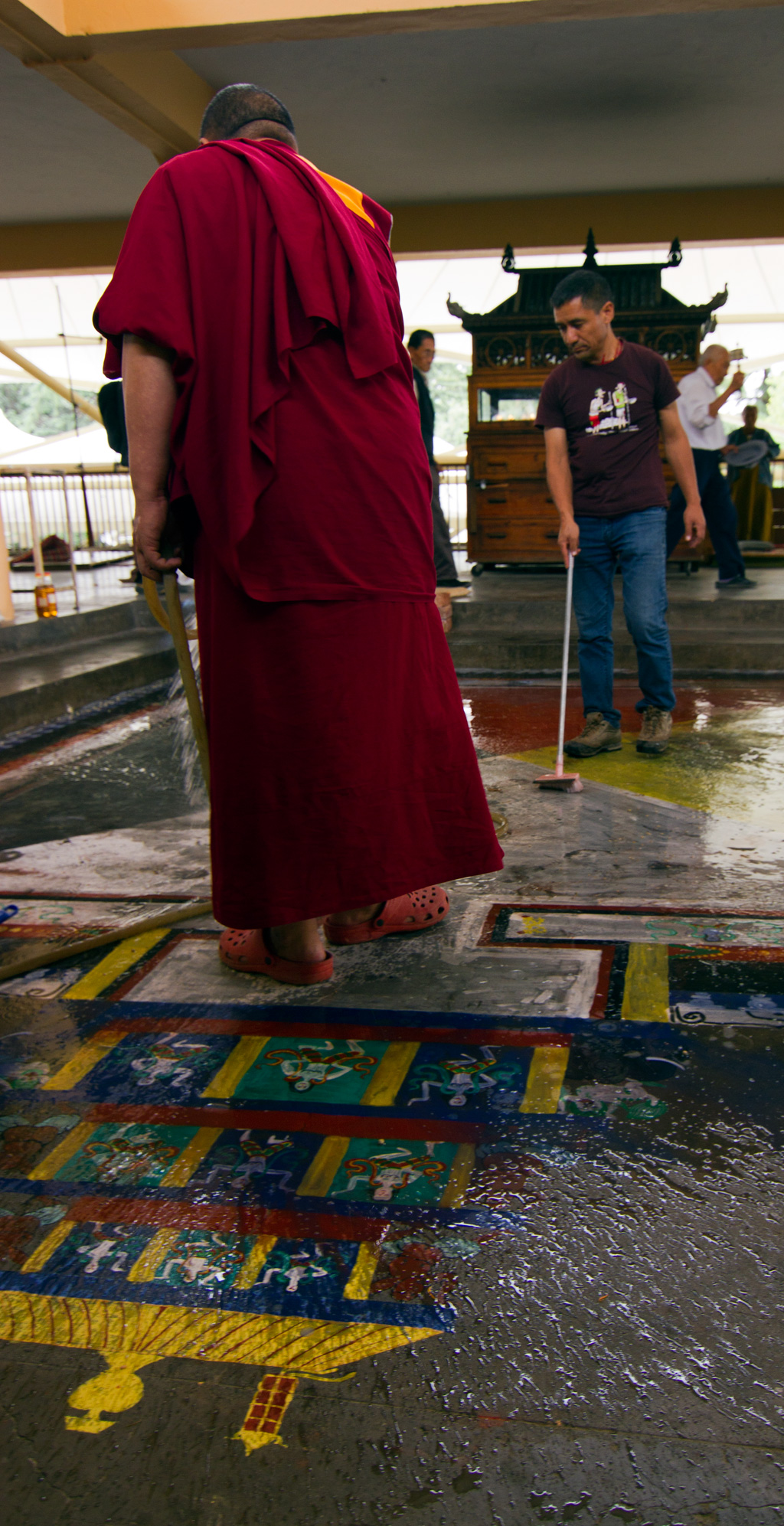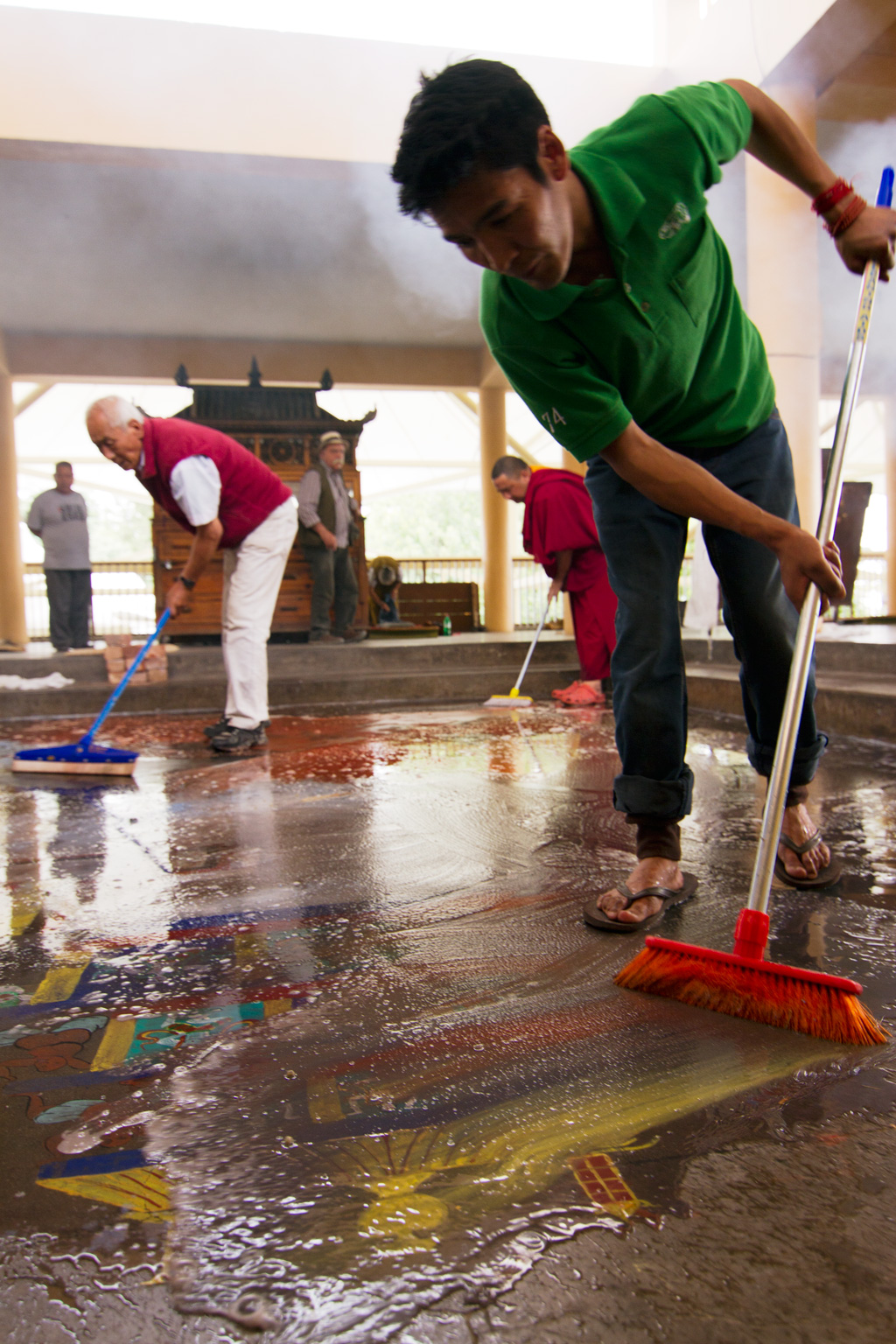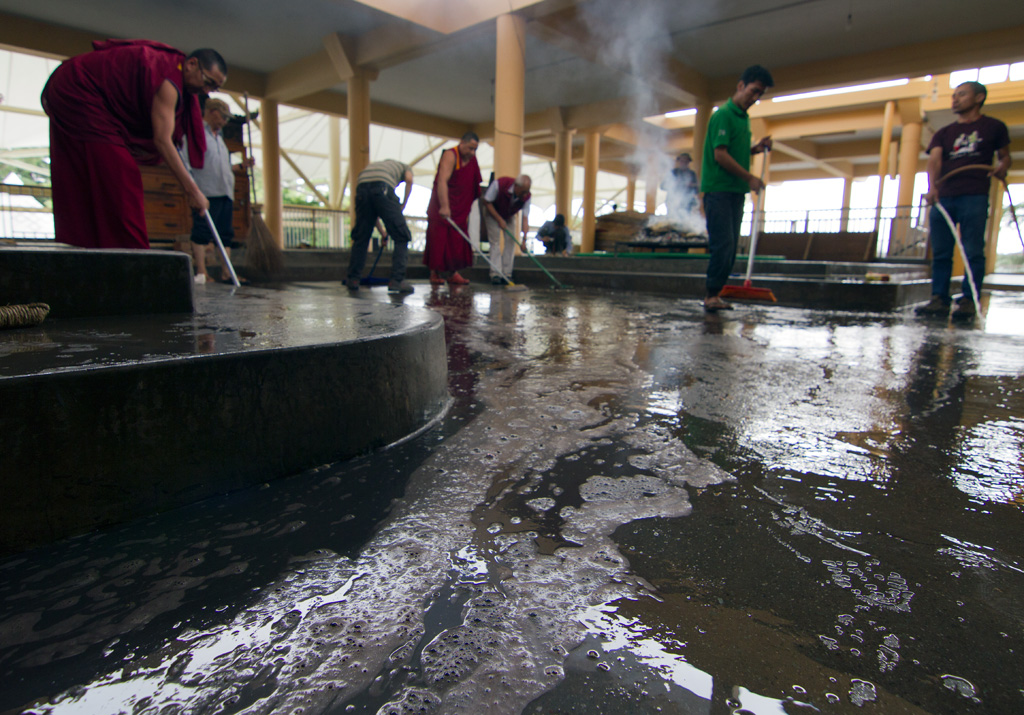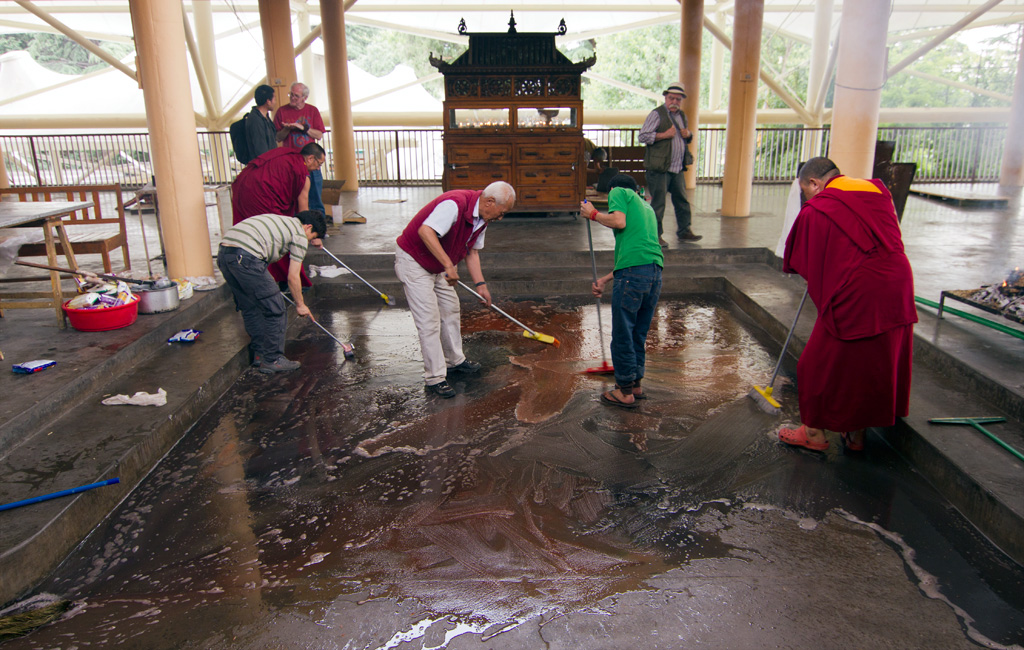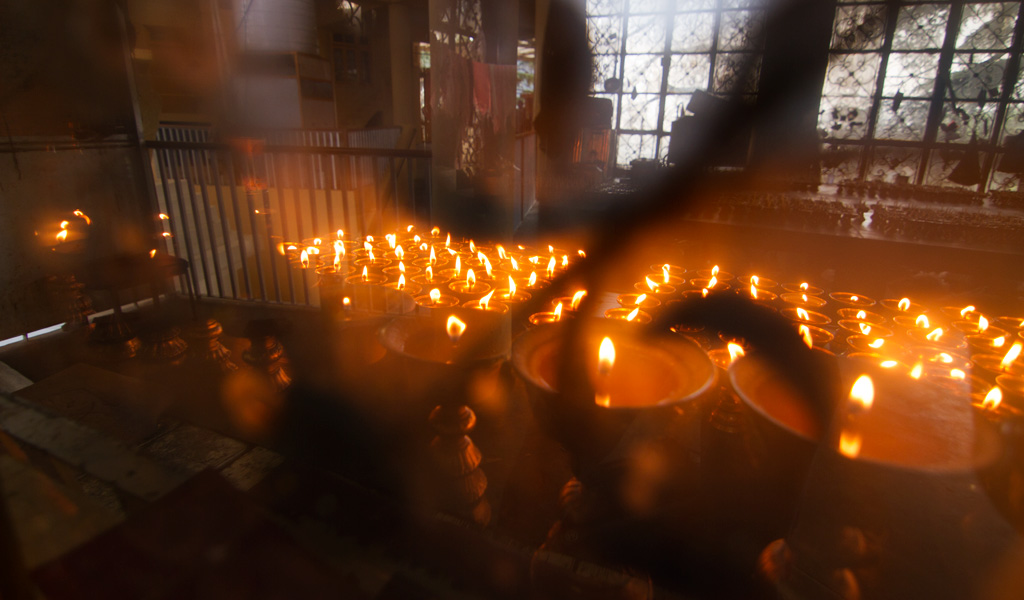
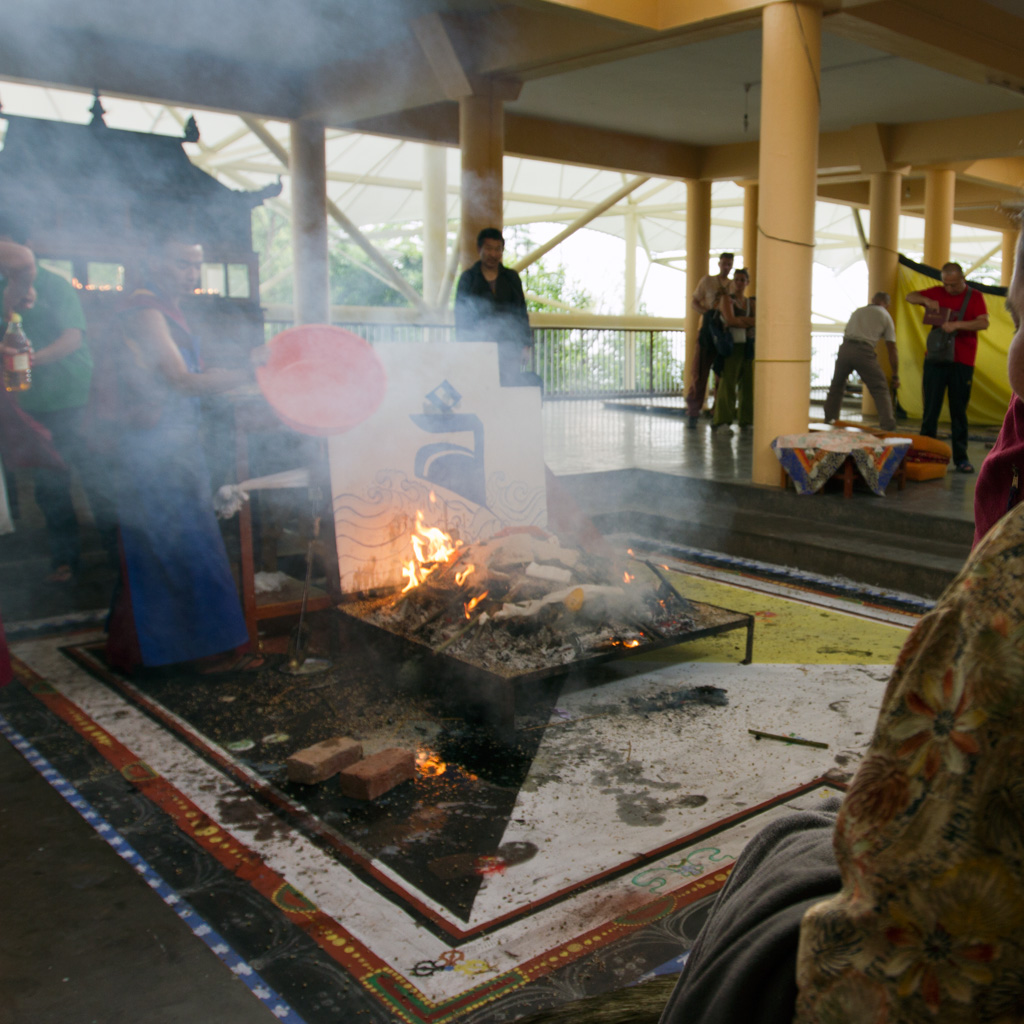
Lobsang said there was a fire puja and mandala dismantling happening in the temple, so I called Bennett to let him know.

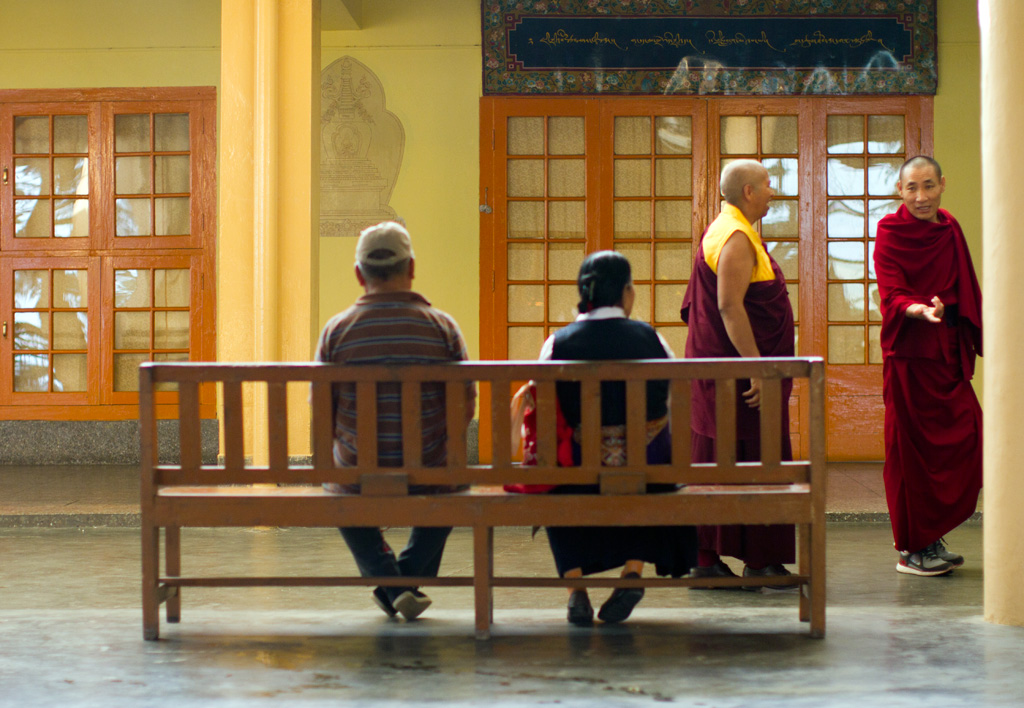
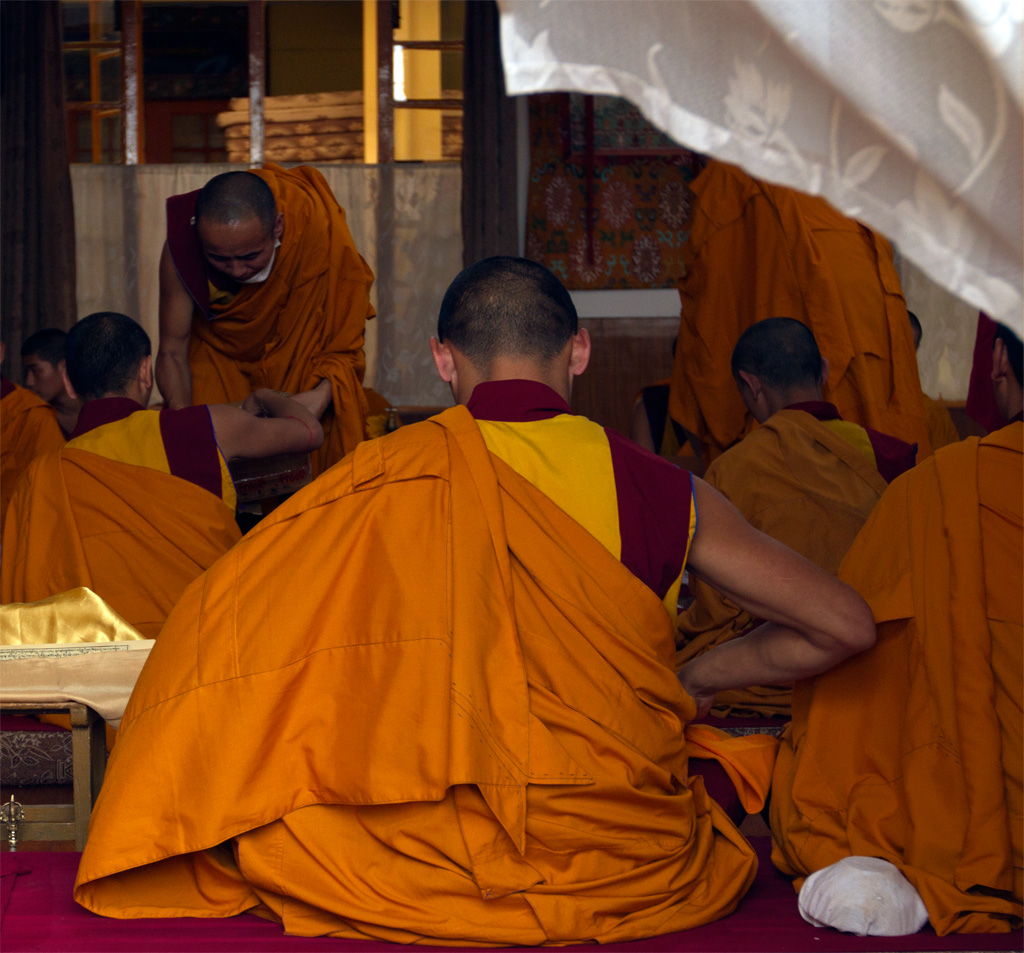
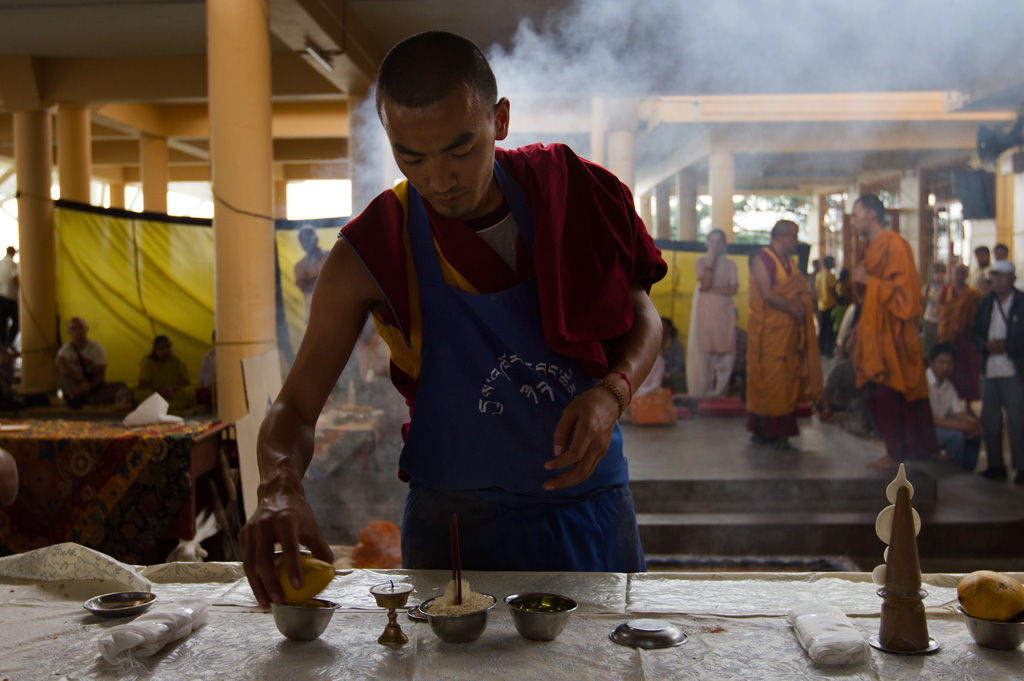
The fire in the center of the mandala is the final purifying process capping off pujas from previous days. Each mandala is inhabited by a deity in the center, and in this case the fire should be visualized as a fire deity in whose heart is the deity of the mandala. One goal of deity meditation, where you envision yourself as that deity, is to loosen attachments to self and identity—concepts that limit awareness of emptiness and interdependence, two essential factors for the cessation of suffering (according to Vajrayana Buddhism). From the outside, it can be difficult to see past the complex Tantric rituals and understand their intended purpose, but this is a good place to be when questions come up. Apparently, you need some training to make invitations to deities. Otherwise, it’s best to simply chant the mantra and let the lamas do the work.
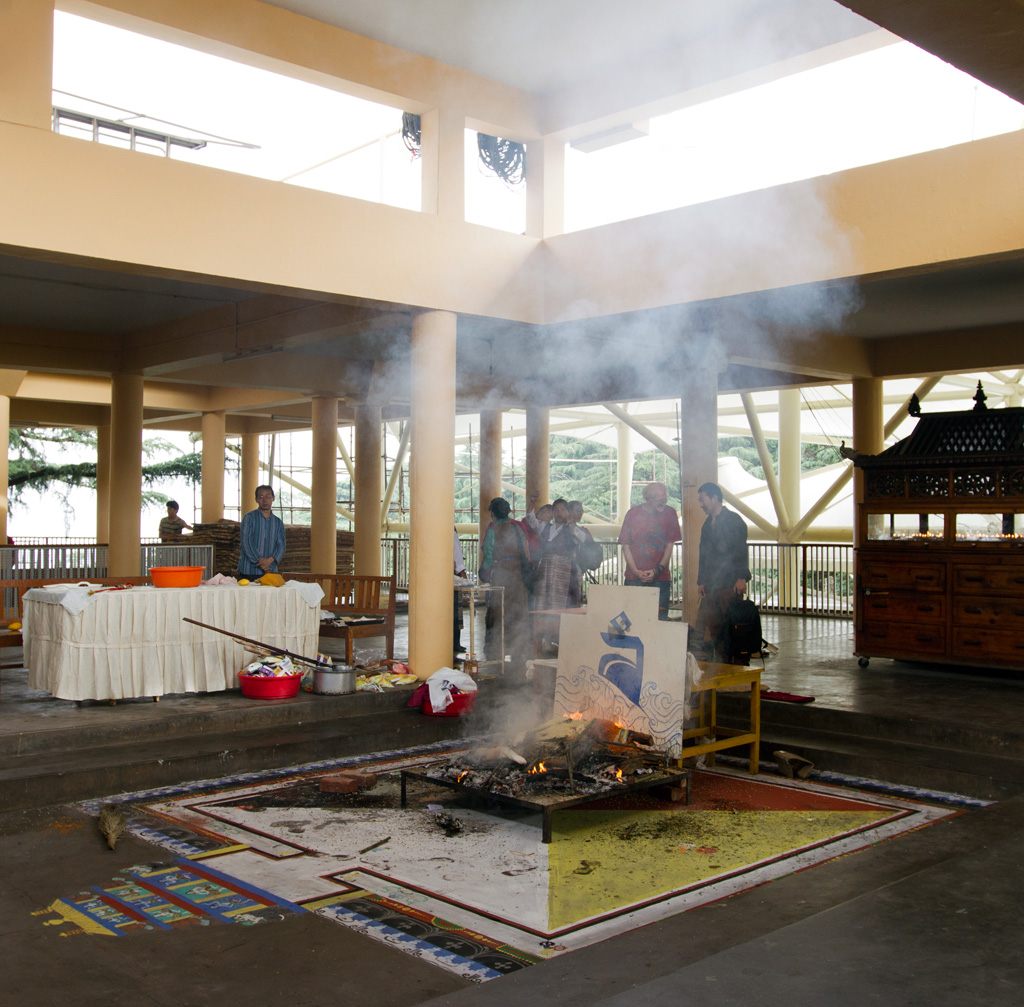
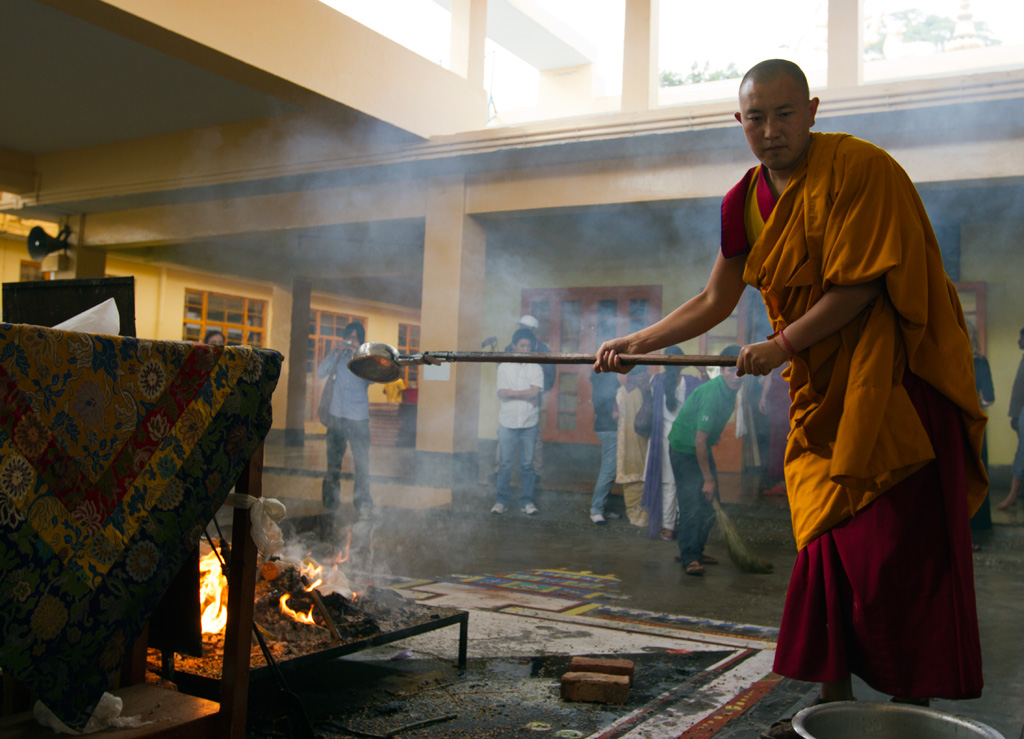
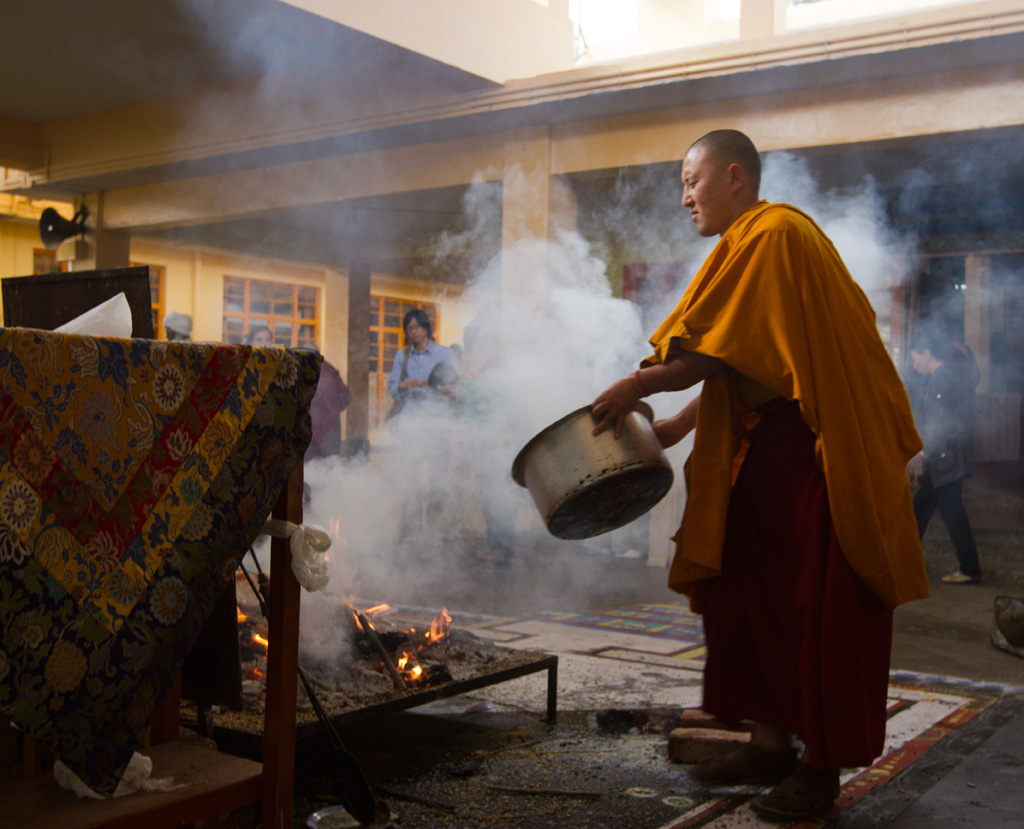
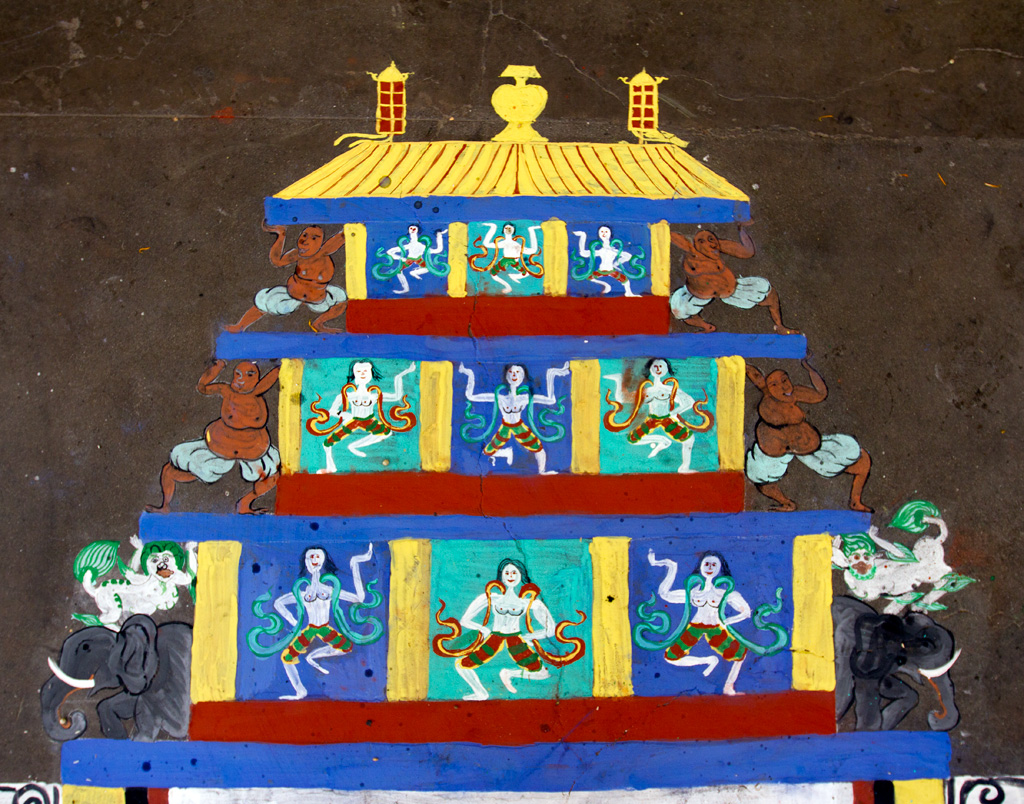
Not all Tibetan monasteries focus on Tantric ritual practices like chanting and making sand mandalas. In South India, there are monasteries with several thousand monks that focus strictly on philosophy and debate. However, Namgyal Monastery provide services and rituals specifically for the Dalai Lama, so they specialize in these practices. Here, Lepa, who also runs the audio PA system during teachings (and was formerly a Namgyal monk, I recently discovered), begins sweeping away the meticulously placed sand.