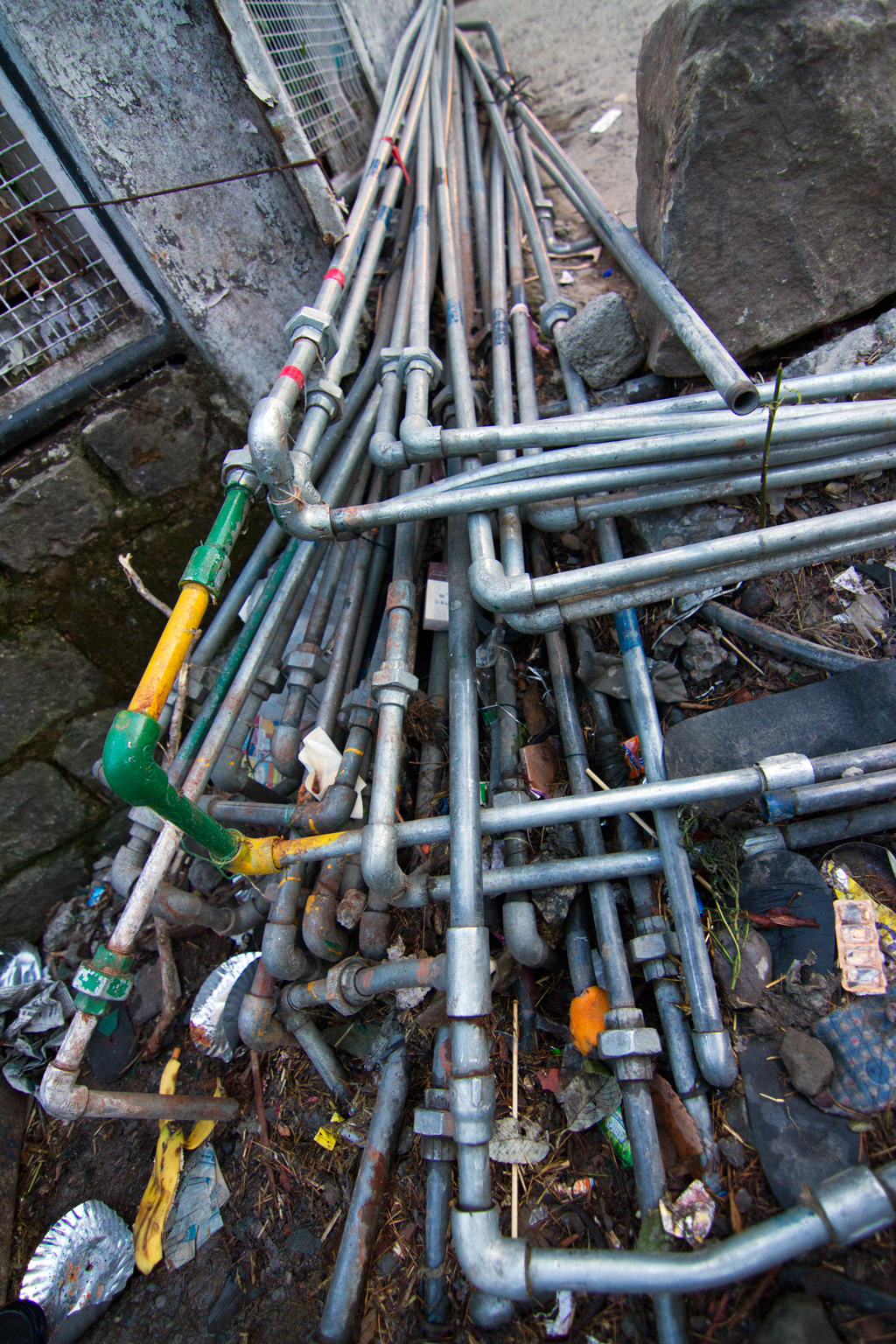
My friend Jake is one of those resourceful people you want to know during the Apocalypse. He’s undaunted by existing infrastructure, both physically and socially. Wall: can easily be torn down. New plumbing: get out the solder and let’s get to work. Rules: made to be broken.
Jake and his wife Lee travel to Kenya a couple of times a year to do things like reduce the number of rapes and to help build water systems. They’re hard core. I only have an abstract appreciation of what building a water system means. In San Francisco, the worst plumbing problem I ever had was a backed up shower, which Jake (who is also my landlord) fixed in less than a day. I can drink the tap water without worrying, I use the washing machine unaware of the water consumed, etc. Here, everything is the exact opposite.
Most places here have tanks on the roof which supply the necessary water pressure. These get refilled from different sources, depending on where you live.
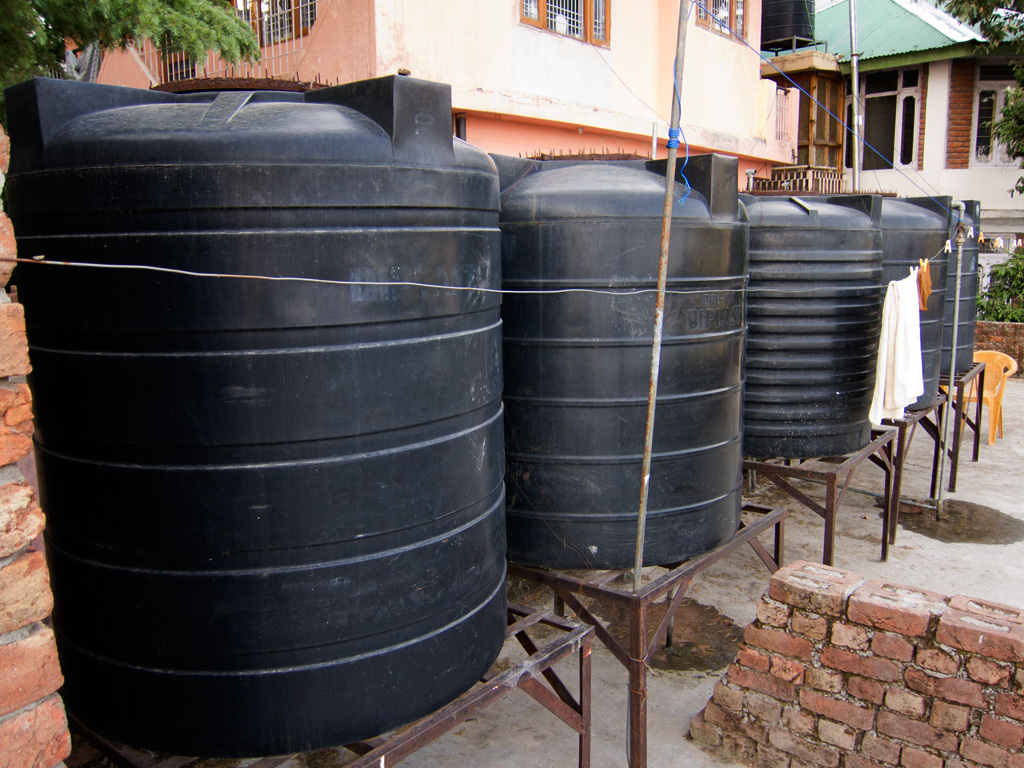
As we discovered last night, at the height of our first bout of food poisoning (and all that entails), there is no guarantee that the tanks will have water in them. I stumbled up to the roof to take a look at the situation. Banging on the tanks, it seemed like they were pretty empty. I think we used too much water doing laundry.
Chemey mentioned that the water situation is pretty bad here these days—they have a lot of shortages and thus deliver water less often. He leaves work early sometimes to save water in a bucket before his neighbors—a big family—finish it off. I called him to ask when we might expect water again. He called Lobsang, who then called the owner of our apartment, who let us know that water was coming in about an hour. Chemey said later that it was pretty rare to get water refilled the same day it runs out, but Mr. Singh’s place has two or three separate water sources to tap. Nevertheless, we’re going to be a lot more careful about our water consumption.
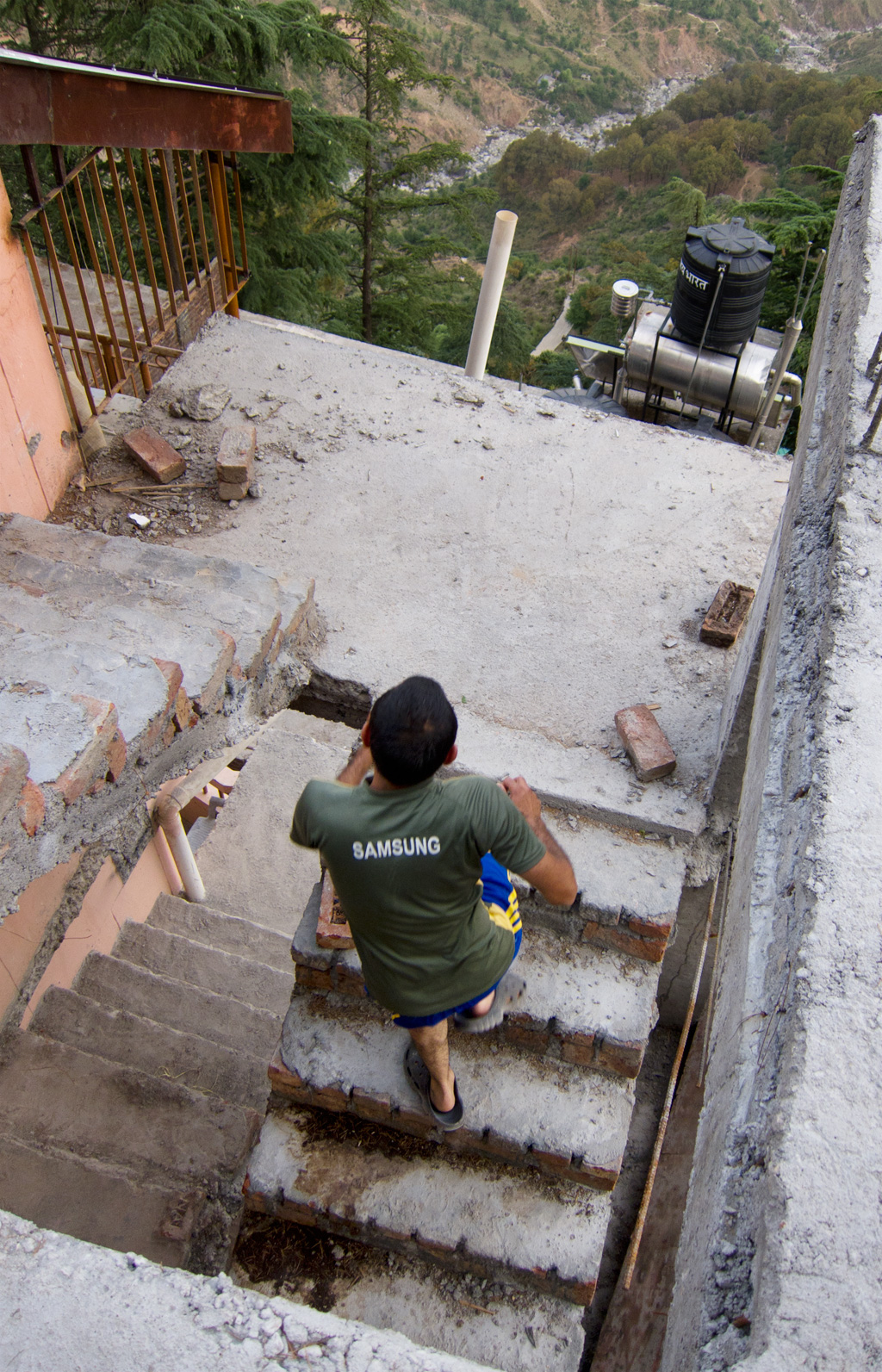
Here is Mr. Singh’s assistant, heading up to the roof to start the water pump. In the background, you can see a water tank on a building below, and still further down is the river, which is practically dry this year.
Waterborne illness are unavoidable when visiting India. Last time, it took me almost two months to catch a case of giardia, but this time Bennett and I were sick by the end of the first week. Even people who live here still get sick from time to time.
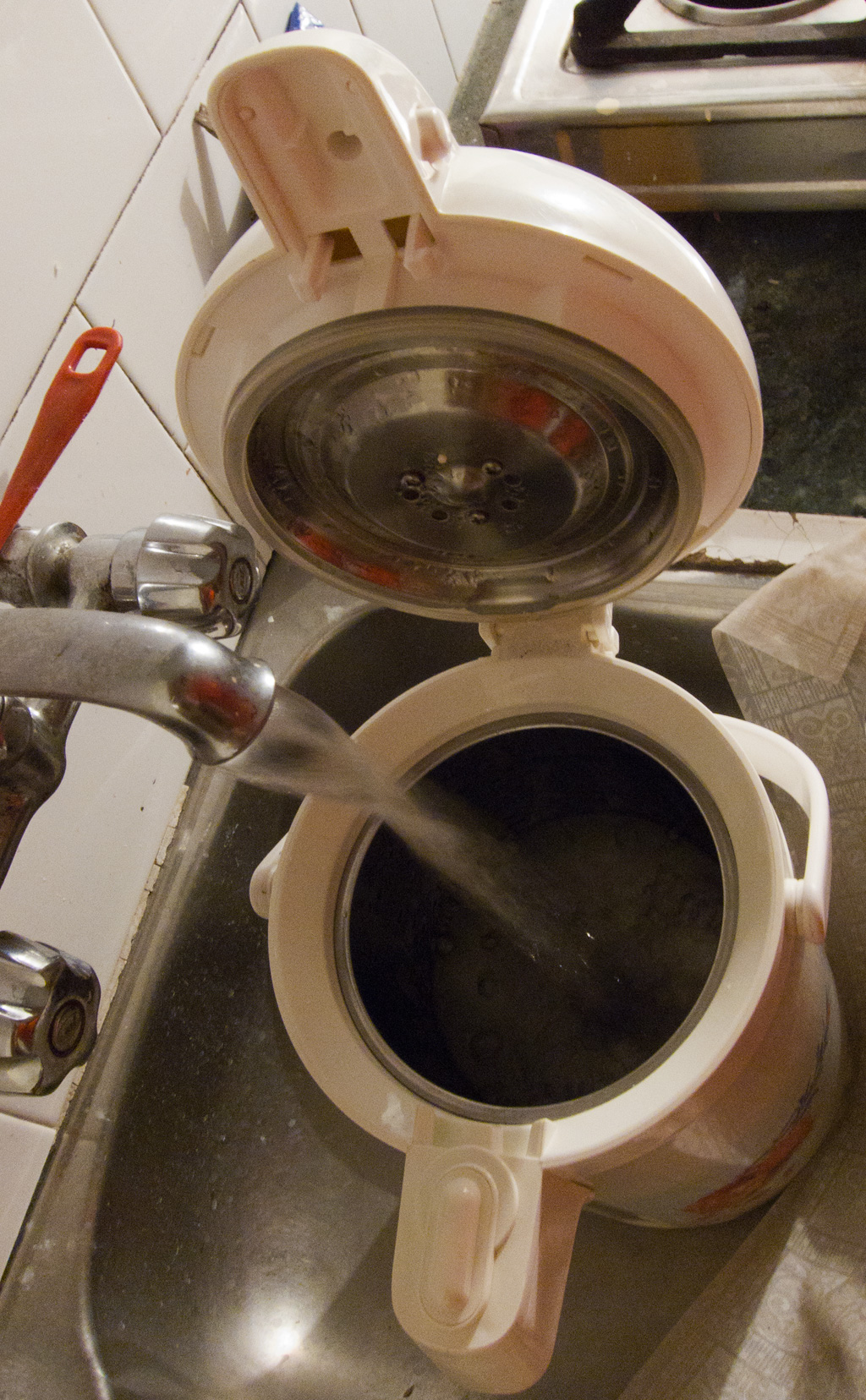
Chemey loaned us his water boiler, which we have been using religiously each evening, then leaving it to cool over night.
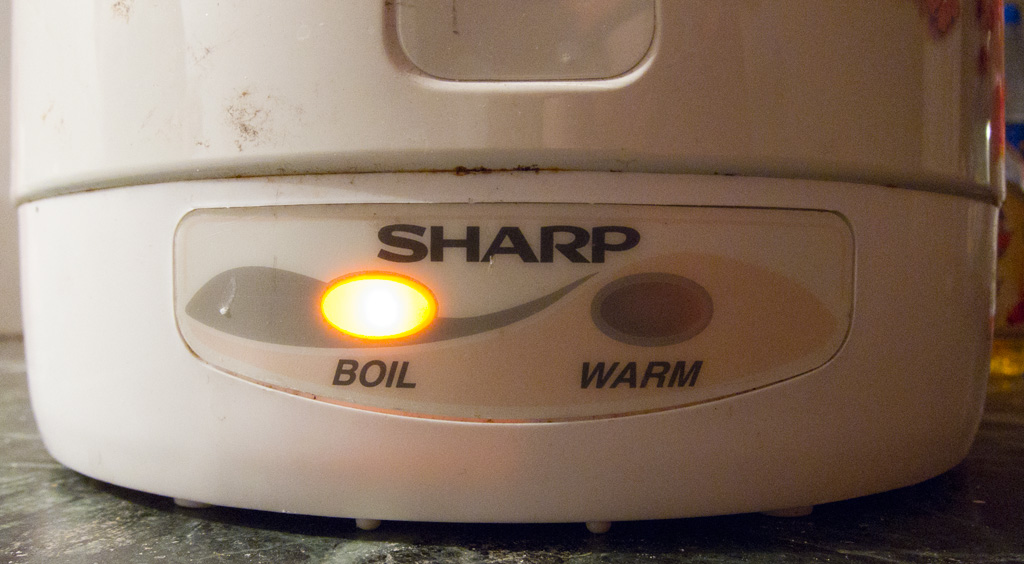
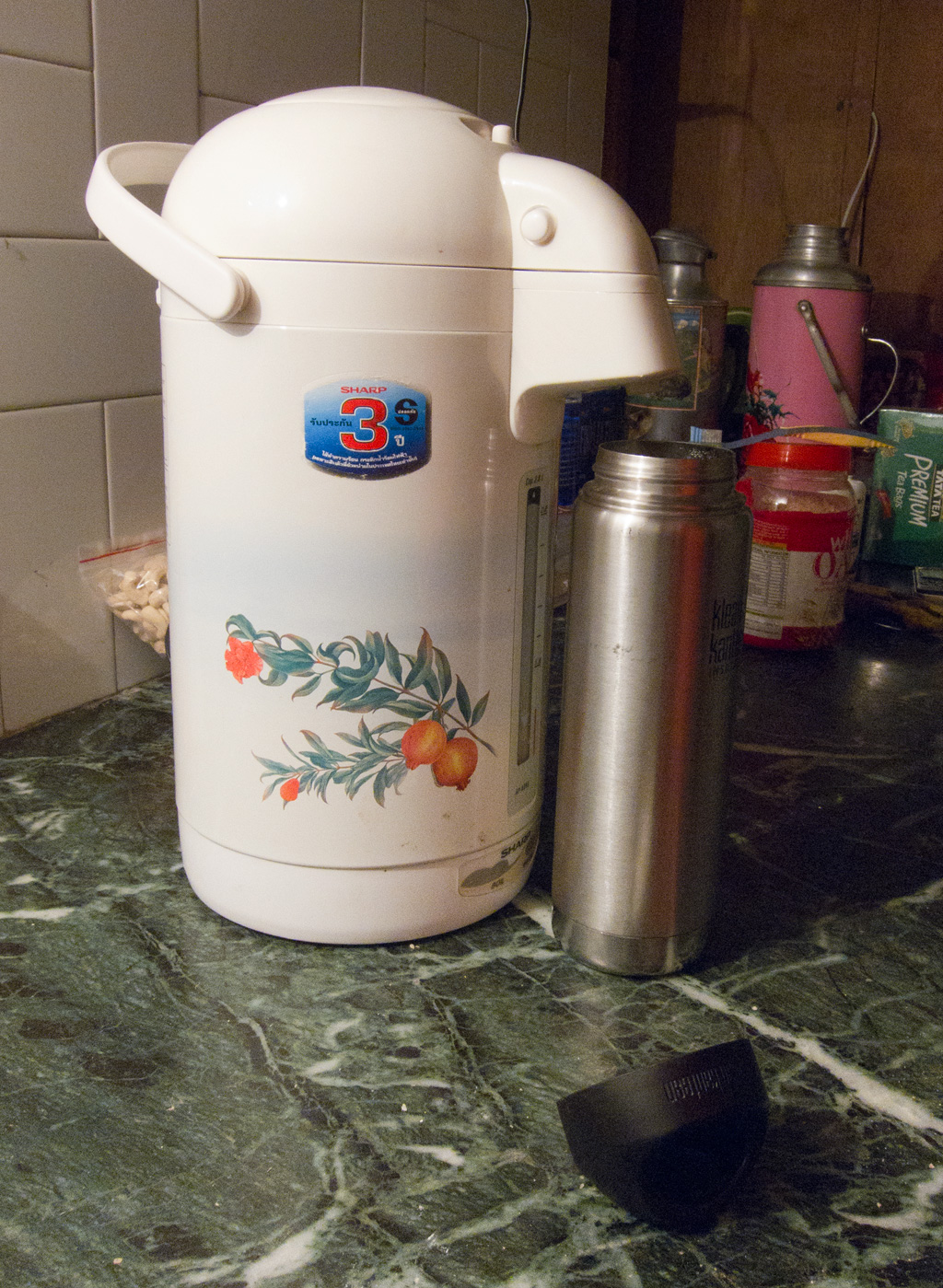
We’ve also been putting grapefruit seed extract into the water, but who really knows if it helps. It certainly tastes bad, which is psychologically reassuring.
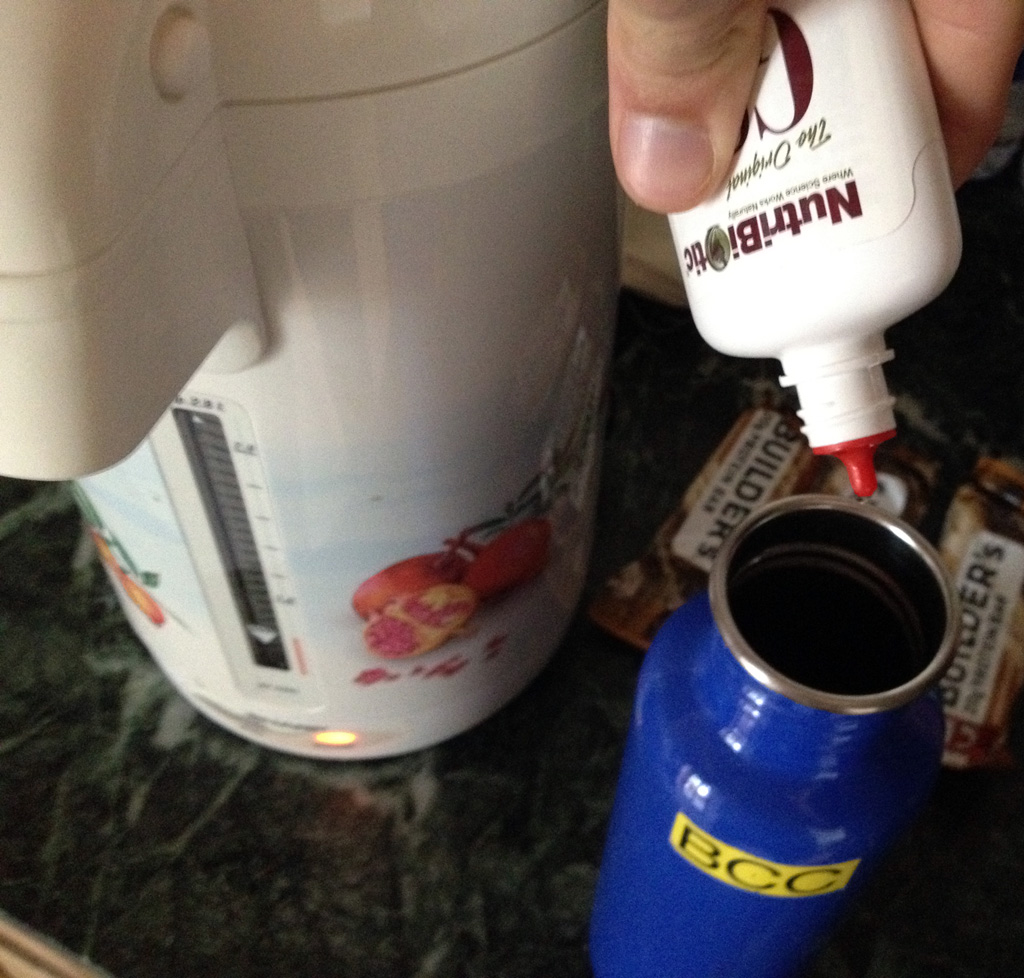
One of my first times using the water boiler, I poured about a liter of scalding water into my metal water bottle, burned my hand and dropped the bottle on the concrete floor, spilling it water all over my legs. The fall left a dent on the bottom of the bottle so that it would no longer stand up. After watching me fumble with the wobbly bottle for a few days, Bennett took up the matter and said “Do you want me to fix that?” I couldn’t really imagine how he would do that. “I’ll just use a brick.” I expressed my doubt by saying “Try if you want, but don’t feel like you have to waste time on it.” He took the bottle and disappeared onto the porch. After a few sledgehammeringly loud bangs, he returned. “Here you go.” Good as new. It’s really great to have him here.
After the water boiler, the most important tool in our water arsenal is this bucket.
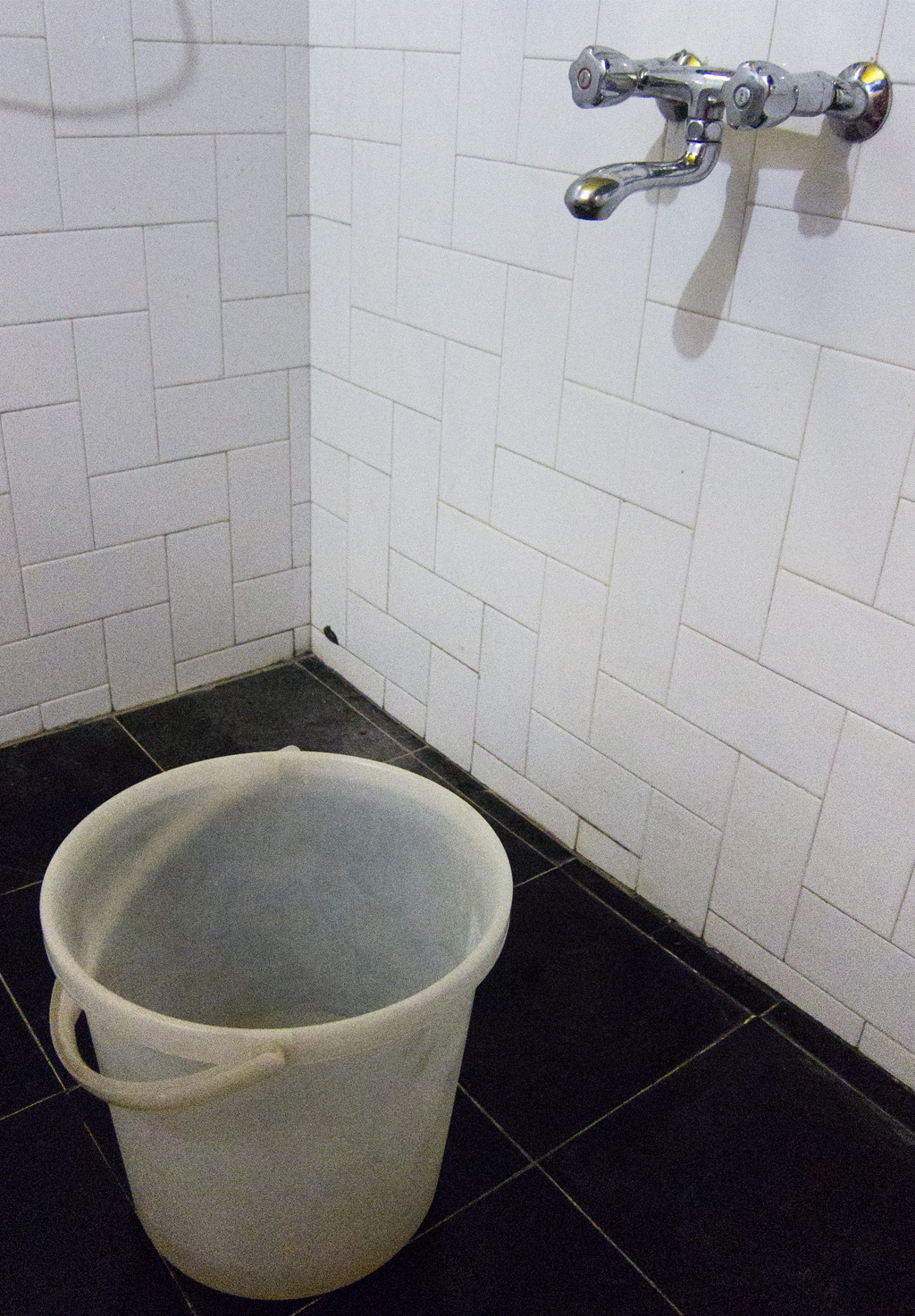
We basically use it for everything: bathing, laundry, and flushing the toilet (the tank doesn’t actually work, which is probably good because we’d run out of water much more quickly that way). It’s amazing how much water you can conserve and reuse—water under the sink can be reused for laundry, laundry water can be used to flush the toilet, etc.
While I play my little games to see how much water I can save (“Only two buckets today!”) Lobsang hits me with some impressive facts: last winter, the pipes froze and the monastery had almost no running water for three weeks. And when he was a kid living in Tibet, they would take a bath once a year. Obviously, altitude and temperature are factors, but regardless, it’s pretty badass if you’re in a water conservation competition. Frankly, it seems like everyone should be in that competition these days.